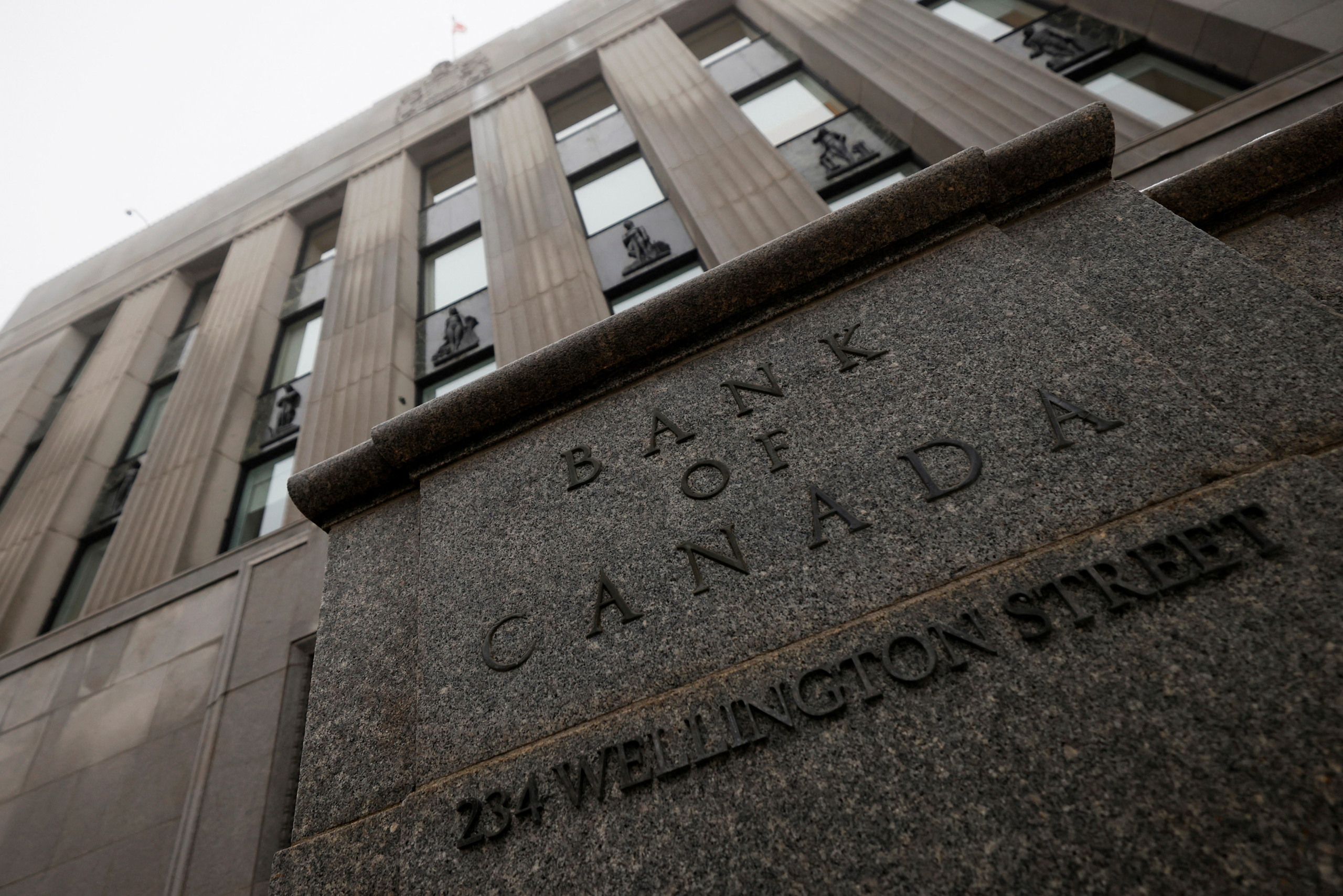
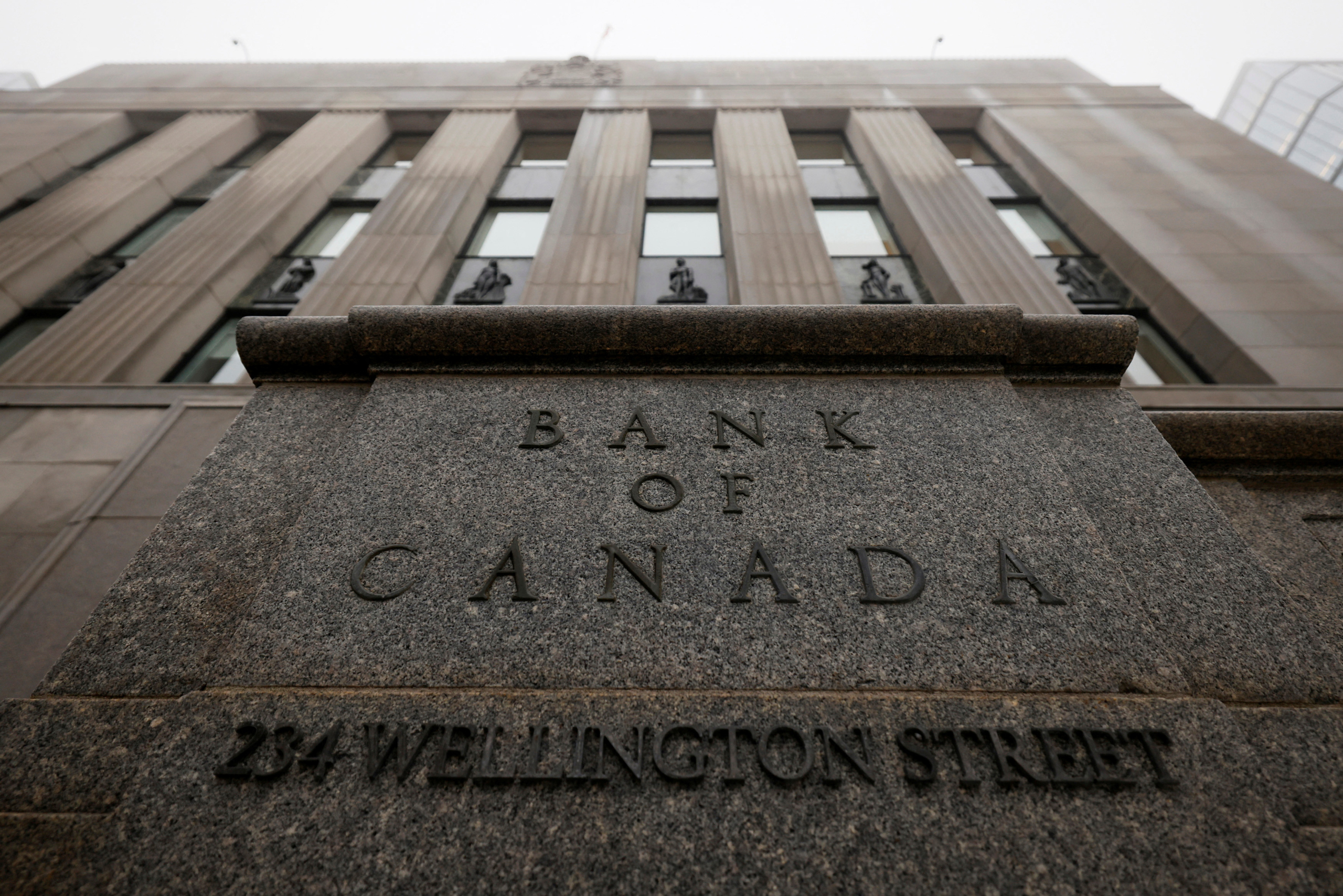
Bank of Canada to change policy, be less forward-looking, says governor

By Promit Mukherjee and David LjunggrenOTTAWA, March 20 (Reuters) - The Bank of Canada on Thursday said the uncertainty over the effect of U.S. tariffs meant it had to change the way it conducted monetary policy to become less-forward looking than normal.In a speech, Governor Tiff Macklem said the bank would be focusing less on policy for a specific outlook and more on policy that worked for different outcomes.Macklem said if the bank guessed where the economy was going and made a mistake, its actions could be ineffective or make matters worse."So we need to set policy that minimizes the risk. That means being less forward-looking than normal until the situation is clearer," he told a business audience in Calgary, the heart of the oil-rich province of Alberta."And it may mean acting quickly when things crystallize. We need to be flexible and adaptable," he continued, without giving specific details.Macklem reiterated that there could be no doubt about the bank's commitment to low inflation, saying it had to ensure higher prices from tariffs did not spread.The BoC says the constant threat of tariffs and the resulting unpredictability are hurting business investments and consumer sentiment as the United States, by far Canada's…
TSX futures slip as investors assess Fed growth outlook

Futures tied to Canada's main stock index fell on Thursday, taking cues from Wall Street, as investors gauged the U.S. Federal Reserve's growth projections amid uncertainties due to a global trade war.The futures on the S&P/TSX index were down 0.21% at 0640 ET (1040 GMT), while Wall Street's S&P 500 E-minis fell 0.7%.Political developments in Canada also took center stage on Thursday after the Globe and Mail reported that the newly-appointed Prime Minister, Mark Carney, is expected to call a snap election for April 28.Toronto's benchmark index (.GSPTSE) logged its biggest jump in over seven months on Wednesday after the Fed provided a less hawkish outlook than some investors had feared.The U.S. central bank kept its interest rates on hold and projected two more quarter-point cuts by the end of this year.The policymakers, however, lowered their economic growth outlook for this year and raised inflation projections as they assessed uncertainty from U.S. trade tariffs.In commodities, oil prices rose on Thursday, boosted by a weaker U.S. dollar and a strong outlook for demand in the United States after fuel inventories fell more than expected.Gold prices were steady after touching another record high earlier in the session, while copper prices were hovering…

Canada-US yield spreads turn a corner on trade war bets

The Canadian government bond market is unlikely to return to the record outperformance against U.S. bonds seen in February, as investors are now betting the trade war will slow the U.S. economy as well as hurt Canada's growth.The Bank of Canada has been among the most aggressive of major central banks in the current easing cycle, cutting its benchmark interest rate by two and a quarter percentage points to 2.75% to support Canada's economy.That led to the Canadian 10-year yield trading as much as 153 basis points below its U.S. equivalent in early February, the largest gap seen in LSEG data going back to 1994, but the spread has since rebounded to -125 basis points.A negative yield spread indicates investors earn a lower return on Canadian bonds than on U.S. bonds if the investments are held until maturity.A move to smaller spreads, including on shorter-dated bonds, could ease pressure on the Canadian dollar, which last month touched a 22-year low at 1.4793 per U.S. dollar, or 67.60 U.S. cents. Investors tend to favor higher yielding currencies."I think we've peaked," said Darcy Briggs, a portfolio manager at Franklin Templeton Canada. "The market assumed that whatever economy had the tariffs applied on…

Global debt exceeds $100 trillion as interest costs keep rising, OECD says

Outstanding government and corporate bonds globally exceeded $100 trillion last year, the OECD said on Thursday, with rising interest costs leaving borrowers facing tough choices and needing to prioritise productive investments.While central banks are cutting interest rates now, borrowing costs remain much higher than before 2022's rate hikes, so low-rate debt is continuing to be replaced and interest costs are likely to rise ahead.That comes at a time when governments face big spending bills. Germany's parliament approved a massive plan to boost infrastructure and support a broader European defence spending push this week. Long-standing costs from the green transition to ageing populations loom for major economies."This combination of higher costs and higher debt risks restricting capacity for future borrowing at a time when investment needs are greater than ever," the Organisation for Economic Co-operation and Development said in its annual debt report.Between 2021 and 2024, interest costs as a share of output rose from the lowest to the highest in the last 20 years.Yet interest costs are still below prevailing market rates for over half of OECD countries' and nearly a third of emerging market government debt, as well as for just under two thirds of high-grade corporate debt and…

Goldman downgrades South African equities, bullish on emerging Europe

Goldman Sachs downgraded its recommendation on South African equities to "marketweight" from "overweight" on Thursday, saying the European Union's growth prospects presented better opportunities to invest in the region's emerging markets.Consequently, the Wall Street brokerage bumped up its rating on the Czech Republic to "neutral" from "underweight" and kept its "marketweight" rating on Turkey and Poland.The remarkable shift in Europe's fiscal policy and optimism around a potential Ukraine peace deal have fuelled a rally in EU-exposed equities such as Poland, Greece and the Czech Republic, analysts led by Sunil Koul, Goldman's global emerging market equity strategist, said in a note.Earlier this week, Germany's parliament approved plans for a massive spending surge, while the U.S. and Ukrainian presidents have agreed to work together to end Russia's war with Ukraine.Polish (.WIG20), Greek (.ATG) and Czech (.PX) stocks have advanced between 16% and 25% year-to-date. In comparison, South African stocks (.JTOPI) have risen 10% so far in 2025, while the broader EM index (.MSCIEF) has gained about 6%."Notwithstanding near-term risks from higher tariffs, EM Europe is still the most inexpensive pocket within EM, and is trading at a 35% discount to MSCI EM," Koul said.While South African equities offer mid-teen EPS growth at…

In the Market: How Trump is driving Asia to diversify away from US

President Donald Trump's tariffs and other policies have some financiers and officials in Asia predicting the remaking of the post-World War II economic order, leading to an urgent quest to diversify away from America. But it's not proving to be easy.The period after World War II saw a global order underpinned by multilateral institutions, such as the United Nations and the World Bank. The United States emerged as the dominant force, with the dollar as the world's reserve currency.The Trump administration appears to be breaking from that order, with foreign and economic policies that have challenged U.S. allies, undercut some multilateral institutions and used tactics such as tariffs.While it is unclear what will eventually emerge, interviews this month with more than a dozen senior bankers, investors and officials based in Asia showed that they are not waiting to find out. They are looking for an 'America plus 1' strategy, which reduces their reliance on the United States going forward.This search for an alternative was more urgent and widespread than last May, when I first reported such a conversation after a visit to Asia. Strikingly, no one seems to have found an answer. These people said there may not be a…

Slide in Chinese shares hampers Asian markets despite Fed optimism

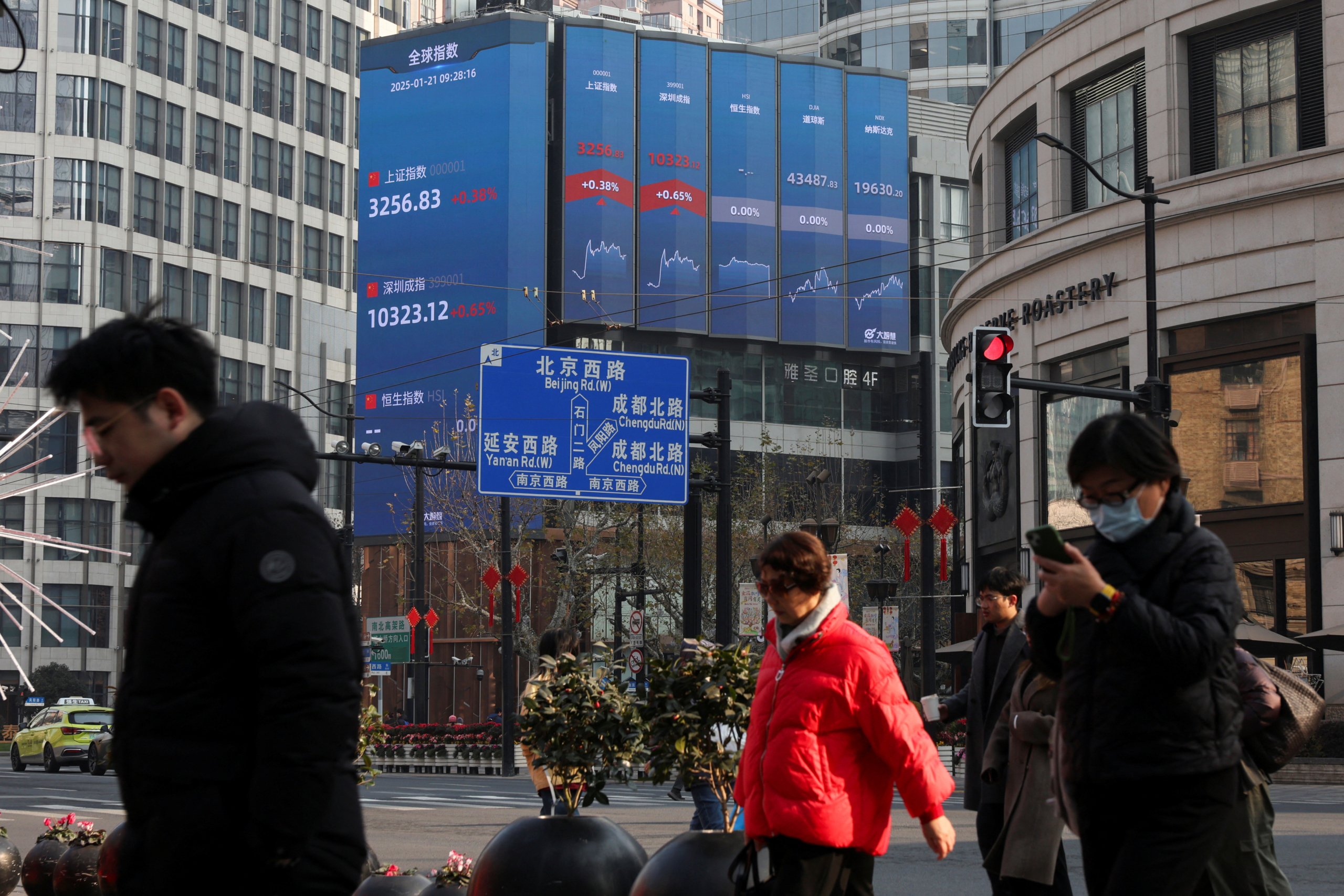
Asia shares were hobbled by weakness in Chinese markets on Thursday and struggled to build on Wall Street's rally, even as investor sentiment was lifted by the prospect that the Federal Reserve could still deliver two rate cuts this year.The Fed on Wednesday left rates unchanged in a widely expected decision, but maintained its projection for two quarter-percentage-point rate cuts by the year-end.Policymakers did revise up their inflation forecast for the year and marked down their outlook for economic growth, citing risks from U.S. President Donald Trump's tariff policies.Still, investors took comfort from the Fed's "dot plot" of policy rate expectations and Chair Jerome Powell's comments that tariff-driven inflation will be "transitory" and largely confined to this year, in turn sending stocks higher while U.S. Treasury yields and the dollar fell.Australian shares (.AXJO) jumped 1%, while U.S. futures also extended their rally after the cash session ended on a high.Nasdaq futures ticked up 0.4% and S&P 500 futures advanced 0.3%. EUROSTOXX 50 futures similarly added 0.1%.Trading was thinned with Japan markets closed for a holiday, though Nikkei futures edged up 0.2%."Reassurance perhaps, but the ongoing path the Fed will tread remains a tight one to navigate, and the central bank…

Australia employment posts surprise fall in Feb, jobless rate steady at 4.1%

Australian employment posted a surprise fall in February although the jobless rate stayed unchanged, a soft result that sent the local dollar lower.Figures from the Australian Bureau of Statistics on Thursday showed net employment fell 52,800 in February from January. That was well under market forecasts for a 30,000 rise.The jobless rate stayed at 4.1%, matching market expectations.The Australian dollar slipped 0.3% to $0.6341 after the data.Source: Reuters.com

JPMorgan says Russia unlikely to rejoin MSCI stock indexes until after 2027

Russian stocks are likely to need more time to reenter the widely followed MSCI global equity indexes than the most optimistic scenario of two years from June, JPMorgan analysts wrote in a client note.Russia was removed from the MSCI equity indexes, including its emerging markets benchmark (.MSCIEF), in early March 2022, days after Moscow's invasion of Ukraine began.In a late Tuesday note, JPMorgan said that while investors hoping for an imminent resolution to the war might be expecting the two-year process for Russia stocks to rejoin the index to start in June, it was "too optimistic" to think that timeline would be met. MSCI can at its discretion alter the process, however."We conclude best case MSCI re-entry would be June 2027, but base case we expect it to be years later," JPMorgan said.Russia and Ukraine accused each other on Wednesday of violating a deal to temporarily end attacks on energy targets, just hours after it was agreed by U.S. President Donald Trump and Russia's Vladimir Putin.Yet Trump said after a call with Ukraine's President Volodymyr Zelenskiy that "we are very much on track".Source: Reuters.com

EU struggles to bring Trump to the table on tariffs

As one of the European Union's top negotiators, Sabine Weyand has battled Britain over Brexit and driven tough trade talks around the world.But as Europe seeks a deal to avert further U.S. tariffs, the EU's most senior civil servant for trade acknowledges one fundamental obstacle: Donald Trump's endgame remains a mystery."And that, of course, is an issue," Weyand, the German national whose European Commission department coordinates trade policy for the EU's 27 countries, told an event this month of the struggle to work out what might placate the U.S. president.When Trump was re-elected last November, European officials had hoped they could talk him down from a trade war - as they did in his first term with largely symbolic concessions that kept the 1.6 trillion euros ($1.75 trillion) annual transatlantic trade in goods and services generally intact.But two months into his second term, the U.S. administration is showing little appetite to deal with officials in the Commission, despite its mandate on trade matters.In the past week, Washington has imposed tariffs on steel and aluminium, the EU has set out plans for retaliation, and Trump has threatened 200% tariffs on EU wine and spirits. The U.S. president has promised further tariffs…