Asian markets cheer as pause in US-China trade war boosts risk appetite

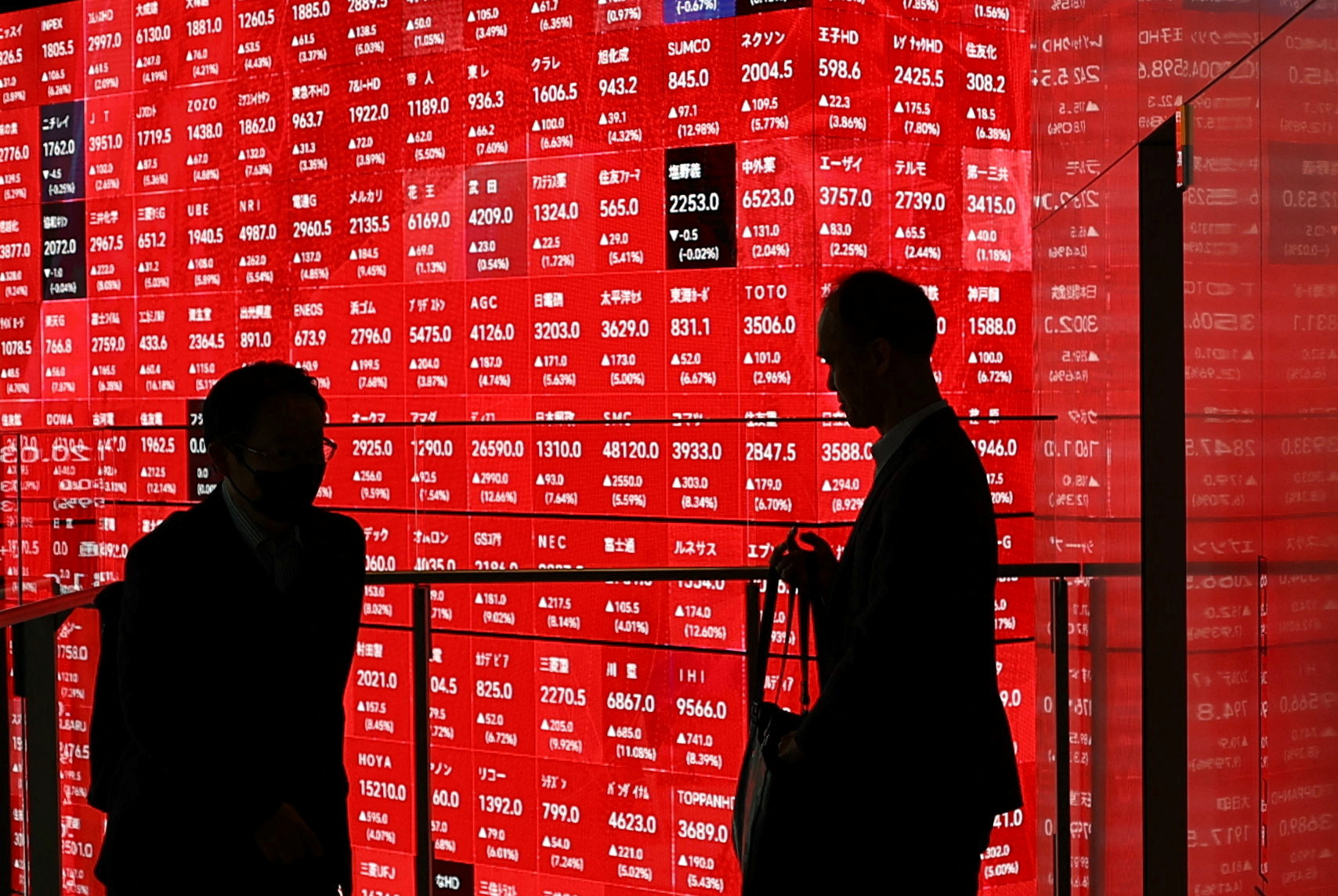
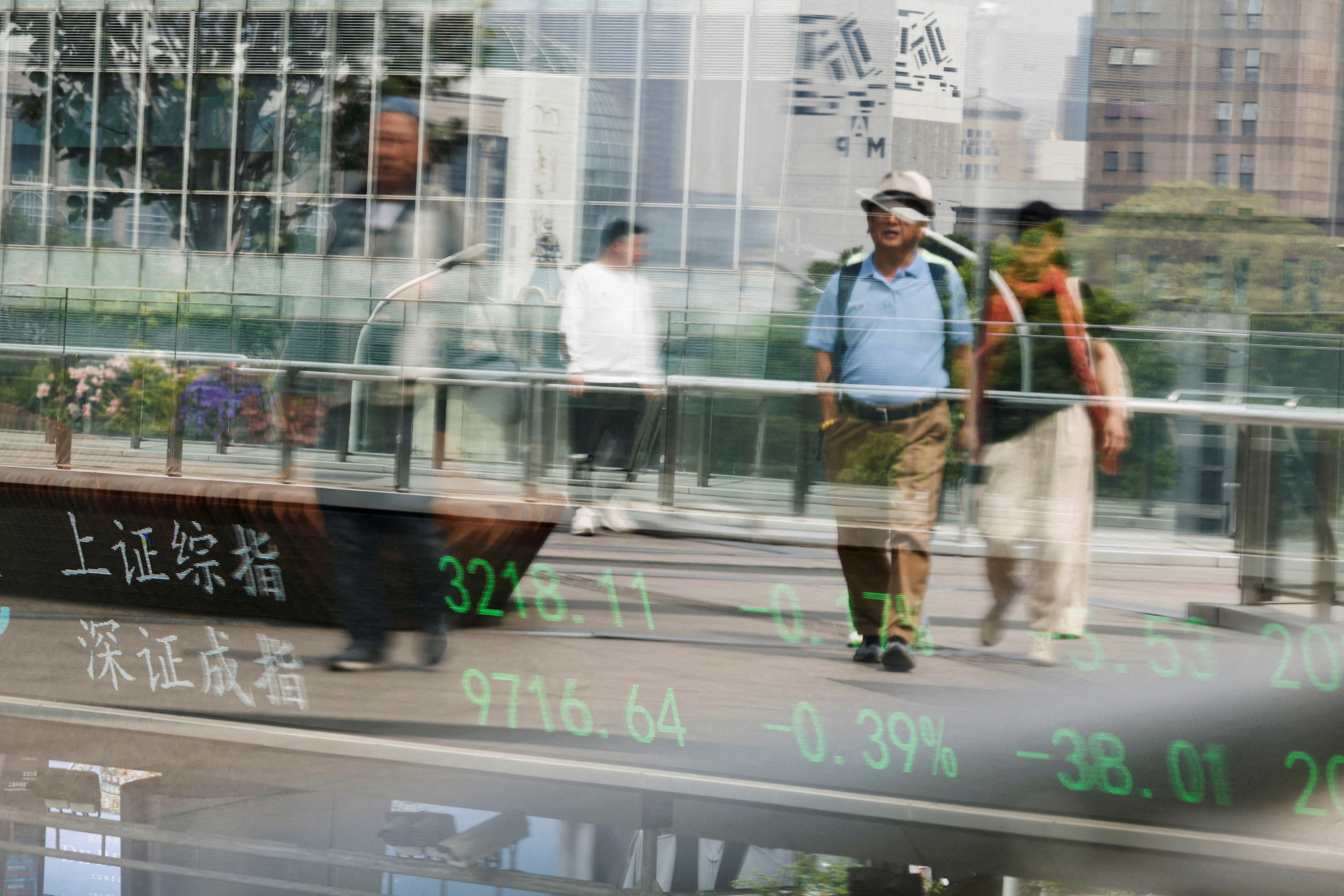
Asian stocks joined the global rally and the U.S. dollar held on to most of its gains on Tuesday as investors heaved a sigh of relief after a temporary halt in the trade war between the U.S. and China eased worries of a global recession.Japan's Nikkei (.N225) soared 2%, touching its highest level since February 25, and tech-heavy Taiwan (.TWII) also rose 2%, while Chinese stocks (.SSEC) inched higher in early trading.That left the MSCI's broadest index of Asia-Pacific shares outside Japan (.MIAPJ0000PUS) at a six-month peak. The S&P 500 rose over 3% while Nasdaq soared 4.3% after the U.S. and China agreed to slash tariffs for at least 90 days."The real win here was the shift in tone from both the U.S. and China. Words like 'mutual respect' and 'dignity' mark a sharp departure from the recent confrontational rhetoric, and that’s what markets are cheering," said Charu Chanana, chief investment strategist at Saxo in Singapore.The U.S. said it will cut tariffs imposed on Chinese imports to 30% from 145% while China said it would cut duties on U.S. imports to 10% from 125%, providing relief to the markets, although concerns linger that tariffs could hurt the global economy.The U.S.…
Japan’s Ishiba signals increasing corn imports as part of US trade talks

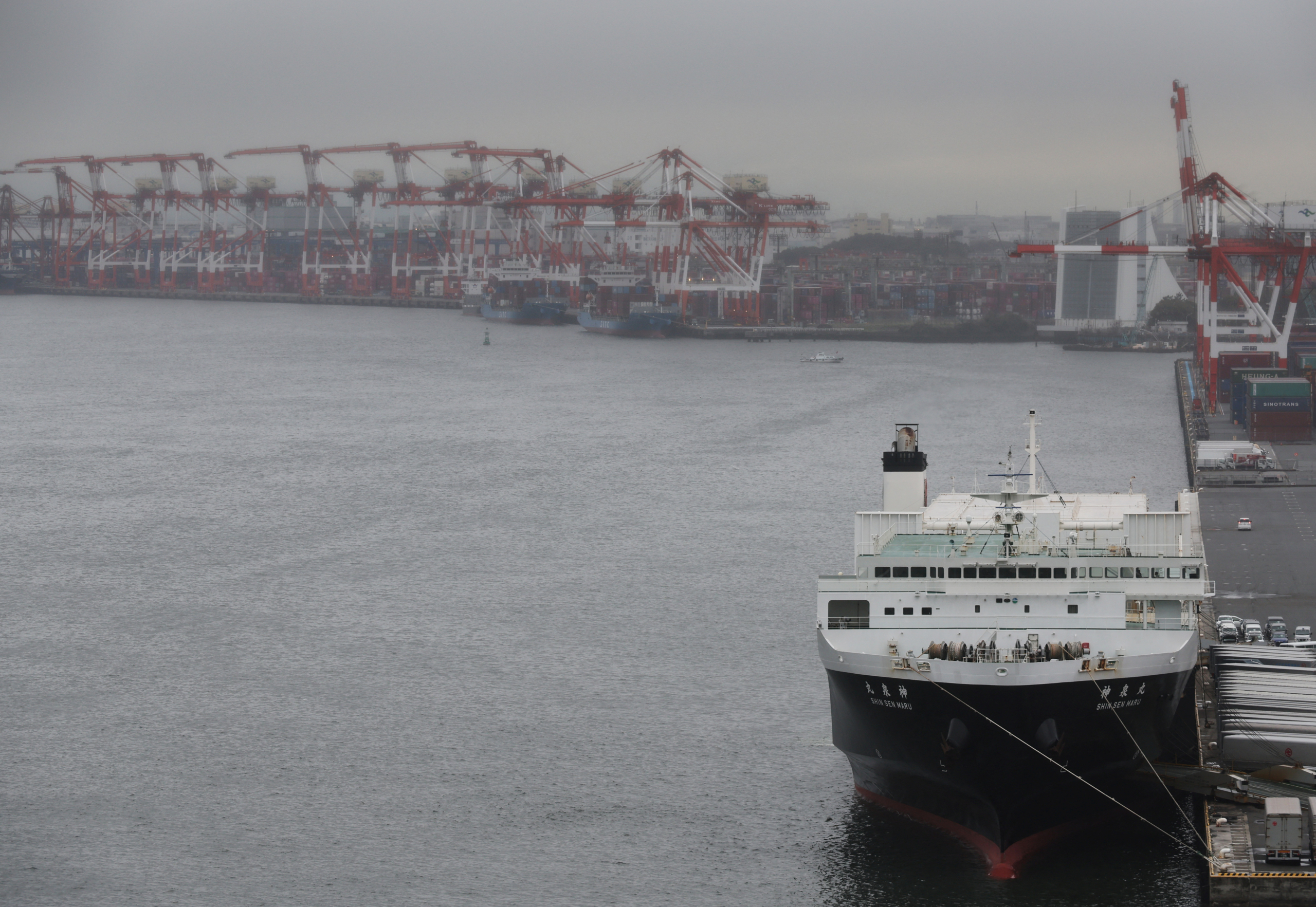
Japanese Prime Minister Shigeru Ishiba on Monday signalled that increasing corn imports from the U.S. would be among options in trade negotiations with Washington, but warned Japan would never sacrifice its agriculture industry to win lower auto tariffs.Japan has made little headway in two rounds of trade talks with the U.S. as it seeks exemptions from U.S. tariffs, including a crippling 25% tariff on its mainstay automobiles.During the first round of talks last month, U.S. negotiators brought up automobiles and rice as areas where they said Tokyo puts up market barriers.Agreeing to buy more corn is a less controversial option for Japan than increasing rice imports, as Ishiba's ruling Liberal Democratic Party (LDP) relies heavily on rice farmers' support in elections.Speaking in parliament, Ishiba repeated that Japan won't sacrifice the domestic agriculture industry for the sake of winning U.S. tariff concessions for automobiles."Still, Japan can use corn not for consumption but for use as ethanol fuel. Usage as biomass would be in Japan's national interest," Ishiba said, adding that Japanese soil was not necessarily suited for corn production anyway."We hope to deepen discussion on whether to use corn for consumption or energy," Ishiba said without elaborating.The U.S. exported $2.8 billion…

Telefonica hires Citi to sell Chilean business, El Confidencial reports

Spanish telecoms company Telefonica (TEF.MC) has hired Citi as an adviser to sell its Chilean business, news website El Confidencial reported on Monday, citing unidentified market sources.Telefonica would book a capital loss on the sale, the news website added.Telefonica has withdrawn from many markets in Spanish-speaking Latin American countries where returns were lower than capital cost, opting to focus on Spain, Brazil, Britain and Germany.The company last month agreed to sell its Peruvian operation at a fraction of its acquisition price 30 years ago.Source: Reuters.com

Trade hopes feed risk appetite, boosting stocks and bitcoin

World stocks hovered near their highest levels in six weeks on Friday after a U.S. trade deal with Britain fueled guarded optimism for progress in tariff talks with other countries.India on Friday offered to slash its tariff gap with the U.S. to less than 4% from nearly 13% now, in exchange for an exemption from President Donald Trump's "current and potential" tariff hikes, Reuters reports, as both nations move fast to clinch a deal.MSCI's broadest index of world shares (.MIWD00000PUS) gained 0.14%, and remains above levels seen before Trump's 'Liberation Day' global tariff announcements. Germany's Dax stock index hit a record high (.GDAXI), while U.S. stock futures pointed to firm gains on Wall Street ,"The deal between the U.S. and UK was more style over substance," said Kyle Rodda, a senior financial markets analyst at Capital.com.The "general terms" agreement leaves in place a 10% tariff on goods imported from the UK but lowers prohibitive U.S. duties on UK car exports. Britain agreed to lower its tariffs to 1.8% from 5.1% and provide greater access to U.S. goods."However, it feeds the narrative that the U.S. is looking to bang out rapid-fire trade deals and reduce tariffs - at the margins -…

Japanese stocks jump, dollar firms on trade hopes; bitcoin soars

Japanese stocks jumped on Friday, supported by the dollar's surge against the yen, after a U.S. trade deal with Britain fuelled hopes of progress in tariff talks with other countries.Bitcoin soared to the highest since January and U.S. crude ticked up after a more than 3% surge on Thursday, when President Donald Trump announced the agreement with British Prime Minister Keir Starmer - the first in the month since Trump started a 90-day pause on trade tariffs to allow room for negotiations.At the same time, concerns that the limited trade agreement with London may not provide much of a blueprint for additional deals cooled optimism around the outcome of Sino-U.S. trade talks set for Saturday in Switzerland.Mainland blue chips (.CSI300) started the day 0.2% lower, while Hong Kong's Hang Seng (.HSI) rose 0.2%.Japan's Nikkei (.N225) and broader Topix (.TOPX) each climbed about 1.2%, with the Topix set to extend its winning streak to an 11th session, the longest run since October 2017.Taiwan's equity benchmark (.TWII) advanced 1%, while Australian stocks (.AXJO) added 0.4%.MSCI's broadest index of Asia-Pacific shares outside Japan (.MIAPJ0000PUS) was broadly flat."The deal between the U.S. and UK was more style over substance," said Kyle Rodda, a senior…

Market recession indicators: dissecting the signal from the noise

Global recession risks have shot back up markets' worry list, but the readout from economic data and key financial indicators is not as clear cut as it first appears.A 90-day pause on most reciprocal tariffs unveiled by U.S. President Donald Trump in April has eased investors' worst fears, but the damage to business and consumer confidence is expected to hurt."Recession risks have risen markedly even if there are some deals struck on tariffs," said Guy Miller, chief markets strategist at Zurich Insurance Group. "The risk of a U.S. recession is 50-50, it's that close."Here's a look at what some closely-watched indicators say about global recession risks.1/ HARD VS SOFTA disconnect between so-called soft economic numbers such as sentiment indicators and hard data, for instance jobs figures, makes it hard to decipher recession risks.Latest U.S. jobs numbers point to a resilient economy, while a first quarter economic contraction in the United States and an expansion in the euro zone have both been explained away by pre-positioning by companies ahead of the reciprocal tariffs.Business and consumer confidence indicators meanwhile have deteriorated, a sign for some that weaker growth will materialise soon.U.S. consumer confidence slumped to a nearly five-year low in April. Consumer…

Shares firm on hopes for trade deals, dollar tries to hold post-Fed bounce

Shares in Asia firmed on Thursday after U.S. President Donald Trump flagged a first trade deal in his global tariff war, while the dollar tried to hold overnight gains as markets pushed out the chance of near-term rate cuts.S&P 500 futures erased earlier losses to be up 0.5% while Nasdaq futures rose 0.7%. The pan-European STOXX 600 (.STOXX) index climbed 0.7% and FTSE futures gained 0.5%.Trump said late on Wednesday that he would announce details about a major trade deal with an unspecified country at a press conference later in the day. The New York Times reported that the deal was with Britain.The president's comments came as investors anxiously await planned trade talks between Washington and Beijing on Saturday, which could mark the first step in resolving a potentially damaging trade war between the world's top two economies.Markets are also keeping their eyes peeled on the Bank of England's policy meeting later in the day where expectations are for a quarter-point rate cut. Additionally, central banks in Sweden and Norway are due to deliver their latest policy decisions, although no moves are expected.Overnight, in a widely expected decision, the Federal Reserve left policy rate in the 4.25%-4.5% range, but said…

Stocks rally on US-China talks, China rate cut

U.S. stock futures and Chinese markets rose on Wednesday, as investors cheered news of a meeting between top U.S. and Chinese trade officials as a chance to tone down the tariffs, while China cut interest rates and vowed to support stock markets."My sense is this will be about de-escalation," U.S. Treasury Secretary Scott Bessent said of the meeting, scheduled for the weekend in Switzerland.S&P 500 futures rose about 0.9% and Hong Kong's Hang Seng (.HSI) was up 1.7% by mid-morning. China blue chips (.CSI300) rose 0.5% and Japan's Nikkei (.N225) was broadly flat."It suggests that there is perhaps a willingness and enthusiasm on both sides to meet at a high level, so it can't be anything but positive I would have thought," said National Australia Bank's head of foreign exchange research Ray Attrill."It's ostensibly positive for Asian FX generally."The dollar rose slightly on the yen and euro, while China's rate cuts weighed on the yuan and knocked the China-sensitive Australian dollar back below 65 U.S. cents.South Korea's won, which had been rallying hard with a broad surge in Asian currencies, fell back by more than 1%.Gold fell 1.4% and oil was about 0.5% higher.China's central bank governor on Wednesday flagged…

Stocks turn lower on lack of trade progress, German politics

Global stocks dropped on Tuesday as concerns about tariffs and their impact on the economy lingered and as German conservative leader Friedrich Merz unexpectedly failed to secure the parliamentary votes required to become chancellor.Markets were processing the surprise from the Bundestag where Merz failed to garner the votes required, dealing a major blow to his proposed government that has promised to revive economic growth at a time of global uncertainty."I didn't expect what happened today to have happened at all," said George Lagarias, chief economist at Forvis Mazars."Markets are going to be extremely negatively surprised if Merz fails to be elected as chancellor and Germany falls into disarray."Merz now has 14 days to try and win parliamentary support, and while this is not seen as a fatal setback, his failure to win parliamentary backing at the first time is a first for post-war Germany.Germany's DAX (.GDAXI) fell by as much as 2% but was last down about 1.3%. Britain's FTSE 100 (.FTSE) was down 0.3%.Investor attention remains on the possibility of easing trade tensions between the U.S. and China after Beijing last week said it was evaluating an offer from Washington to hold talks over tariffs.U.S. President Donald Trump said…

Shares dither, oil slides as tariffs fan growth worries

Shares struggled for direction on Wednesday and oil prices slid as relief over a potential easing of global trade tensions was upset by a worsening economic outlook and signs corporates were feeling the pain from Donald Trump's tariffs.Nasdaq futures were down 0.67% in Asia, while S&P 500 futures fell 0.5%. EUROSTOXX 50 futures slipped 0.06%.In China, data showed factory activity contracted at the fastest pace in 16 months in April, as hefty U.S. tariffs snapped two months of recovery and kept alive calls for further stimulus from Beijing."The hit from sky-high U.S. tariffs meant the new export orders index dropped back to its lowest level, COVID-19 disruptions aside, since August 2012," said Zichun Huang, a China economist at Capital Economics."The sharp drop in the PMIs likely overstates the impact of tariffs due to negative sentiment effects, but it still suggests that China’s economy is coming under pressure as external demand cools."The dismal figures hobbled a rise in Chinese shares, with the CSI300 blue-chip index (.CSI300) reversing earlier gains to last trade 0.07% lower. Hong Kong's Hang Seng Index (.HSI) ticked up 0.1%.Despite Trump's move to soften the blow of his auto tariffs and signs of progress in broader trade negotiations,…