TSX rises on telecom, tech boost; Trump’s latest tariffs eyed

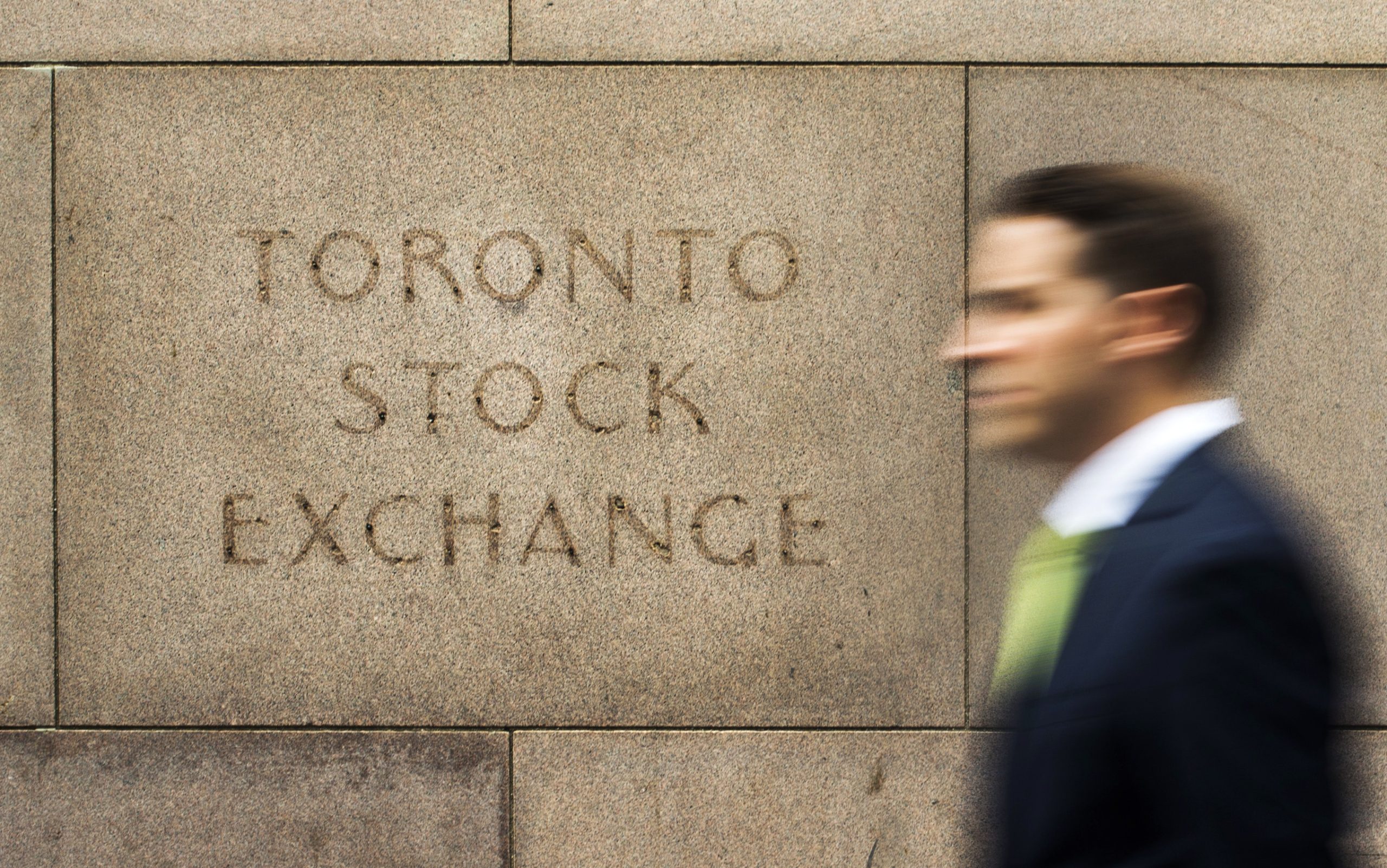
Canada's main stock index rose on Thursday, with broad gains led by telecom and tech shares, although U.S. President Donald Trump's recent reciprocal tariff proposals limited the overall increase.The S&P/TSX composite index (.GSPTSE) was up 0.2% at 25,618.60.A majority of subsectors were trading higher, led by capped communication (.GSPTTTS) jumping 1.7%, helped by a 3.7% rise in Telus (T.TO) after the communications technology company's fourth-quarter revenue beat market expectations.Technology (.SPTTTK) also led the charge with a 1.7% jump, boosted by e-commerce company Shopify's 3.7% gain.Canada's 10-year benchmark yield eased, tracking the U.S. counterpart, helping utilities (.GSPTTUT) and real estate (.GSPTTRE) add 1.2% and 0.8%, respectively.However, Donald Trump's plan to unveil reciprocal tariffs on Thursday afternoon kept investors on edge."We're going to be seeing a lot more volatility and uncertainty continuing in the market and I think everyone is walking on egg shells to try to figure out what is going to happen here," said Shiraz Ahmed, senior portfolio manager and founder of Sartorial Wealth at Raymond James as he referenced Trump's plans on reciprocal tariffs.Financials (.SPTTFS) declined 0.5%, dragged by Sun Life Financial (SLF.TO) falling 8.3% to the bottom of the TSX after Canada's second-largest life insurer fourth-quarter profits missed…
Gulf bourses end mixed with US data in focus

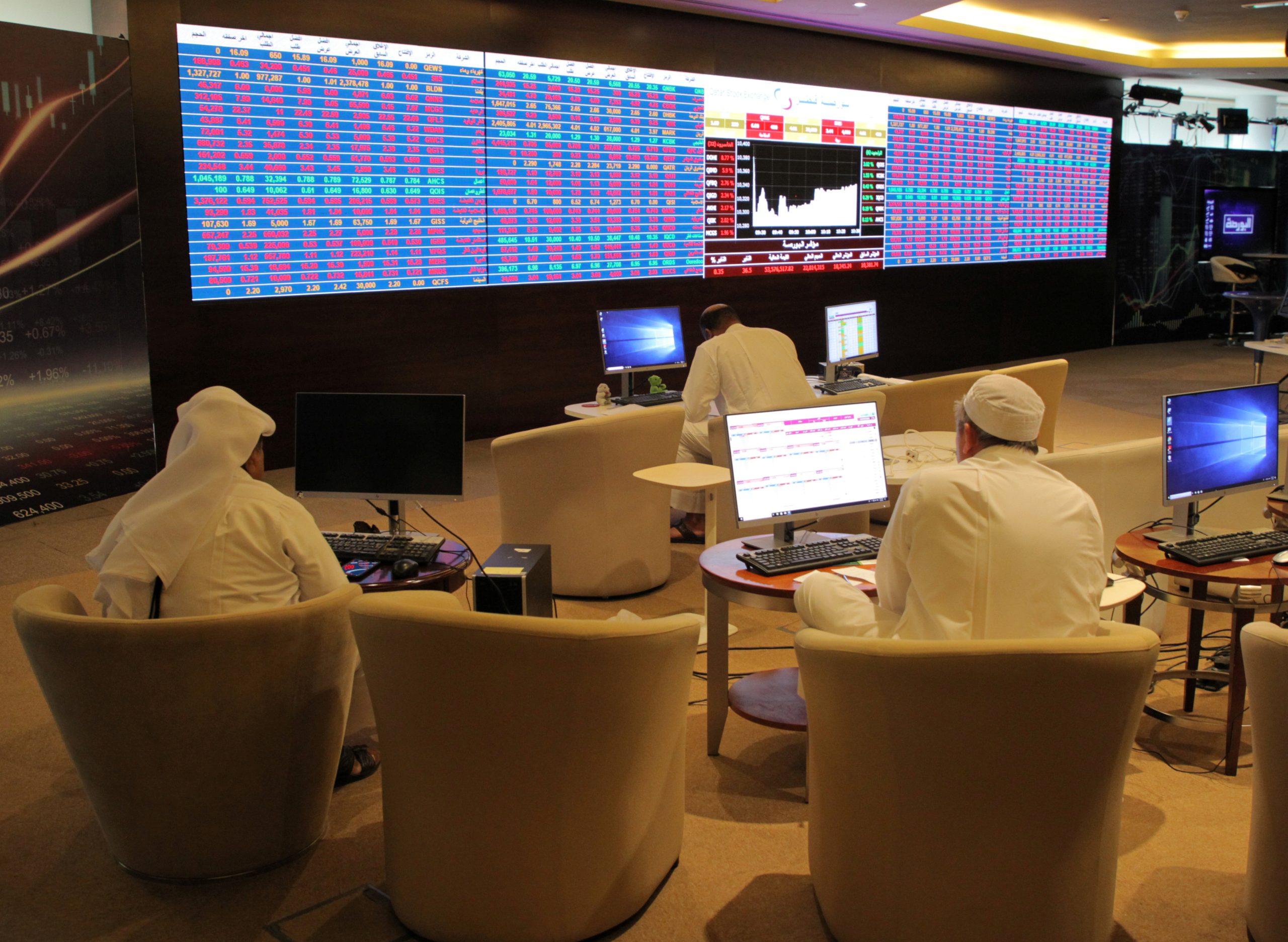
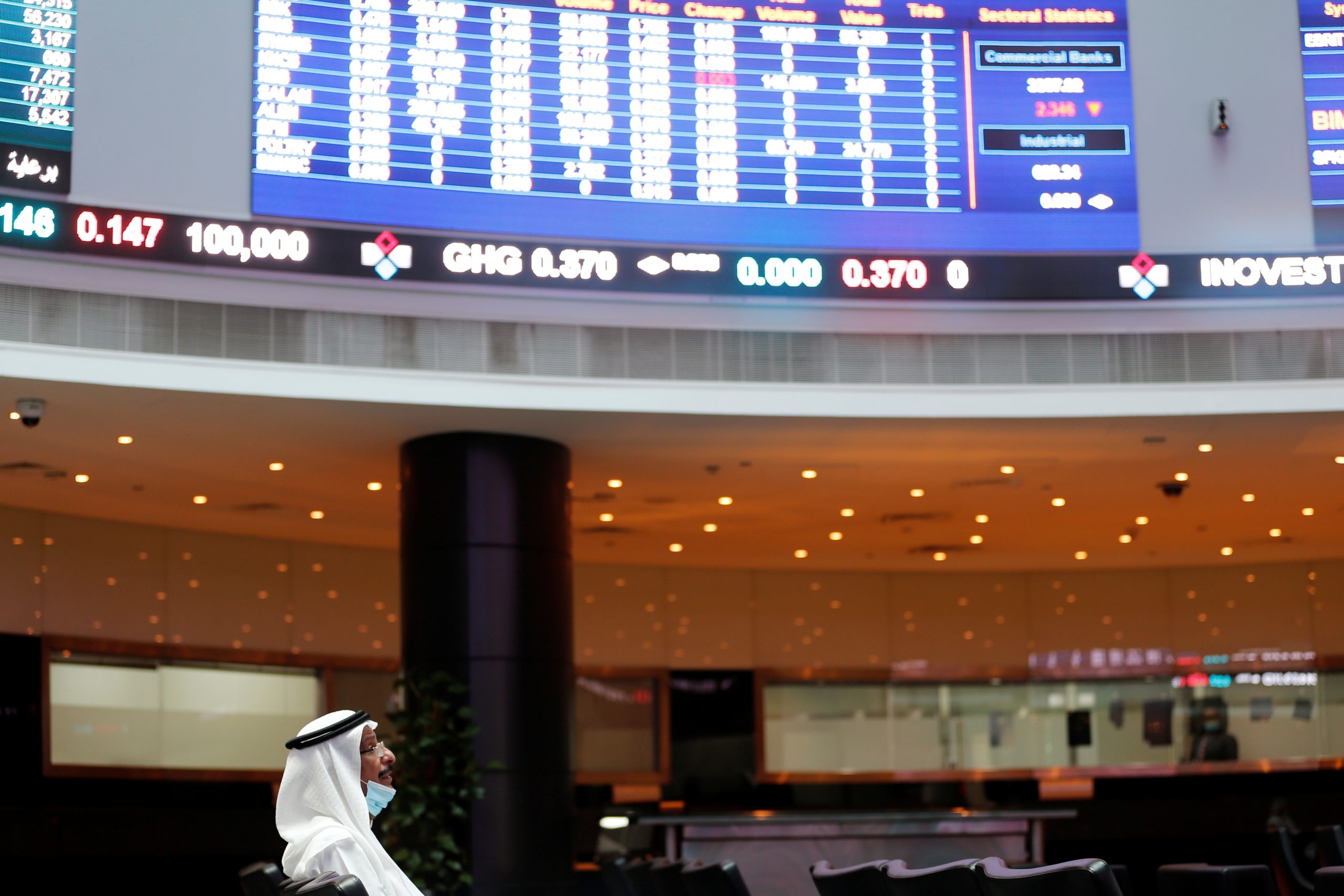
Stock markets in the Gulf ended mixed on Thursday as investors monitored developments in U.S. tariff plans and the possible repercussions for global trade, ahead of key U.S. economic data due later in the day.U.S. President Donald Trump has said he would impose reciprocal tariffs on every country that charges duties on U.S. imports, spurring concern over a widening global trade war and a possible acceleration of U.S. inflation.Saudi Arabia's benchmark index (.TASI) erased early losses to end flat.Dubai's main share index (.DFMGI) gained 0.3%, helped by a 3.9% rise in toll operator Salik Company (SALIK.DU).In Abu Dhabi, the index (.FTFADGI) closed flat, with food and drinks group Agthia (AGTHIA.AD) plunging about 10%, the most on the index, despite reporting a bigger annual profit.Oil prices, a catalyst for the Gulf's financial markets, fell 1% as a potential peace deal between Russia and Ukraine continued to exert downward pressure, along with rising U.S. crude inventories.The Qatari index (.QSI) gained 0.2%, with Qatar Islamic Bank (QISB.QA) rising 0.9%.Data on Wednesday showed the U.S. consumer price index increased more than expected in January, reinforcing the Federal Reserve's message that it was in no rush to resume rate cuts. Producer Price Index (PPI) data…

S&P Global warns of “unprecedented” U.S. World Bank withdrawal risk

S&P Global completed the list of top credit rating agencies to warn that an "unprecedented" U.S. withdrawal from the World Bank and other top multilateral lenders would damage their prized triple-A credit ratings.President Donald Trump signed an Executive Order last week for a six-month review of U.S. support to all international intergovernmental organisations to decide whether it should withdraw from them, or seek their reform.S&P said the current triple-A ratings of the World Bank and other top development banks assume the U.S. remaining in place. Therefore, if Washington were to "limit" its support, any rating change that came as a result of that was likely to be "negative".S&P's top MDB analyst Alexander Ekbom added that it would ultimately depend on the impact on the individual institution's capital and whether other major shareholders filled the void that would be left."Should the U.S. leave, which would be unprecedented, it is difficult to predict how any reallocation would be ironed out," he said.Source: Reuters.com

Financial services, IT will be most attractive for PE buyouts in 2025, industry group head says

India's financial services and IT sectors will be the most attractive sectors for private equity buyouts this year, the head of the Indian Venture and Alternate Capital Association told Reuters this week.This is a marked shift from 2024 when real estate and healthcare were the most sought-after sectors for PE buyouts with $4.3 billion and $2.9 billion worth of takeover deals completed, respectively, EY and IVCA data showed."When we come in and buy out a company, we don't want to run the business ourselves. It is easier to do it in sectors like these, which are more service-oriented," said Ashley Menezes, who is also the operating chief of PE firm ChrysCapital.India reported a 39% jump in PE and venture capital buyouts to $16.8 billion in 2024, according to a report by EY and IVCA.The takeover of telecom tower operator ATC India by Brookfield for $2.5 billion, the sale of packaging firm Manjushree Technopack to U.S. PE firm PAG for about $1 billion, and Shriram Housing Finance's sale to Warburg Pincus for $555 million were among the top Indian buyouts last year.Menezes also said that the current pattern of companies gearing up for initial public offerings is a positive for PE…

Exchange operator ASX posts rise in new listings and capital growth, shares jump

Australian exchange operator ASX (ASX.AX) said on Thursday it had recorded higher new listings and total quoted capital in the first half and flagged the momentum was continuing into the second half, leading shares to close 5% higher.ASX said its operating revenue reached a record high for the six months ended December 31, reflecting a lift in demand for derivatives market data, rising listing fees and higher trading in the cash market.ASX shares surged as much as 9.2% during trading, the biggest intraday rise in nearly five years.It reported a 10.1% rise in first-half underlying net profit to A$253.7 million ($159.70 million), beating consensus estimates by 2.8% and said it would pay an interim dividend of A$1.112 a share.ASX said increased trading in the Australian market was on the back of changing expectations for global interest rates that coupled with major geopolitical disturbances drove volatility in markets.Initial public offerings also increased in the Australian market, rising to $2.01 billion of net proceeds in 2024, the highest level since 2021, according to LSEG data.ASX has faced headwinds from regulatory scrutiny due to its inability so far to replace its CHESS clearing and settlement system, after an outage in December.The exchange operator…

Global stocks rally on Ukraine peace hopes, bonds sell off

U.S. and European stock futures rallied on Thursday on optimism over prospects of a peace deal between Ukraine and Russia, offsetting a jump in Treasury yields as hot inflation threatens to close the door to any policy easing in the U.S. this year.Global trade war fears persisted as U.S. President Donald Trump said he would impose reciprocal tariffs as soon as Wednesday evening on every country that charges duties on U.S. imports. Gold prices hovered not far from their record highs.The Japanese yen was the biggest loser in the face of higher U.S. yields, while the euro has been helped by Trump's phone calls with Russian President Vladimir Putin and Ukraine's Volodymyr Zelenskiy, raising hopes that the years-long war could be nearing an end.Oil prices dropped, having been down more than 2% overnight. Wall Street staged a late rally to end the day mixed.In Asia, EUROSTOXX 50 futures climbed 1%. Nasdaq futures rose 0.4% while S&P 500 futures gained 0.2%. Japan's Nikkei (.N225) gained 1.1% while MSCI's broadest index of Asia-Pacific shares outside Japan (.MIAPJ0000PUS) edged up 0.3%."The optimism is probably somewhat premature," said Kyle Rodda, a senior analyst at Capital.com."Early drafts of a peace deal by the United States…

Most Gulf markets in red on US tariff worries, Powell’s comments

Most stock markets in the Gulf ended lower on Wednesday as investors remained cautious, given the uncertainty over U.S. import tariffs and the Federal Reserve Chair Jerome Powell signalling a patient path for rate cuts.Donald Trump's trade advisers were finalizing plans on Wednesday for the reciprocal tariffs the U.S. president has vowed to impose on every country that charges duties on U.S. imports, ratcheting up fears of a widening global trade war.Saudi Arabia's benchmark index (.TASI) fell 0.3%, hit by a 1.8% fall in Saudi Basic Industries Corp (2010.SE) as the petrochemical maker traded ex-dividend.Dubai's main share index (.DFMGI) dropped 0.6%, weighed down by a 4% decline in sharia-compliant Dubai Islamic Bank (DISB.DU), despite reporting a rise in annual profit.The Dubai bourse snapped two sessions of gains, influenced by recent earnings releases, said Joseph Dahrieh, managing principal at Tickmill.However, the Dubai bourse maintains the potential for further upside given its solid fundamentals and generally strong earnings releases this quarter, added Dahrieh.In Abu Dhabi, the benchmark index (.FTFADGI) nudged 0.2% higher, with Aldar Properties (ALDAR.AD) closing 1.1% higher, rising for a fourth consecutive session.Aldar on Monday reported a fourth-quarter profit of 1.9 billion dirhams ($517.32 million), up 37% year-on-year.However, Lulu Retail…

EU favours negotiations over retaliation to Trump tariffs

The European Union hopes to avert a damaging trade war with the U.S. over impending metals tariffs by prioritising negotiations rather than retaliatory countermeasures, EU officials signalled on Wednesday.Ministers responsible for trade from the bloc's 27 members met in a video conference on Wednesday to discuss the EU response to U.S. President Donald Trump imposing 25% tariffs on all steel and aluminium imports from March 12.European Commission President Ursula von der Leyen has called those tariffs unjustified and said they would "trigger firm and proportionate countermeasures".An EU government official said ministers discussed potential measures, such as reinstating import duties imposed in 2018 on U.S. products from bourbon to Harley Davidson motorcycles in response to the first Trump administration's tariffs on steel and aluminium.Those EU measures were suspended after an agreement with the Biden administration. The Commission did not reveal much about its thinking, sources said.Instead, the ministers broadly agreed that negotiation was the best option and that the bloc should present a united front."There is a window for negotiation ahead of the 12 March deadline," Irish Foreign Minister Simon Harris said in a statement.One EU diplomat said it was time to be "cool-headed," with a month still to go before…

Would Trump break capital controls taboo?

Investment barriers have long been taboo among U.S. policymakers, for fear that a mere mention could spook the world's biggest financial market. But the idea of taxing or frustrating inward investment is now being openly discussed by investors as Donald Trump's sweeping economic agenda rewrites all the rules.The macroeconomic worldview that underlies much of the president's agenda is based on international trade accounts and zero-sum rivalry.If the U.S. is running large and chronic deficits in goods, so the thinking goes, then it must be because trading partners are systematically undervaluing their currencies against the dollar to uncut American business, suppressing their domestic consumption and, in the process, "stealing" U.S. manufacturing jobs.These countries then plow the savings created by these huge trade surpluses back into U.S. assets. And that, in turn, pushes the dollar's value higher, lowers the U.S. cost of capital and enables Americans to consume ever more overseas goods.Tariffs on imports, Trump's economic weapon of choice during his first month back in office, are one way to push back against this perceived global slight against American workers.FLIP-SIDE OF COINBut there's an obvious flip-side to this view.America's large and rising current account deficit, which captures U.S. net trade flows in…

South Korean free trade pact could limit impact of reciprocal Trump tariffs, economists say

South Korea's free trade agreement with the United States could help mitigate its exposure to reciprocal tariffs threatened by U.S. President Donald Trump, economists at two major investment banks have said.Trump imposed tariffs on Monday on all imports of steel and aluminium, beginning from March 12 and South Korean officials have also warned against possible risks from tariffs on Chinese goods and curbs on imports of cars and semiconductors.But as Trump also threatened reciprocal tariffs on every country that sets duties on U.S. imports, economists with Barclays and Citi said South Korea's free trade pact may limit their impact.Among the top 15 U.S. trading partners, South Korea's tariffs are the second highest rate after India, but nearly all were eliminated by the pact first signed in 2007 and revised in 2018 during Trump's first term."Taking these near-zero Korea-U.S. tariff rates into account, the impact on Korea is even more negligible than we had earlier estimated," Barclays economists said in a note.Tariff rates stood at 0.002% and 0.003% on U.S. exports to South Korea and vice versa, they added.Despite tariff worries dominating global financial markets, South Korea's benchmark KOSPI (.KS11) has risen 1% this week to trade around its highest level…