Canada posts trade deficit of $1.52 billion in February

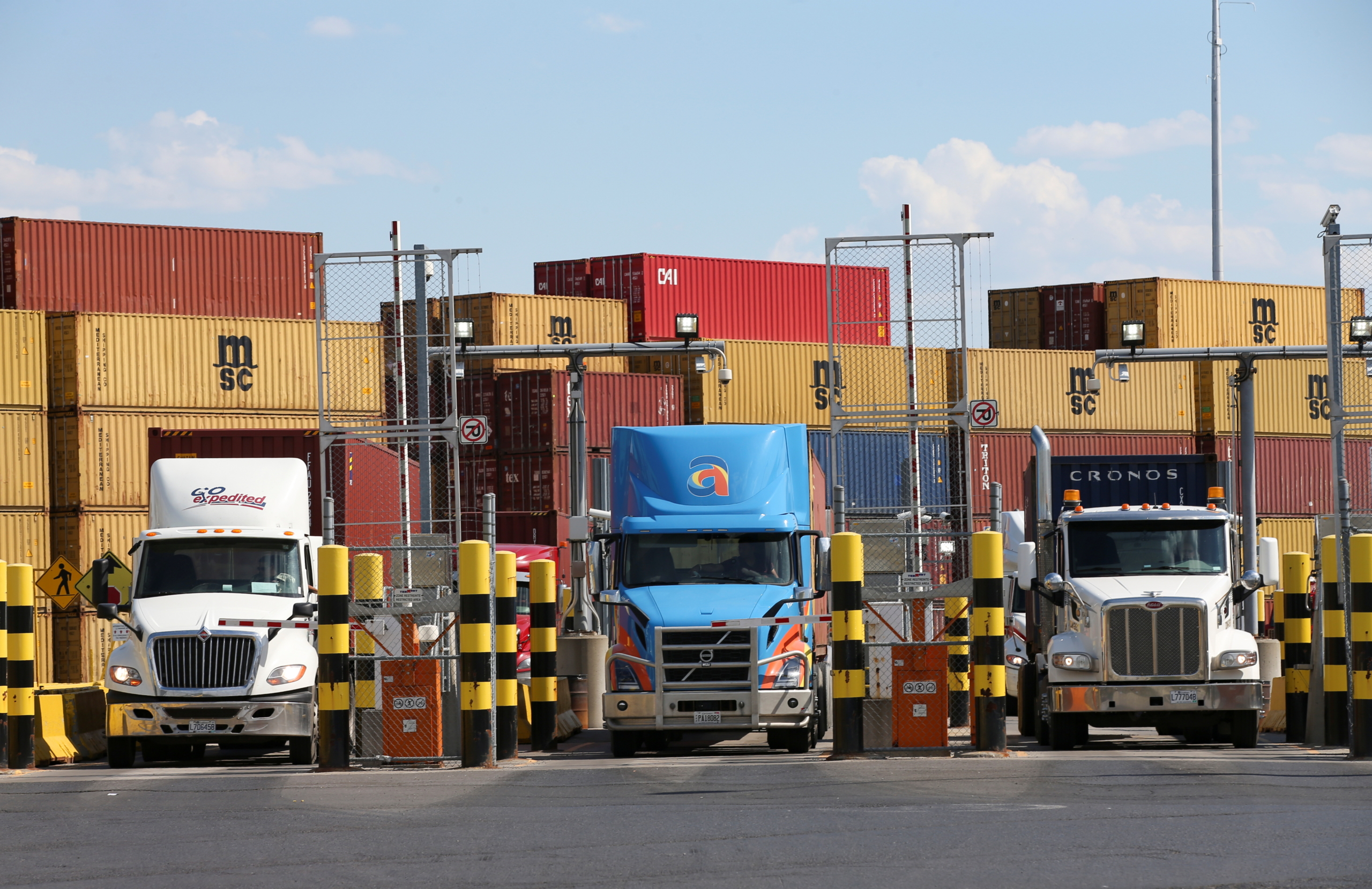
OTTAWA, April 3 (Reuters) - Canada posted a trade deficit of C$1.52 billion ($1.08 billion) in February, as exports fell and imports grew slightly, Statistics Canada said on Thursday.Due to the implementation of new software at the Canadian Border Services Agency, Statscan said that this month's data includes a greater degree of estimation.Exports were down 5.5%, on energy products, as well as motor vehicles and parts. Imports grew by 0.8%, on motor vehicles and parts, as well as industrial machinery, equipment and parts.Following are the seasonally adjusted figures in billions of Canadian dollars:Merchandise trade Feb Jan (rev) change pct Jan (prev)Balance -1.519 +3.130 n/a +3.973Exports 70.114 74.214 -5.5 74.464Imports 71.633 71.083 +0.8 70.492NOTE: Analysts surveyed by Reuters forecast a trade surplus of C$3.55 billion in February.($1=$1.4124 Canadian)(Reporting by Dale Smith; editing by Promit Mukherjee) (([email protected]))Keywords: CANADA ECONOMY/TRADESource: Reuters.com

Canada posts surprise trade deficit in February

Canada unexpectedly swung into a trade deficit in February but both exports and imports stayed at near record levels, data showed on Thursday, as businesses built inventories in the United States to try to limit the impact of tariffs.The country's trade deficit for February was at C$1.52 billion ($1.08 billion), down from a 32-month high surplus of C$3.13 billion in January, Statistics Canada said.Analysts polled by Reuters had forecast a trade surplus of C$3.55 billion in February.Canada's merchandise trade has gained momentum since November as the threat of tariffs from U.S. President Donald Trump became more real.He has imposed tariffs on imports from Canada ranging from steel and aluminum to cars and parts, but on Wednesday did not impose any reciprocal tariffs.Tariff threats have forced businesses, especially in the U.S., to build up inventories to mitigate some of the cost impact.This is reflected in Canada's trade statistics as the country's surplus with the U.S. rose for three consecutive months, reaching a record in January. Its overall surplus also jumped to record levels in January.Total exports in February dropped by 5.5% to C$70.11 billion, Statscan said, adding that despite the drop, February exports were the second highest since May 2022.Exports declined…

Canada’s services PMI tumbles to near 5-year low on tariff concerns

The downturn in Canada's services economy deepened in March as U.S. tariffs and the start of a general election campaign led to an increase in economic uncertainty that cut client spending, S&P Global's Canada services PMI data showed on Thursday.The headline Business Activity Index fell to 41.2 from 46.6 in February, posting its lowest level since June 2020, shortly after the start of the COVID-19 crisis. A reading below 50 shows a contraction in activity."Against the backdrop of an unpredictable economic and political environment, Canada's services economy experienced broadly unprecedented drops in activity and new business during March," Paul Smith, economics director at S&P Global Market Intelligence, said in a statement."Uncertainty stemmed principally from tariffs, and the unpredictable nature of their application and scope, leading to huge nervousness and a retrenchment of spending amongst businesses and consumers alike."U.S. President Donald Trump sees tariffs as a tool to raise revenue to offset his promised tax cuts and to revive a long-declining U.S. industrial base. Canada sends about 75% of its exports to the United States.The New Business Index was at 41.3, down from 45.1 in February, and the measure of new export business slumped to 33.8 from 38.7."The news of a…

EU’s tariff response should target Republican-led US states and tech firms, Austria says

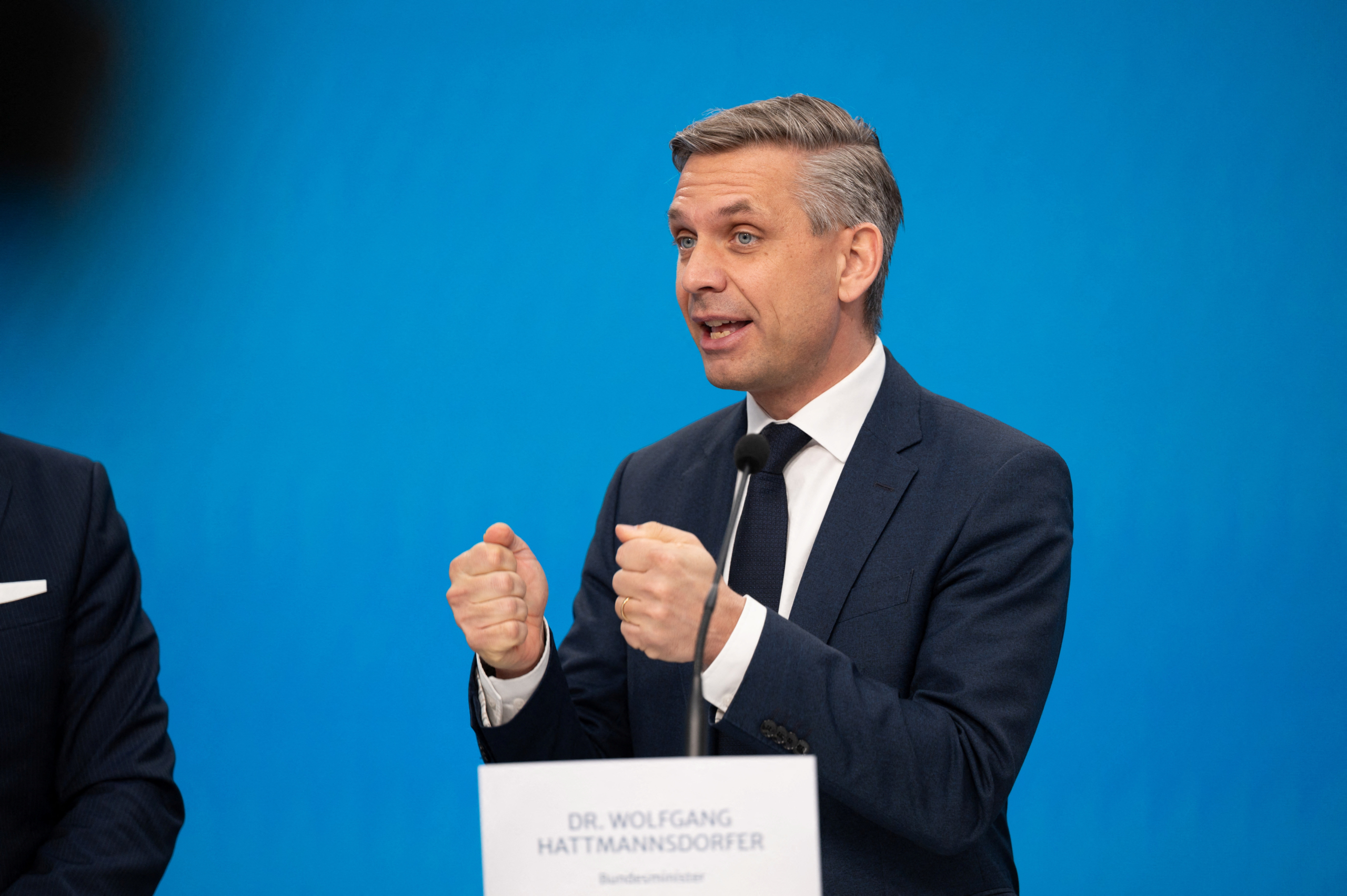
The European Union's countermeasures in response to U.S. President Donald Trump's universal tariffs should target Republican-led states and tech firms so as to force him to the negotiating table, Austria's economy minister said on Thursday."We have to hit Republican states and we have to hit Donald Trump's friends, the tech companies," Wolfgang Hattmannsdorfer, a conservative, told a news conference, adding that the EU would have to discuss digital taxation and regulation.Source: Reuters.com

U.S. crypto stocks slide as Trump’s sweeping tariffs jolt markets

U.S. crypto stocks declined on Thursday after President Donald Trump's latest round of sweeping tariffs rattled investor confidence due to rising global trade tensions, sparking a sell-off in riskier assets.Crypto exchange Coinbase Global (COIN.O) fell about 7.7%, while major bitcoin holder Strategy (MSTR.O) dropped 5.6%. Among miners, MARA Holdings (MARA.O), Riot Platforms (RIOT.O) and Bitfarms slipped about 8.3%, 8.7% and 5%, respectively.The broad losses underscore the widespread fallout of the tariffs on multiple asset classes. Bitcoin , the biggest cryptocurrency, dropped 3.9%, while ether dived 5.2%.Even though the Trump administration has signaled a willingness to embrace crypto and adopt a lighter approach to regulation, broader economic instability tied to the sector could still impact companies.Marcin Kazmierczak, chief operating officer at blockchain firm RedStone, said the declines point to a growing correlation between digital assets and macroeconomic policy shifts."But protectionist policies that potentially weaken dollar hegemony could accelerate interest in decentralized alternatives over the medium-to-long term," he said.Some analysts said the moves were less severe than other industries."The price action highlights crypto's hyper-democratic and borderless nature, allowing investors worldwide to hedge against the potential impact of macroeconomic uncertainties," said David Hernandez, crypto investment specialist at 21Shares.Crypto exchange traded-funds may also attract…

EU plans countermeasures to new US tariffs, says EU chief

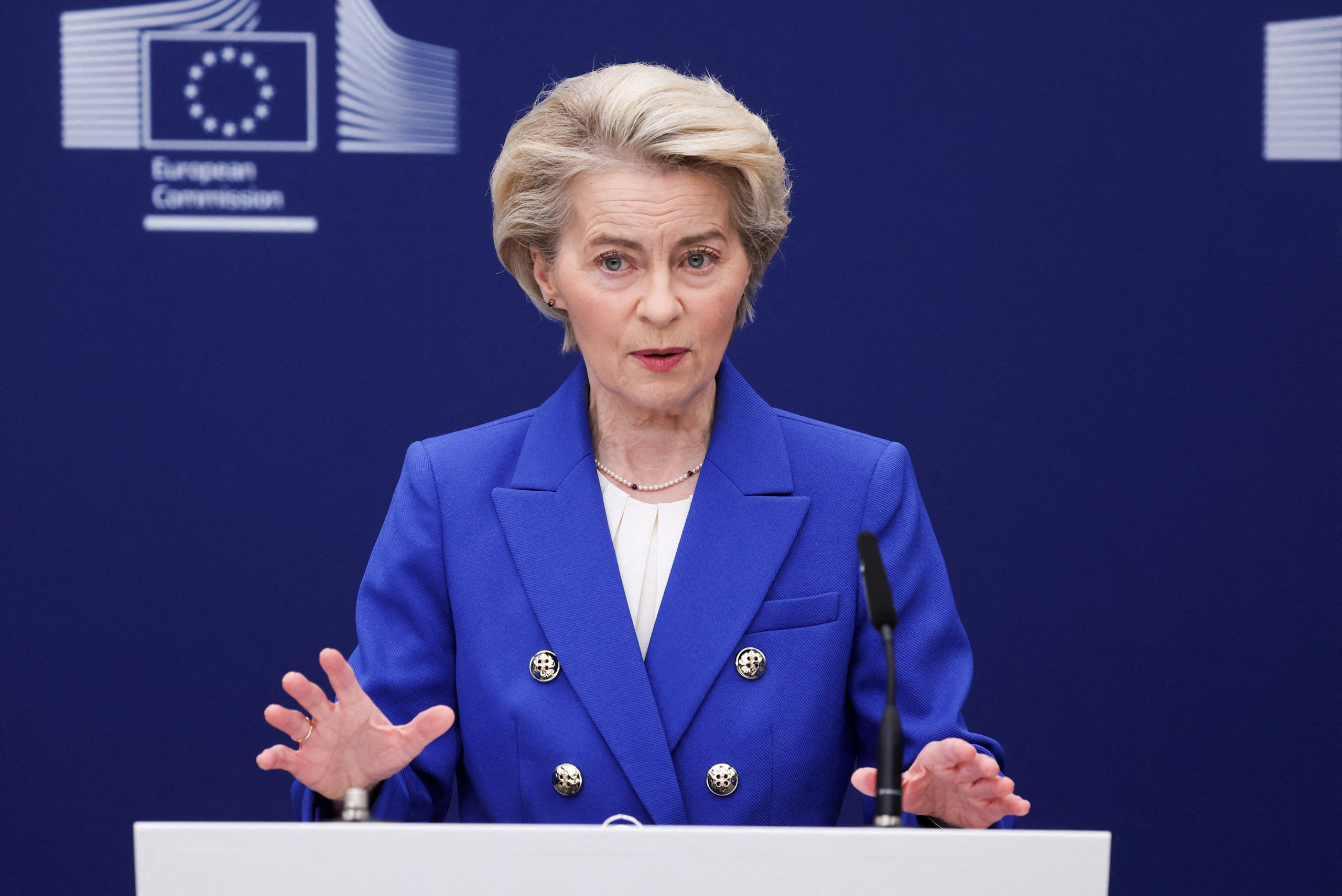
European Commission President Ursula von der Leyen described U.S. President Donald Trump's universal tariffs as a major blow to the world economy and said the European Union was prepared to respond with countermeasures if talks with Washington failed.Von der Leyen said the EU was already finalising a first package of tariffs on up to 26 billion euros ($28.4 billion) of U.S. goods for mid-April in response to U.S. steel and aluminium tariffs that took effect on March 12."And we're now preparing for further countermeasures to protect our interests and our businesses if negotiations fail," von der Leyen said in a statement she read out in the Uzbek city of Samarkand on Thursday, ahead of an EU-Central Asia partnership summit.Trump on Wednesday unveiled a 10% minimum tariff on most goods imported to the United States, with a higher 20% rate for the European Union.Von der Leyen did not provide details of future EU measures.A French government spokesperson said further measures on a broader range of goods and services would come into force at the end of April. Nothing is yet decided, she added, but services, notably digital services, are likely to be a focus.Italian Prime Minister Giorgia Meloni said late on…

Investors dive for cover as Trump tariffs skittle stocks

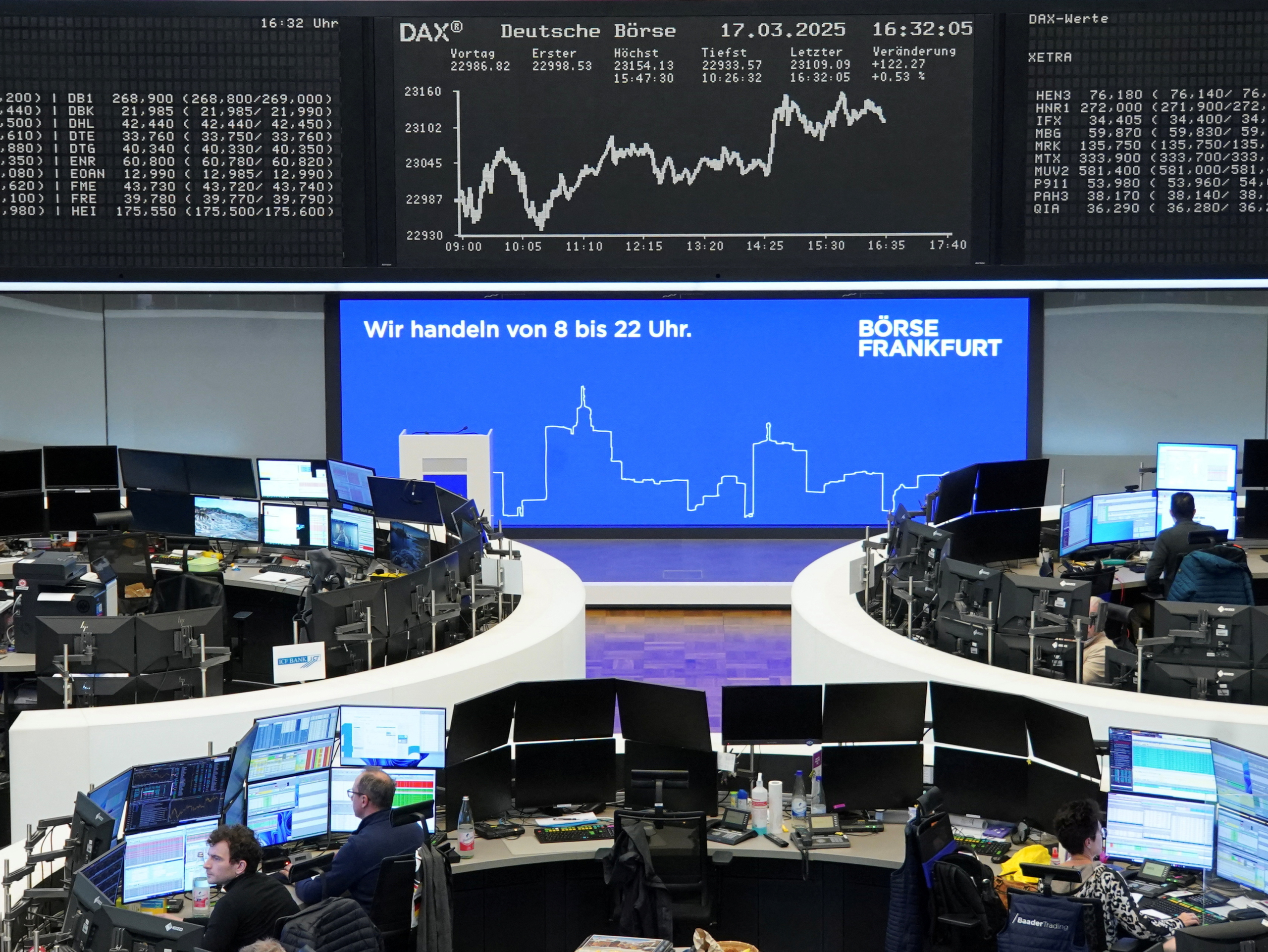
World stock markets and oil prices tumbled and investors dashed to the relative safety of bonds, gold and the yen on Thursday, as President Donald Trump’s drastic U.S. trade tariffs stirred widespread fears of a global recession.A new baseline 10% tariff on imported goods plus some eye-watering additional 'reciprocal' tariffs on countries Trump said put high trade barriers on the U.S., left traders clearly rattled.In Europe, where the 27 country EU bloc now faces a 20% reciprocal levy, bourses lurched between 1.3% and 2% lower early on as Brussels and other capitals in the region were left in uproar.Tokyo (.N225) had slumped 2.7% in Asia overnight to leave it on course for its worst week in nearly two years. Wall Street futures were down 3%, while the dollar (.DXY) dropped more that 1% to a six-month low. /FRXAnalysts at JPMorgan said the tariffs were, "significantly higher than the realistic worst-case scenario" they have been envisaging.Credit rating agency Fitch warned they were a "game-changer" for both the U.S. and global economy, while Deutsche Bank called them a "once-in-a-lifetime" event that could easily knock between 1%-1.5% off U.S. growth this year."Many countries will likely end up in a recession," Fitch's Olu Sonola…

Australia central bank warns US tariff policies could threaten global growth

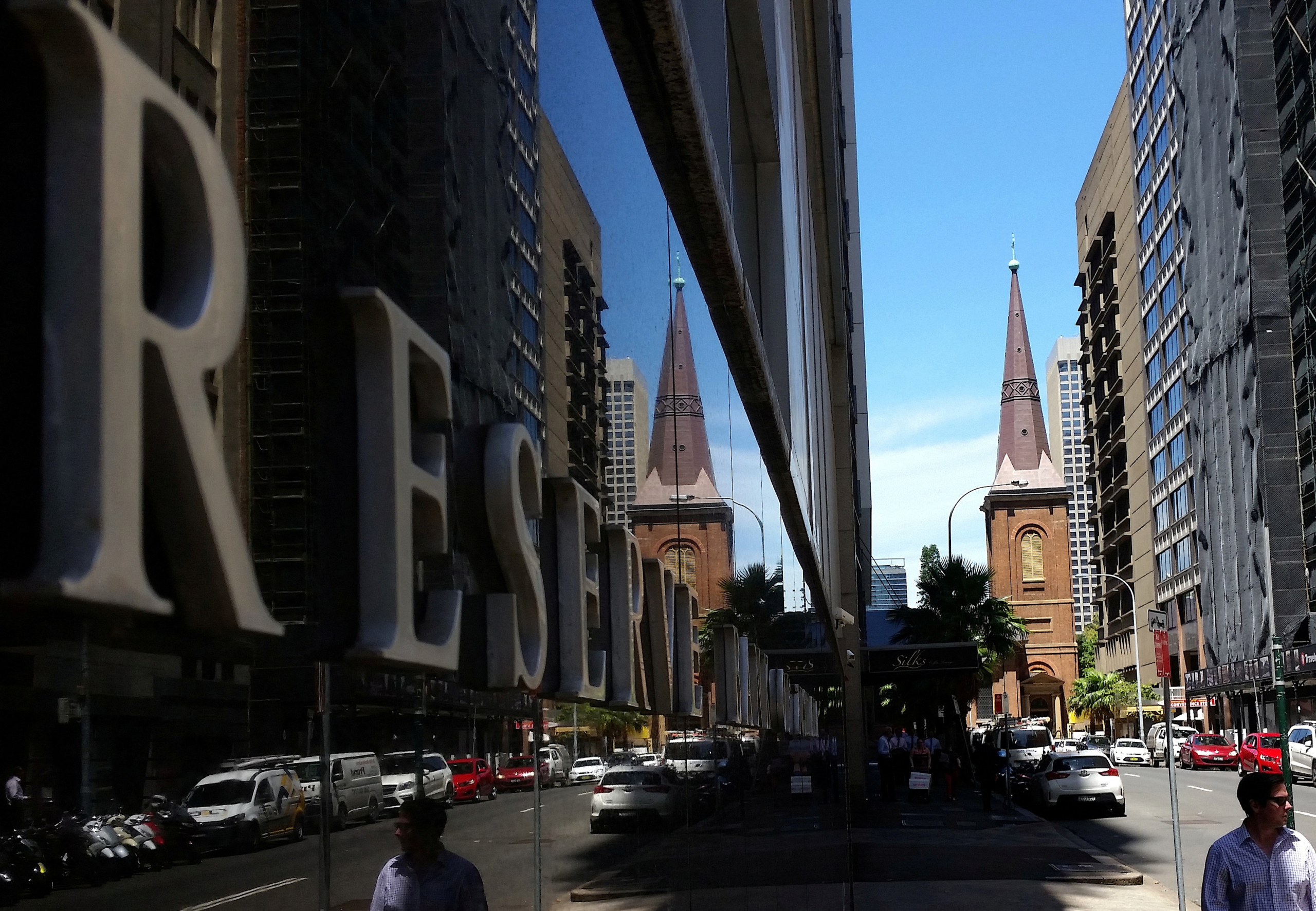
SYDNEY, April 3 (Reuters) - Australia's central bank warned on Thursday that U.S. trade policies could pose significant headwinds for the global economy, causing a sharp rise in risk aversion in markets and lifting financing costs for firms.The warning came as global share prices sank in the wake of U.S. President Donald Trump's announcement of new tariffs, prompting threats of retaliation from many trading partners.In its semi-annual Financial Stability Review, the Reserve Bank of Australia (RBA) cautioned that ongoing uncertainties with U.S. trade policies, and the reprisals they may trigger, could have a chilling effect on business and household spending."Vulnerabilities in key international financial markets could be crystalised and lead to disorderly price adjustments," said the RBA in a 63-page document."A sharp repricing of risk, from the current low levels, could abruptly increase borrowing costs for corporations and exacerbate financial challenges," it added, noting that the non-bank lending sector could be more at risk.The report was finalised before Trump's announcement that he will impose a 10% baseline tariffs on all imports to the United States, and much higher levies on some major trading partners.Australia will be subject to the minimum levy of 10%, but tariffs on its biggest export market…

Tariffs to cause ‘short-term bumps,’ Trump economic adviser tells Fox Business

U.S. Council of Economic Advisers Chair Stephen Miran told Fox Business on Wednesday that there will be short-term bumps caused by tariffs announced by Washington, while Treasury Secretary Scott Bessent urged other countries not to retaliate.WHY IT'S IMPORTANTPresident Donald Trump said on Wednesday that he would impose a 10% baseline tariff on all imports to the U.S. and higher duties on dozens of other countries, including some of the United States' biggest trading partners, deepening a trade war that has rattled global markets and bewildered U.S. allies.Some trading partners are expected to respond with countermeasures of their own that could lead to dramatically higher prices for products in the U.S. and in other parts of the world.KEY QUOTESMiran was asked how concerned he was about short-term price increases."Are there going to be short-term bumps as a result? Absolutely," Miran told Fox Business Network's "Kudlow" program."But what the president is focused on is a long-term transformation and improvement in the durability, sustainability and fairness of the American economy with respect to the rest of the world," Miran added.Bessent urged other countries to not retaliate against U.S. measures. "Let's see where this goes, because if you retaliate, that's how we get escalation,"…

Trump tariffs: List of global responses and countermeasures

Governments around the world pledged counter measures on the U.S. after President Donald Trump unveiled on Wednesday a new baseline 10% tariff on goods from all countries plus reciprocal tariffs on those that his administration says have high barriers to U.S. imports.Here is what some governments said about what they would - and would not - do in response.CHINAChina's commerce ministry said Beijing "firmly opposes" the reciprocal tariffs and "will take countermeasures to safeguard its own rights and interests," after Trump imposed a 34% reciprocal tariff on the country.JAPANJapanese Trade Minister Yoji Muto called the reciprocal tariffs "extremely regrettable" and said Tokyo would urge the U.S. to exempt Japan from tariff measures. Tokyo faces a 24% reciprocal tariff.SOUTH KOREAActing President Han Duck-soo ordered emergency support measures for affected businesses, including automobiles, the industry ministry said, after Trump's tariff announcement included a 25% rate on South Korea.CANADAPrime Minister Mark Carney said Canada was "going to fight these tariffs with countermeasures" and would "act with purpose and with force."Goods from Canada and Mexico are not currently subject to reciprocal tariffs because Trump's prior 25% fentanyl-related duties remain in place on their goods, along with 10% for Canadian energy and potash. A tariff…