Stocks skid, bonds rally as tariffs stoke recession risk

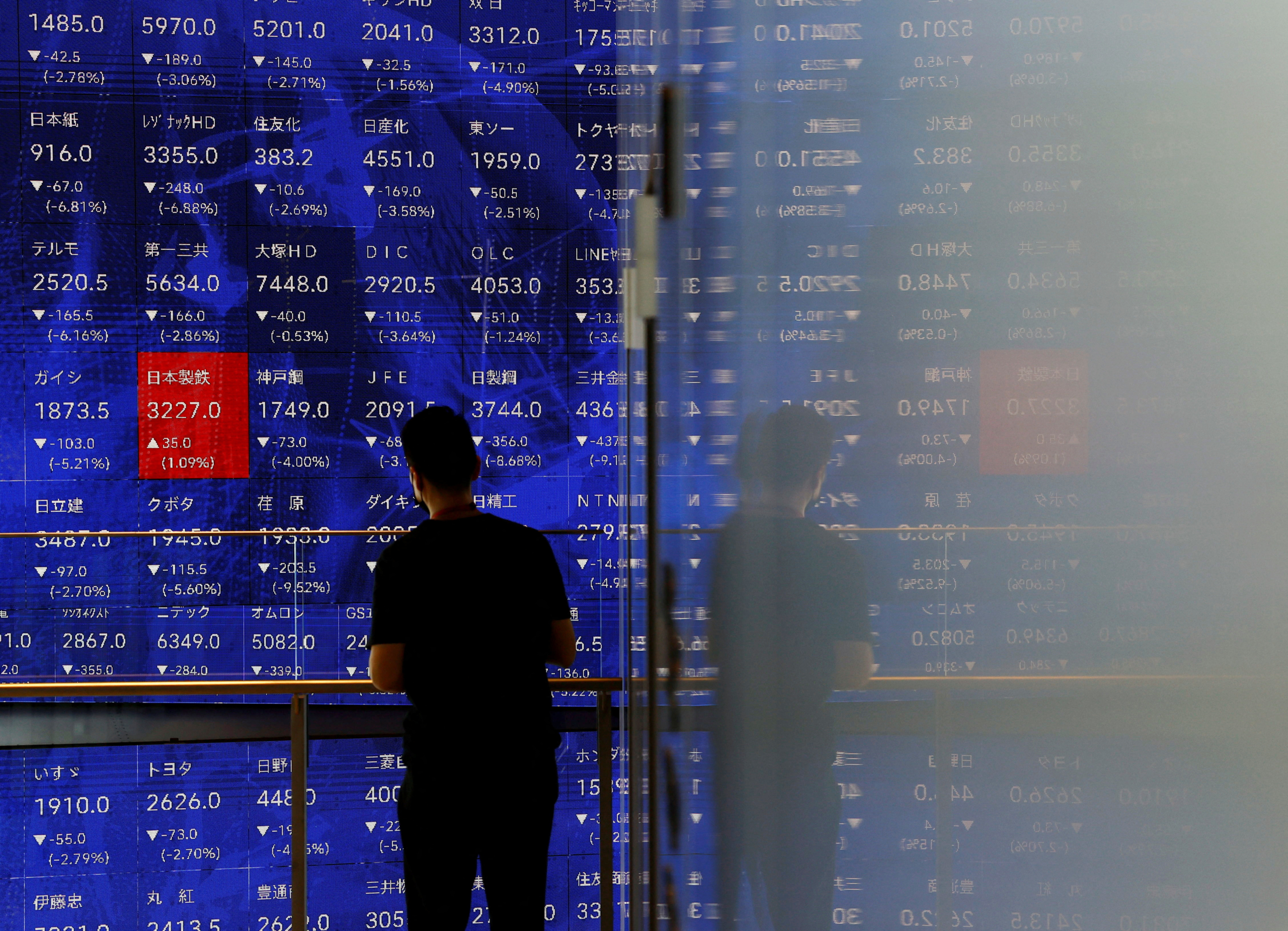
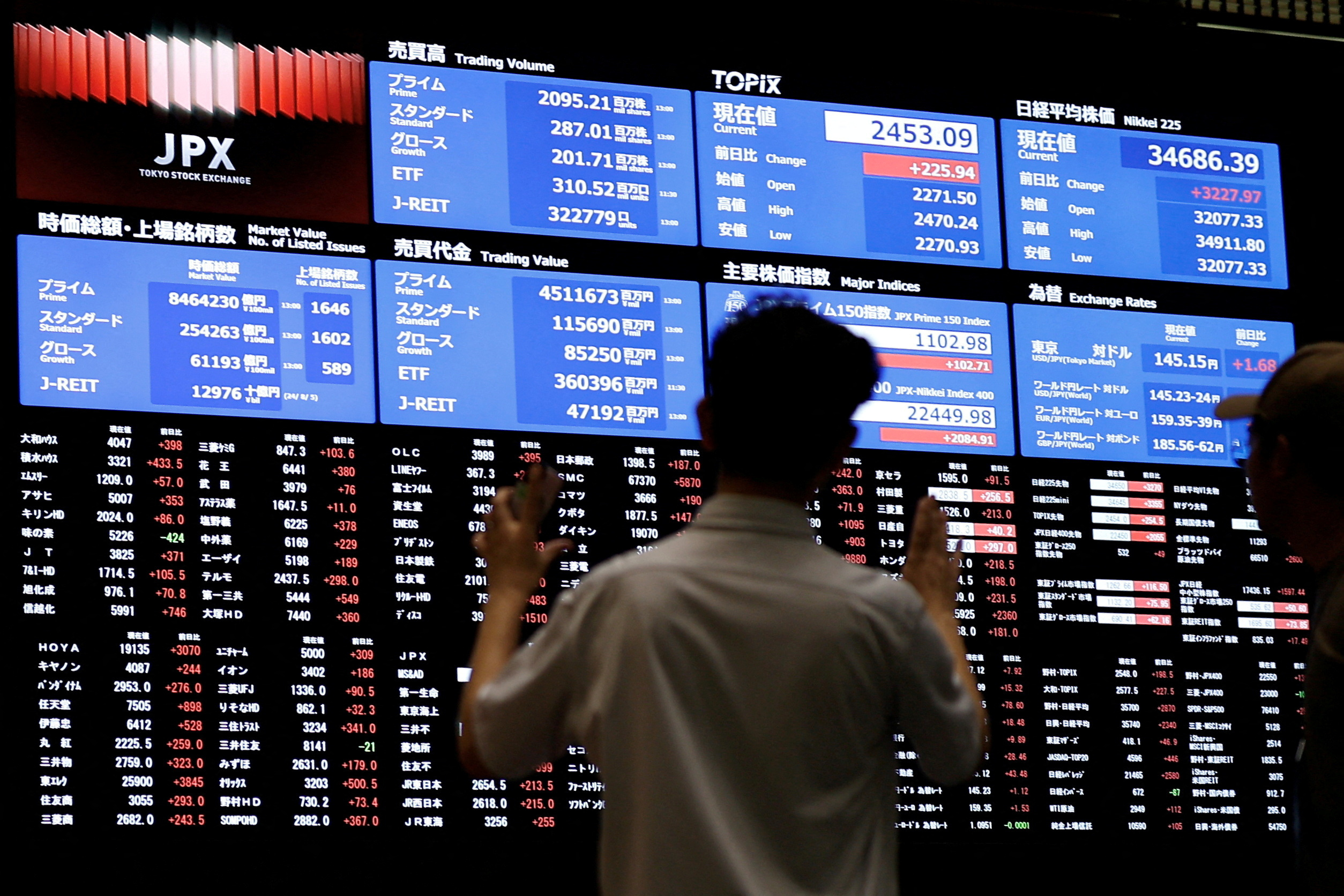
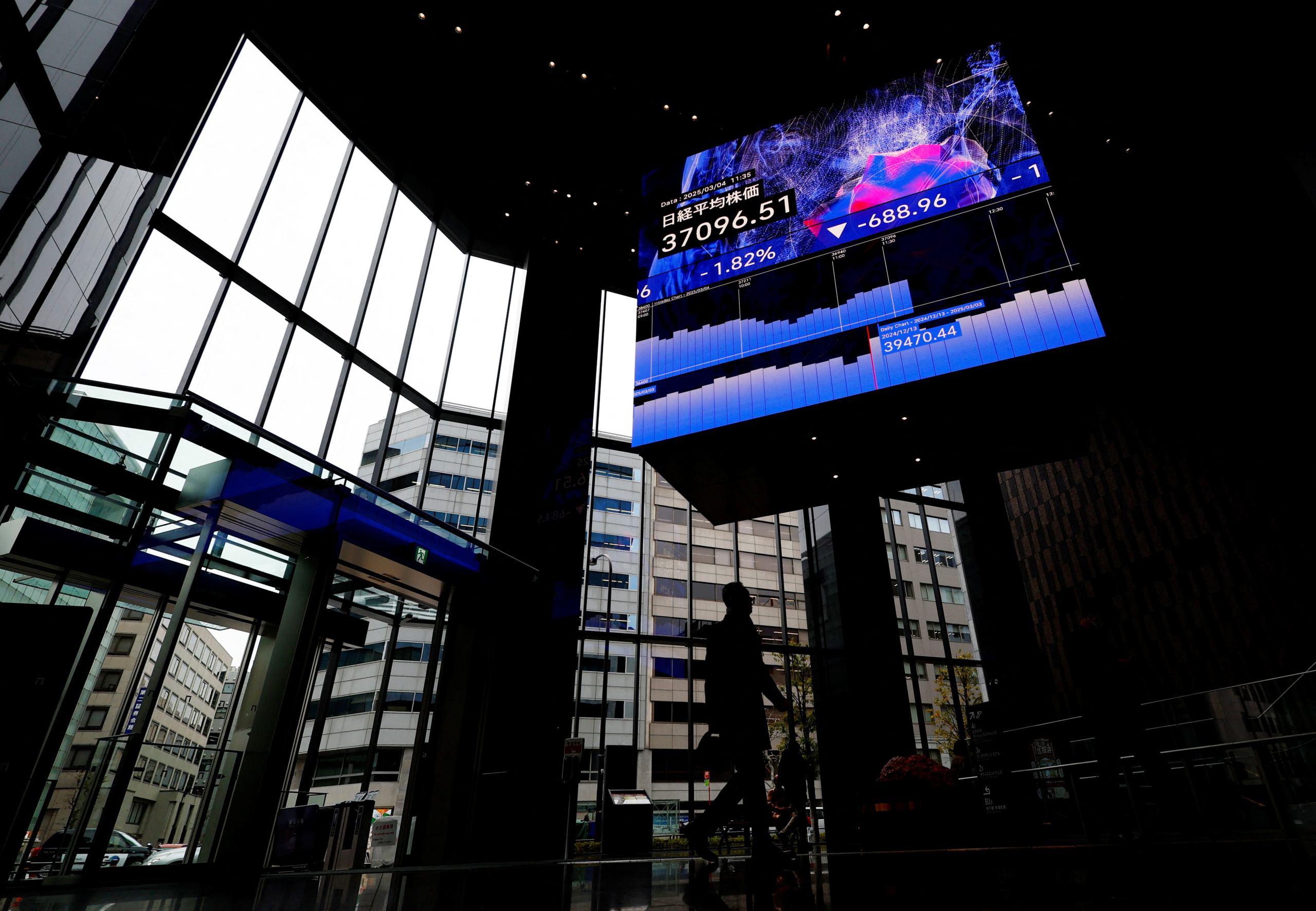
World share markets were in a tailspin on Monday after U.S. President Donald Trump said tariffs would essentially cover all countries, stoking worries a global trade war could lead to recession.Trump's comments to reporters on Air Force One seemed to dash hopes the levies would be more limited. Trump is due to receive tariff recommendations on Tuesday and announce initial levels on Wednesday, followed by auto tariffs the day after.Seeking any safe harbour from the trade storm, investors piled into sovereign bonds and the Japanese yen, while lifting gold prices to another all-time high."For the first time in years, we find ourselves genuinely worried about risk assets," said Ajay Rajadhyaksha, head of rates markets at Barclays."If policy chaos and trade wars worsen much further, a recession is now a realistic risk across major economies," he added. "For the first time in many quarters, we favour core fixed income over global equities."Japan's Nikkei (.N225) led the rout in Asia, sinking 3.6% to a six-month low as automaker stocks continued to suffer fallout from Trump's talk of 25% tariffs on imported cars.MSCI's broadest index of Asia-Pacific shares outside Japan (.MIAPJ0000PUS) shed 1.2% and South Korea (.KS11) 2.5%.Chinese blue chips (.CSI300) dipped 0.3%…
Australia forecasts hit to resource, energy export earnings from lower US dollar

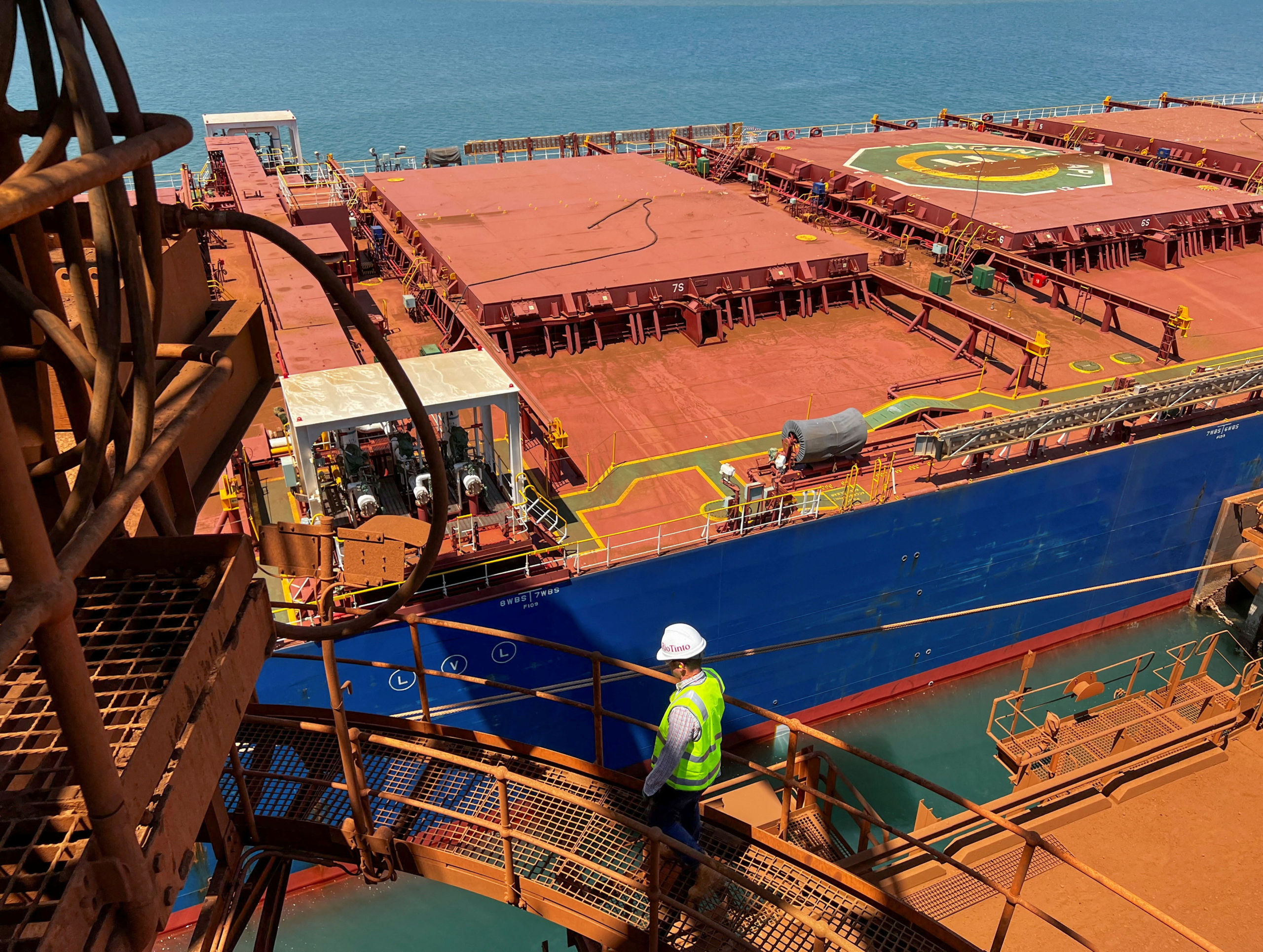
Australia's mining and energy export earnings are expected to fall 6% in the financial year through June, with prices of its key iron ore shipments declining, the government said on Monday.Profits are forecast fall to A$387 billion ($243 billion) from A$415 billion the previous year due to "the impact of lower U.S. dollar prices for our resource and energy exports", the Department of Industry said in its quarterly resources and energy outlook.The forecast decline was smaller than the 10% drop predicted in December."Further modest falls in earnings are likely over the five-year outlook," steadying at A$343 billion near the end of that period, the report said.The value of Australia's energy exports was returning to moderate levels after experiencing "extremely high levels" in 2021-22 and 2022-23, it said."The high prices set during that period - due to the COVID-19 pandemic, bad weather and the fallout from Russia’s invasion of Ukraine - encouraged a rise in energy supply."Iron ore will remain the mainstay of Australia's commodity exports, the report said, although it forecast prices of the steelmaking ingredient would fall on strong growth in global supply and lower demand from China.Iron ore exports to China from Australia's Port Hedland, a strong indicator…

TSX hits one-week low as US inflation data rattles markets

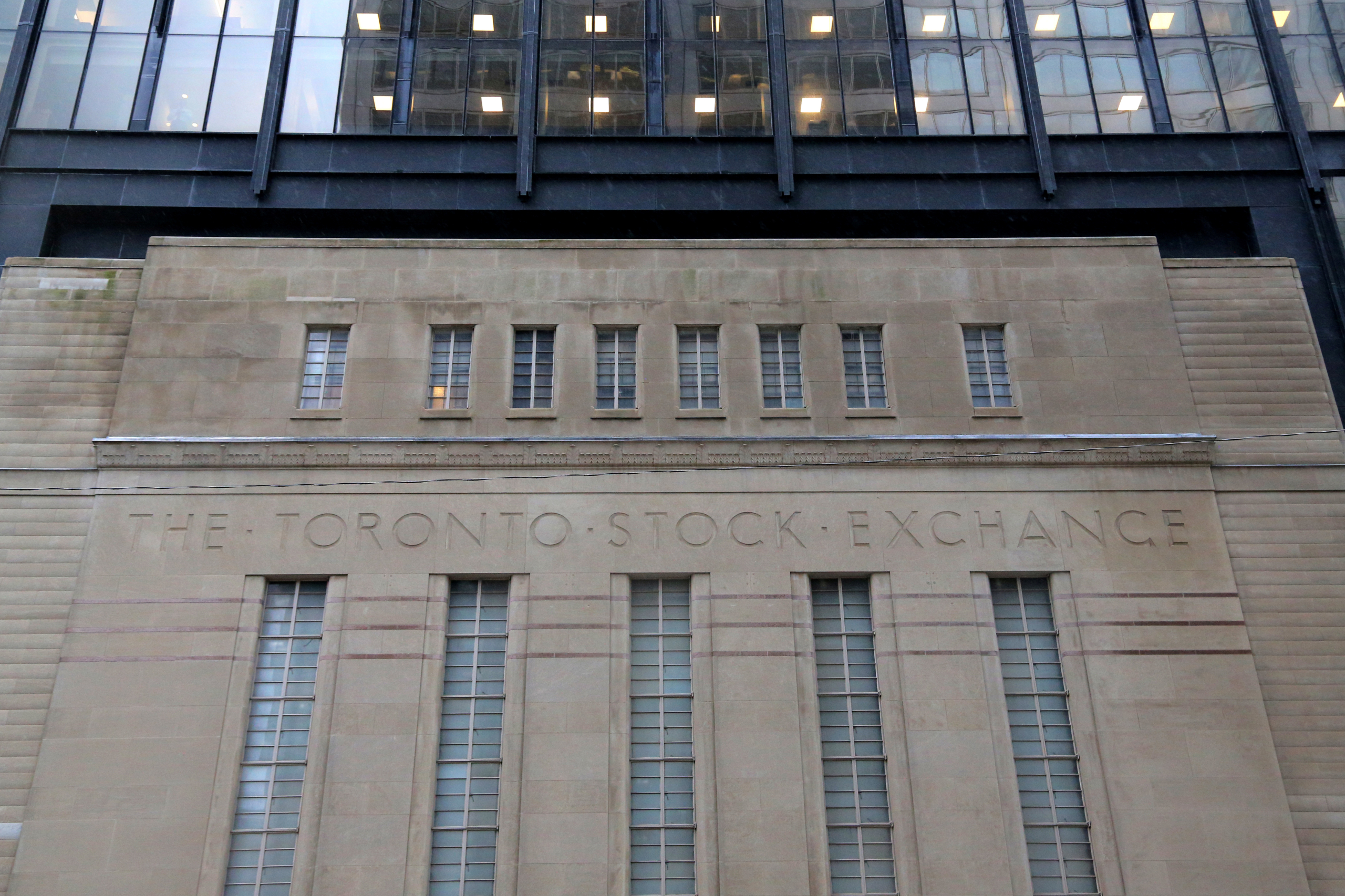
Canadian stocks fell on Friday as U.S. inflation figures revealed rising price pressures, exacerbating investor worries already heightened by tariffs.Toronto Stock Exchange's S&P/TSX composite index (.GSPTSE) was down 1% at 24,900.84, its lowest level since March 21, and set for a weekly loss.The U.S. Personal Consumption Expenditures price index rose on Friday as economists polled by Reuters had expected, fueling concerns that President Donald Trump's tariff policies could further stoke inflation.In the latest tariff salvo on Wednesday, Trump announced a 25% tax on imported vehicles. He is also set to unveil reciprocal tariffs on countries on April 2.The U.S. Federal Reserve tracks the PCE price index for its inflation target and the data could impact the central bank's interest rate decisions moving ahead."The third consecutive above-target gain in core PCE prices in February, of 0.37% m/m, reinforces our view that the Fed is unlikely to cut interest rates this year," said Stephen Brown, deputy chief North America economist at Capital Economics.On TSX, information technology (.SPTTTK) fell for the third straight session, down 2% — the most among all sectors. Blockchain farm operator Bitfarms (BITF.TO) dropped nearly 3%, as bitcoin fell 3.7%.Consumer discretionary (.GSPTTCD) fell 1.4%; Restaurant Brand International (QSR.TO) declined…

Trump’s erratic tariff policy shakes confidence in Europe’s market bull run

Investors are calling time on a rally in European stocks and the euro after a blistering first quarter that many fear has exaggerated how fast a planned public spending boom can revive the region's still sluggish economy and shore it up against trade war risks.Big asset managers including Amundi, Europe's largest, said they had held back or reduced bets on the euro or trimmed bullish European equity trades, as U.S. President Donald Trump prepares to announce reciprocal trade tariffs on April 2.Many said that the so-called Europhoria trade that propelled German shares (.GDAXI) to their best quarter since 2022 and the euro to a five-month high earlier in March had already factored in most foreseeable economic stimulus gains."If the Trump administration decides to push trade partners towards a trade war it will be bearish for European equities," Edmond de Rothschild Asset Management CIO Benjamin Melman said, adding he did not expect outsized gains for European stocks from here.Global markets were roiled on Thursday following Trump's announcement of a 25% levy on car imports, with European equities (.STOXX) down as much as 2% as billions of euros were wiped off German automakers' shares.Pictet Asset Management's chief strategist, Luca Paolini, said more…

Asia stocks slide, gold hits record high on US tariffs

Asian stocks fell on Friday with heavy selling in South Korea and Japan while safe-haven gold hit a record high as the latest tariff salvo from U.S. President Donald Trump stoked investor worries of an all-out trade war.Trump moved ahead with a 25% tariff on auto imports due to kick in next week, drawing fierce criticism from politicians and industry executives across the globe and a warning from global car makers that price hikes were likely on the way.The widening of the global trade war that Trump kicked off upon regaining the White House has jolted the markets, with shares of global automakers hit particularly hard.In Asia, Japan's Nikkei (.N225) fell more than 2% led by sharp drop in Toyota (7203.T) and Honda (7267.T). South Korea's benchmark index (.KS11) touched a two-week low and was last down 1.3%. The auto industry is a pillar of both countries' economies.Hong Kong's Hang Seng index (.HSI) was 0.6% higher, largely shrugging off the auto tariff threat. Trump said he would be willing to reduce tariffs on China to get a deal done with TikTok's Chinese parent ByteDance to sell the popular app."U.S. tariffs on auto imports do not come as a huge surprise,…

Auto stocks slide as US tariffs send ‘fatal signal’ for trade

Shares in some of the world's largest auto companies tumbled on Thursday after President Donald Trump put a wall of tariffs around the U.S. vehicle sector, adding to worries about the hit to global trade and to industry profits.Trump said 25% tariffs on imported cars and light trucks would begin on April 3, and although the duties have been well flagged, shares in automakers from Frankfurt to Seoul tumbled.As European markets opened, shares in Volkswagen , Europe's top car maker, dropped 3.4%, while those in luxury brands BMW (BMWG.DE) and Mercedes-Benz (MBGn.DE) fell 4%.In Japan overnight, some $16.5 billion was wiped off transport stocks (.ITEQP.T), according to LSEG data, as shares in Toyota (7203.T) fell 2.7%, Honda (7267.T) 3% and Nissan (7201.T) 2.2%. Hyundai Motor (005380.KS) and Kia (000270.KS) in South Korea dropped about 4% each.Volkswagen is in the frame since 43% of its U.S. sales are sourced from Mexico, S&P Global Mobility estimates, as is Chrysler owner Stellantis (STLAM.MI), which along with Ford is one of the top producers of U.S. vehicles based in Mexico.The head of Germany's car industry association said the tariffs are a "fatal signal" for global trade."The risk of a global trade conflict - with…

Trump says larger tariffs could be imposed on Canada, EU if they cause US ‘economic harm’

U.S. President Donald Trump said on Thursday that larger tariffs could be placed on the European Union and Canada if they both work together "to do economic harm to the USA.""If the European Union works with Canada in order to do economic harm to the USA, large scale tariffs, far larger than currently planned, will be placed on them both in order to protect the best friend that each of those two countries has ever had," he said in a post on Truth Social.On Wednesday, Trump unveiled a 25% tariff on imported vehicles, expanding a global trade war and prompting criticism and threats of retaliation from affected U.S. allies.European Commission President Ursula von der Leyen described the move as "bad for businesses, worse for consumers," while Canadian Prime Minister Mark Carney labeled the tariffs a "direct attack" on Canadian workers and said retaliatory measures were being considered.The new levies on cars and light trucks will take effect on April 3, the day after Trump plans to announce reciprocal tariffs aimed at the countries responsible for the bulk of the U.S. trade deficit. They come on top of duties already introduced on steel and aluminum, and on goods from Mexico, Canada…

Brazil’s Lula warns Trump’s tariffs risk inflation, vows WTO challenge on steel

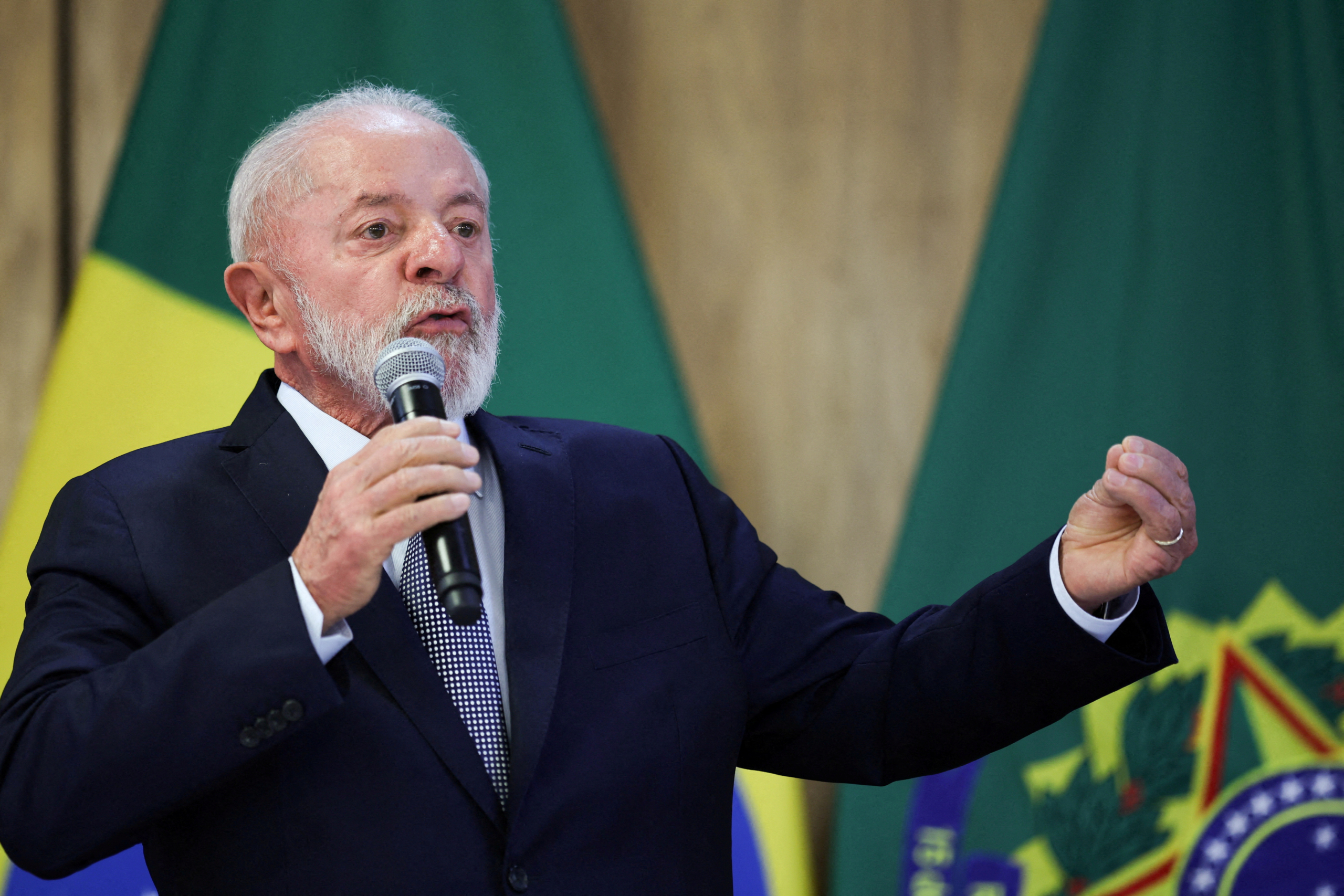
Brazil's President Luiz Inacio Lula da Silva said U.S. President Donald Trump risked damaging the U.S. economy with additional tariffs and vowed to lodge a complaint with the World Trade Organization (WTO) over a trade levy on Brazilian steel."It will raise the prices of goods and could lead to inflation that he hasn't yet realised. Protectionism doesn't help any country in the world," Lula said on Thursday at a press conference in Tokyo.Trump on Wednesday unveiled a 25% tariff on imported cars and light trucks starting next week, widening the global trade war he began after becoming president in January.On March 12, his administration also imposed a 25% tariff on all steel and aluminum from Brazil, the second-largest exporter to the American market after Canada. The Brazilian government has so far failed to renegotiate a return to a policy of annual tariff-free export quotas."We have two decisions to make. One is to appeal to the World Trade Organization, which we will do, and the other is to impose higher tariffs on American products. We can’t just stay quiet," Lula said in Tokyo, where he met Japanese Prime Minister Shigeru Ishiba on Wednesday for talks aimed at booster economic and trade…

Stocks skid, dollar nears 3-week top as Trump announces auto tariffs

Asian shares skidded with Wall Street on Thursday while the dollar hovered near a three-week high after U.S. President Donald Trump announced new tariffs on all auto imports, ratcheting up a global trade war that risks fuelling inflation.Japan's Nikkei (.N225) fell 1.2%, led by heavy losses in automakers. Toyota Motor (7203.T) shares tumbled 3.4%, and both Mazda Motor (7261.T) and Subaru (7270.T) plunged about 6%.South Korea's KOSPI (.KS11) dropped 0.7%. Japanese and South Korean automakers have a big presence in the U.S. market.Shares of Chinese EV makers also fell, with Nio (9866.HK) down 2.8% and Xpeng (9868.HK) 1.1% lower. China's blue chip index (.CSI300) and Hong Kong's Hang Seng were both down 0.3%.Trump late on Wednesday announced plans for long-promised 25% tariffs on automotive imports that are set to go into effect on April 2. However, he said planned reciprocal tariffs on all countries will be "lenient".On China, he said he may give Beijing some reduction in tariffs to get a deal done to sell TikTok.After the announcement, U.S. automakers lost ground after the bell. General Motors (GM.N) slumped 6%, while shares in Ford (F.N) fell almost 5%.Nasdaq futures dropped 0.2% and S&P 500 futures fell 0.1% in Asia. Wall…

Gulf bourses end mixed as investors await clarity on US tariffs

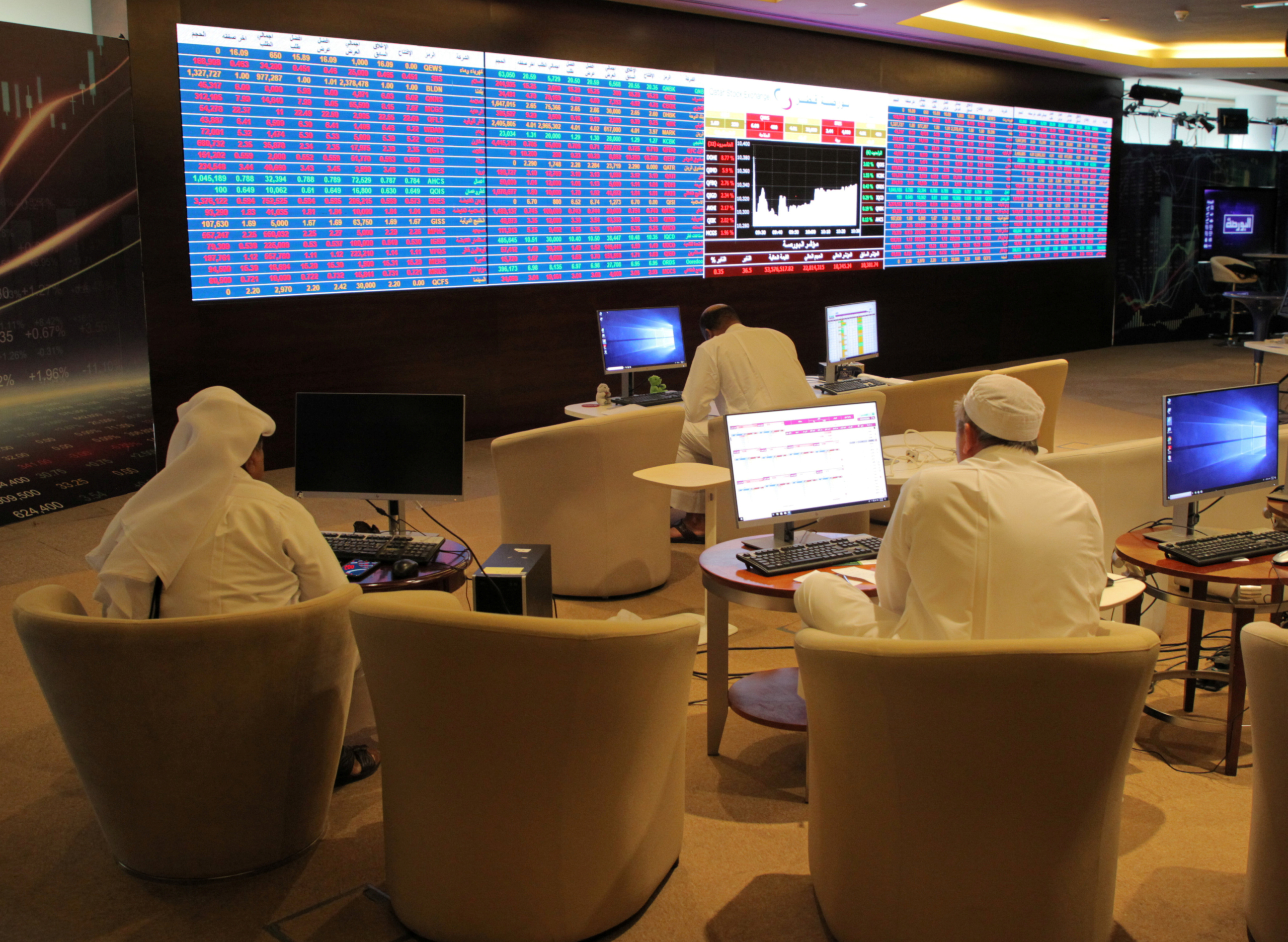
Major Gulf stock markets were mixed on Wednesday as investors waited for clarity on U.S. President Donald Trump's trade policy ahead of looming tariffs.Traders are hoping there may be room for flexibility around recently-announced trade policies, after Trump hinted earlier this week that not all tariffs would kick in on April 2, and that some countries may be exempt.Oil prices - a catalyst for the Gulf's financial markets - initially rose on U.S. plans for additional tariffs on buyers of Venezuelan oil and gas, and a larger-than-expected drop in U.S. crude inventories.But the impact was later mitigated by the U.S.-brokered maritime security and energy truce between Russia and Ukraine.Saudi Arabia's benchmark index (.TASI) advanced 2.3%, led by a 3% rise in Al Rajhi Bank (1120.SE) and a 2.1% increase in oil giant Saudi Aramco (2222.SE)."The Saudi bourse exhibited strong positive performance, showing improved sentiment after a period of uncertainty," Joseph Dahrieh, managing principal at TickmillAll, said, adding that all sectors traded positively on Wednesday."The energy sector extended its rebound, benefiting from the recent two-week oil price recovery, with Aramco also posting gains," he said.In Qatar, the index (.QSI) added 0.3%, helped by a 0.3% rise in the Gulf's biggest lender…