WTO slashes 2025 trade growth forecast, warns of deeper slump

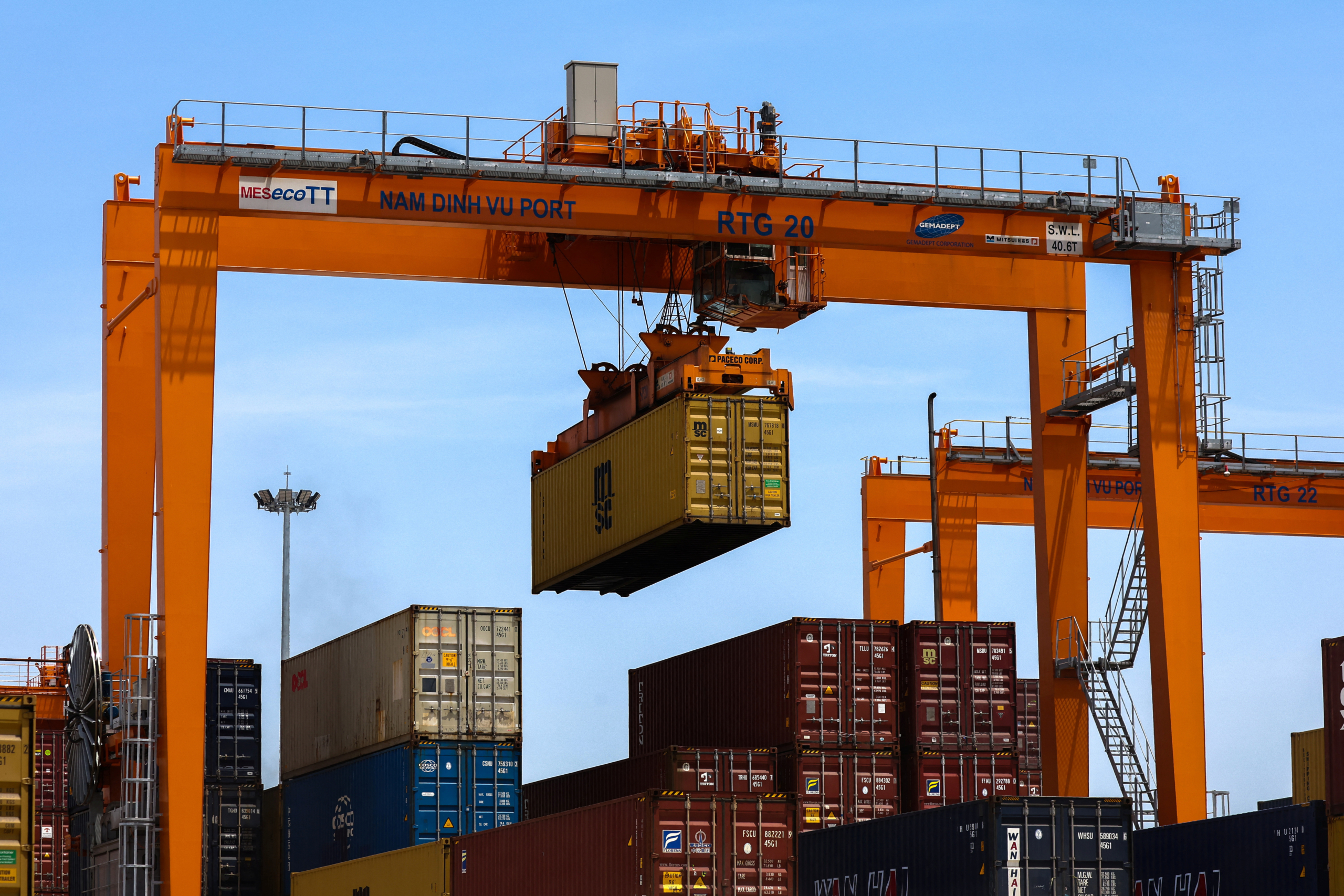
The World Trade Organization sharply cut its forecast for global merchandise trade from solid growth to a decline on Wednesday, saying further U.S. tariffs and spillover effects could lead to the heaviest slump since the height of the COVID pandemic.The WTO said it expected trade in goods to fall by 0.2% this year, down from its expectation in October of 3.0% expansion. It said its new estimate was based on measures in place at the start of this week."I'm very concerned, the contraction in global merchandise trade growth is of big concern," WTO Director General Ngozi Okonjo-Iweala told reporters in Geneva.U.S. President Donald Trump imposed extra duties on steel and car imports as well as more sweeping global tariffs before unexpectedly pausing higher duties on a dozen economies. His trade war with China has also intensified with tit-for-tat exchanges pushing levies on each other's imports beyond 100%.The WTO said that, if Trump reintroduced the full rates of his broader tariffs that would reduce goods trade growth by 0.6 percentage points, with another 0.8 point cut due to spillover effects beyond U.S.-linked trade.Taken together, this would lead to a 1.5% decline, the steepest drop since 2020."If we have contraction in global…
Bank of Canada says US tariffs could trigger deep recession

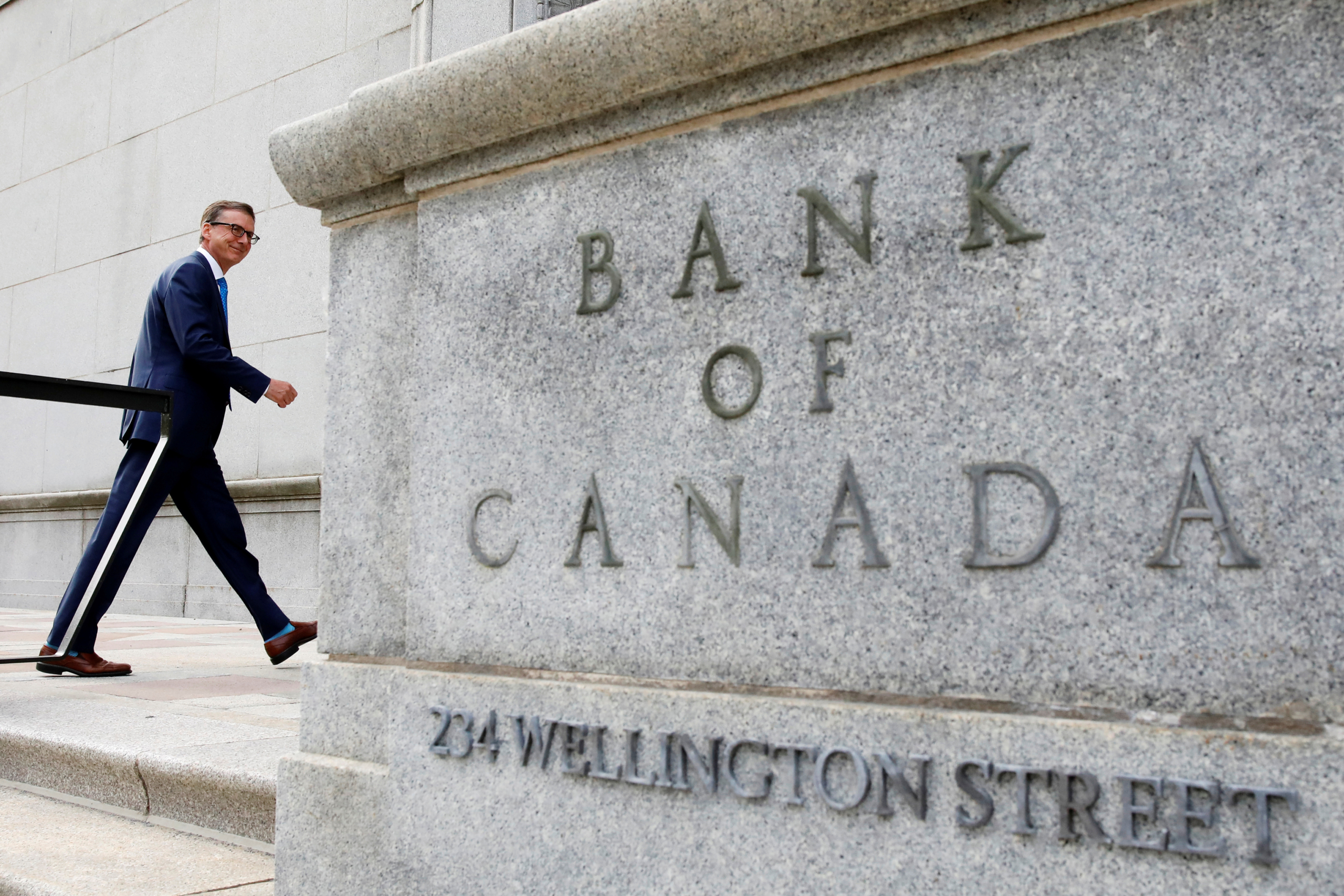
OTTAWA, April 16 (Reuters) - If U.S. tariffs trigger a global trade war, inflation in Canada would spike and the country would enter a deep recession, according to a Bank of Canada scenario released on Wednesday.Citing the high level of uncertainty, the central bank did not issue its regular quarterly economic forecasts. Instead, it provided two scenarios as to what might happen.In the first scenario, most tariffs are negotiated away, and Canadian and global growth weaken temporarily. Canadian inflation falls to 1.5% for a year and then returns to the bank's 2% target.In the second scenario, the tariffs spark a long-lasting global trade war. Canada enters a significant recession, inflation spikes above 3% in mid-2026 before returning to 2%.The bank, which stressed that many other scenarios were possible, estimated annualized first quarter GDP was 1.8%, down from the 2.0% it forecast in late January.(Reporting by David Ljunggren, editing by Promit Mukherjee)((Reuters Ottawa bureau; [email protected]))Keywords: CANADA CENBANK/FORECASTSSource: Reuters.com

Shares fall in Asia as Nvidia curbs fan worries, gold hits record

Shares fell in Asia on Wednesday as AI darling Nvidia (NVDA.O) took a hit from U.S. curbs on chip sales to China, highlighting the damage to come in a tit-for-tat global trade war, while gold hit a record and the dollar stayed under pressure.Data showed that China's economy grew 5.4% in the first quarter from a year earlier, beating expectations, although trade tensions with the U.S. have clouded the outlook.Overnight, President Donald Trump ordered a probe into potential new tariffs on all U.S. critical minerals imports, on top of reviews into pharmaceutical and chip imports. Beijing is continuing to play hardball, having reportedly ordered airlines to suspend deliveries of Boeing aircraft (BA.N).Treasury yields were steady ahead of a key speech from Federal Reserve Chair Jerome Powell later in the day. Fed Governor Christopher Waller already sounded dovish and the expectation is Powell will echo the recent messages from his colleagues amid the tariff chaos.S&P 500 futures fell 0.8% while Nasdaq futures slumped 1.4%. That was due to a 6% plunge in Nvidia shares in after-hours trading, which erased a total of $160 billion in its market cap.The chip giant is facing $5.5 billion in charges after the U.S. government limited…

European rating agency Scope sends US downgrade warning

European credit ratings agency Scope has warned that the United States could be downgraded if a lengthy trade war erodes long-term trust in the dollar, or if President Donald Trump implements even more extreme measures such as capital controls.The fallout from Trump's trade tariffs has included the dollar's sharpest year-to-date fall against other major currencies in more than 50 years, while credit default swap (CDS) markets, which investors use to hedge risk, are pricing in as many as five U.S. rating downgrades.Berlin-based Scope, which is used alongside S&P Global, Moody's and Fitch by the European Central Bank to judge creditworthiness, said one of the most exposed countries to the trade war was the U.S. itself, particularly in more extreme scenarios.Those include a protracted tariff fight and/or the introduction of U.S. capital controls - or taxes on foreign investment - which could then lead to "viable alternatives" to the dollar as the world's dominant currency."If doubts about the exceptional status of the dollar were to increase, this would be very credit negative for the U.S.," Scope's head of sovereign ratings, Alvise Lennkh-Yunus, said in a report published on Tuesday.It is the first agency to deliver such a stark warning about a…

Markets volatile but no huge drop in short-term liquidity, BOJ official says

Global markets are experiencing volatility from uncertainty over U.S. tariff policy but not seeing a huge decline in short-term liquidity, a senior Bank of Japan official said on Tuesday."Unlike during the global financial crisis, we're not seeing a major decline in short-term liquidity. But the BOJ will continue to scrutinise market developments, and their impact on global and domestic economies," Akio Okuno, head of the central bank's monetary affairs department, told parliament.Global stock, currency and bond markets have whipsawed due to President Donald Trump's back-and-forth comments on tariffs, with some analysts seeing the recent sharp declines in U.S. Treasuries and the dollar as a sign markets are losing confidence in the safe-have status of U.S. assets.Japan, for its part, is gearing up for trade negotiations with the United States this week that will likely touch on the thorny topic of currency policy, with some officials privately bracing for Washington to call on Tokyo to prop up the yen.Finance Minister Katsunobu Kato said Japan and the U.S. share the view that markets should set exchange rates, and that excessive and disorderly currency moves have adverse effects on the economy and financial stability."I hope to continue dialogue with the U.S. based on…

Asia shares rise, bonds hold steady on some tariff reprieve

Asia shares edged slightly higher on Tuesday, helped by gains in auto companies after U.S. President Donald Trump suggested he might grant exemptions on auto-related levies already in place.U.S. Treasury bonds steadied having staged a recovery overnight following last week's historic selloff, while the dollar continued to fall out of favour with investors.Trump said on Monday he was considering a modification to the 25% tariffs imposed on foreign auto and auto parts imports from Mexico, Canada and other places. Those tariffs could raise the costs of a car by thousands of dollars, and Trump said car companies "need a little bit of time because they're going to make 'em here."That followed Friday's move to exempt smartphones, computers and some other electronics from Trump's "reciprocal" U.S. tariffs. But his administration later stepped up probes into imports of semiconductors after Trump said on Sunday he would be announcing their tariff rate over the next week."When we start to see some of these exemptions flow through for particular sectors, it helps markets think about tariffs as something that aren't necessarily going to be all-encompassing, and that they might actually be reprieved," said Illiana Jain, an economist at Westpac.Investors took whatever good news they…

South Africa’s rand recovery continues with volatile global and local backdrop

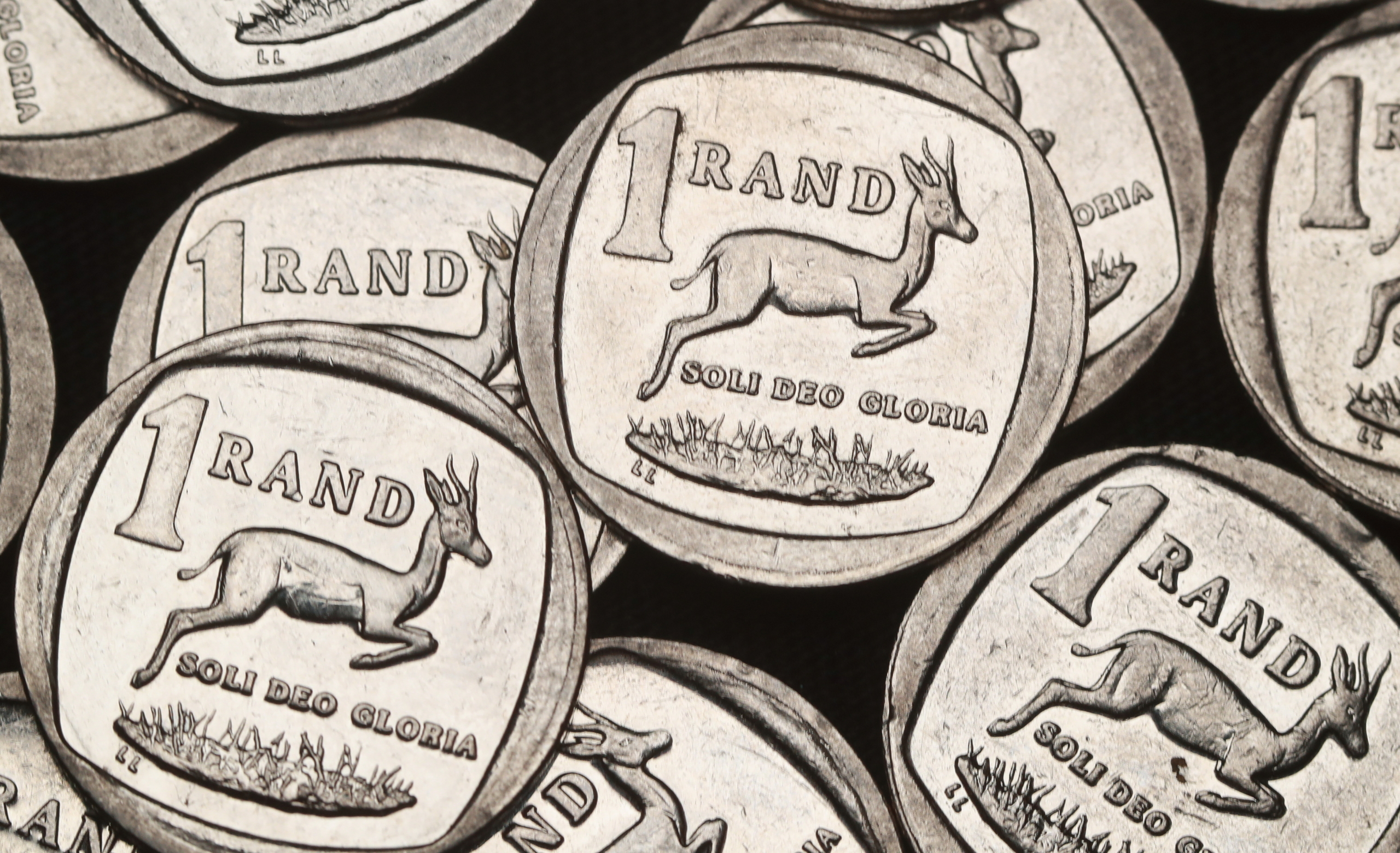
South Africa's rand recovered further against a weaker dollar on Monday, extending a recent bout of extreme volatility linked to U.S. President Donald Trump's trade war and worries that a key coalition partner could leave the country's government.At 0638 GMT, the rand traded at 18.9675 against the dollar , about 1% stronger than its previous close.The dollar last traded about 0.6% weaker against a basket of currencies."The markets were spooked and confused last week. This is set to continue this week," said Adam Phillips, treasury specialist at Umkhulu Treasury.The risk-sensitive rand has see-sawed on Trump's changing tariff policies, which have escalated tensions between the U.S. and the world's second-biggest economy, China.Over the weekend Trump exempted smartphones and other electronics imported largely from China from his tariffs, suggesting a growing awareness of the effect the measures will have on consumers, though U.S. Commerce Secretary Howard Lutnick said the reprieve was temporary.The rand has also moved on local headlines about tensions in South Africa's coalition government.The two biggest parties in the coalition, the African National Congress (ANC) and the Democratic Alliance (DA), clashed over the budget, leading to speculation that the DA could quit or be forced from the Government of National…

South Africa’s rand gains on report ANC may scrap VAT hike

The South African rand firmed on Monday, boosted by a news report that the country's biggest political party may back down on a plan to raise value-added tax (VAT) and dollar weakness on global markets.At 1404 GMT, the rand traded at 18.89 against the dollar , about 1.4% firmer than Friday's closing level.The Sunday Times newspaper reported that the African National Congress was likely to drop its insistence on a VAT hike in this year's budget after indications that none of the parties it has been talking to would support it.The ANC has clashed with its main coalition partner, the Democratic Alliance over the budget's proposal to raise VAT by 0.5 percentage points on May 1 and another 0.5 points next year.The pro-business DA voted against the budget's fiscal framework in parliament and is challenging the VAT hike in court, raising investor concern it could quit or be forced from the coalition government.Andre Cilliers, currency strategist at TreasuryONE, said scrapping the VAT increase would keep the government intact and that prospect was supporting the rand.The ANC and DA met on Saturday to discuss the impasse. Neither party gave a detailed readout of their talks, but both described them as constructive.The…

Trade tensions can lead to stock market crashes, IMF says

Major geopolitical risk events, including trade tensions, can trigger large corrections in stock prices, the International Monetary Fund said in a report on Monday.That in turn can generate market volatility which can threaten financial stability, it said in a chapter from its forthcoming Global Financial Stability Report.The IMF did not mention specific events, such as the sweeping tariffs U.S. President Donald Trump has announced in recent weeks. But it noted that news-based measures of risk, including conflicts, wars, terrorist attacks, military spending and trade restrictions had increased sharply since 2022.In an accompanying blog, the IMF urged financial institutions to hold enough capital and liquidity to help them deal with potential losses from geopolitical risks, and urged them to use stress tests and other analyses to identify and manage such risks.In its report, the IMF said its research had shown that big risk events such as wars, diplomatic tensions or terrorism sent stock prices down an average 1 percentage point monthly across all countries, with the average drop for emerging markets 2.5 percentage points.International military conflicts, such as Russia's invasion of Ukraine in 2022, were the most significant risk events, pushing stock returns down an average 5 percentage points monthly, twice…

Stocks bounce in Asia as some US tariffs paused

Wall Street share futures rallied in Asia on Monday after the White House exempted smartphones and computers from "reciprocal" U.S. tariffs, though gains were limited as President Donald Trump warned levies were still likely at some point.Indeed, Trump on Sunday told reporters tariffs on semiconductors would be announced over the next week and a decision on phones made "soon".On the face of it, the exemption of 20 product types accounting for 23% of U.S. imports from China, was a boon to manufacturers. However, the off-again, on-again policy gyrations left investors confused and analysts bearish on the long run."The post-Liberation Day back-pedalling has led some to breathe a sigh of relief. Not us," said Bruce Kasman, head of economics at JPMorgan."A 10% universal tax is still a very large shock and the huge 145% tax on China is prohibitive," he added. "You cannot stop trade between the world's two largest economies and not expect damage everywhere. We maintain our call for a 60% likelihood of a U.S./global recession."After an initial jump, S&P 500 futures pared gains to be up 0.8%, while Nasdaq futures rose 1.2%. The S&P 500 rallied 5.7% last week, but was still more than 5% below where it…