Canadian factory PMI tumbles as tariff uncertainty hits sentiment

Canadian manufacturing activity contracted for the first time in six months in February as an uncertain trade outlook led to firms turning the most pessimistic since the start of the COVID-19 pandemic.The S&P Global Canada Manufacturing Purchasing Managers' Index (PMI) fell to 47.8 from 51.6 in January, its first move below the 50.0 no-change mark since August. A reading below 50 indicates contraction in the sector."The considerable uncertainty related to tariffs being applied on all goods passing across the Canada-United States border weighed heavily on the manufacturing economy during February," Paul Smith, economics director at S&P Global Market Intelligence, said in a statement."Output fell noticeably, driven lower by a steeper decline in new orders as product markets, both at home and abroad, were paralysed by concerns over the applicability and size of tariffs in the coming months."The output index fell to 47.5 from 52.3 in January and the new orders index was at 45.4, its lowest level since July.U.S. President Donald Trump has proposed 25% tariffs on Mexican and Canadian goods that are due to go into effect on March 4. Canada sends about 75% of its exports to the United States."Understandably, manufacturers grew increasingly downbeat about the future ...…
Asia shares in tense wait for tariff news, bitcoin surges

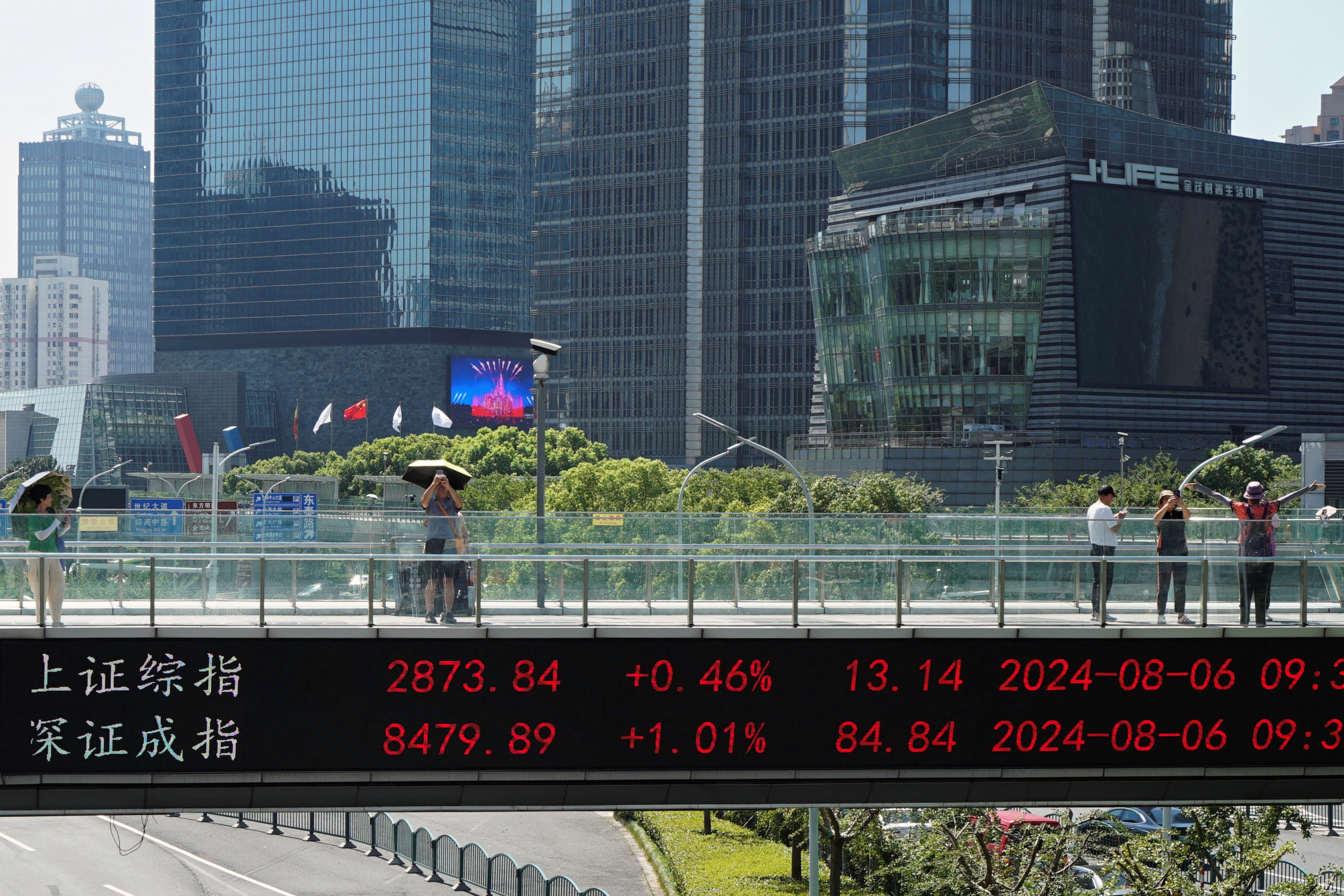
Asian share markets dithered on Monday as the threat of imminent tariffs lurked in the background, while bitcoin surged on news it would be included in a new U.S. strategic reserve of cryptocurrencies.U.S. President Donald Trump on social media announced five digital assets he expected to include in a new reserve, including bitcoin , ether , XRP , solana and cardano .Bitcoin, the world's largest cryptocurrency by market value, shot up more than 11% to $94,110, while ether, the second-largest cryptocurrency, climbed 14% to $2,528.MSCI's broadest index of Asia-Pacific shares outside Japan (.MIAPJ0000PUS) was flat, though Japan's Nikkei (.N225) rose 1.1%, helped by a softer yen.S&P 500 futures and Nasdaq futures were both up 0.1%, having staged a late rally on Friday after a week of heavy losses.Geopolitical uncertainty lingered as European leaders agreed to draw up a Ukraine peace plan to take to the United States, following President Volodymyr Zelenskiy's clash with Trump in the Oval Office.Worries about the health of U.S. economy had also been fanned by a string of soft data that had seen the closely watched Atlanta Fed GDPNow tracker swing to an annualised -1.5%, from +2.3%, sparking talk of a possible recession.Those fears were fanned…

Australian’s housing market ends downturn as rate cut lifts sentiment, CoreLogic data shows

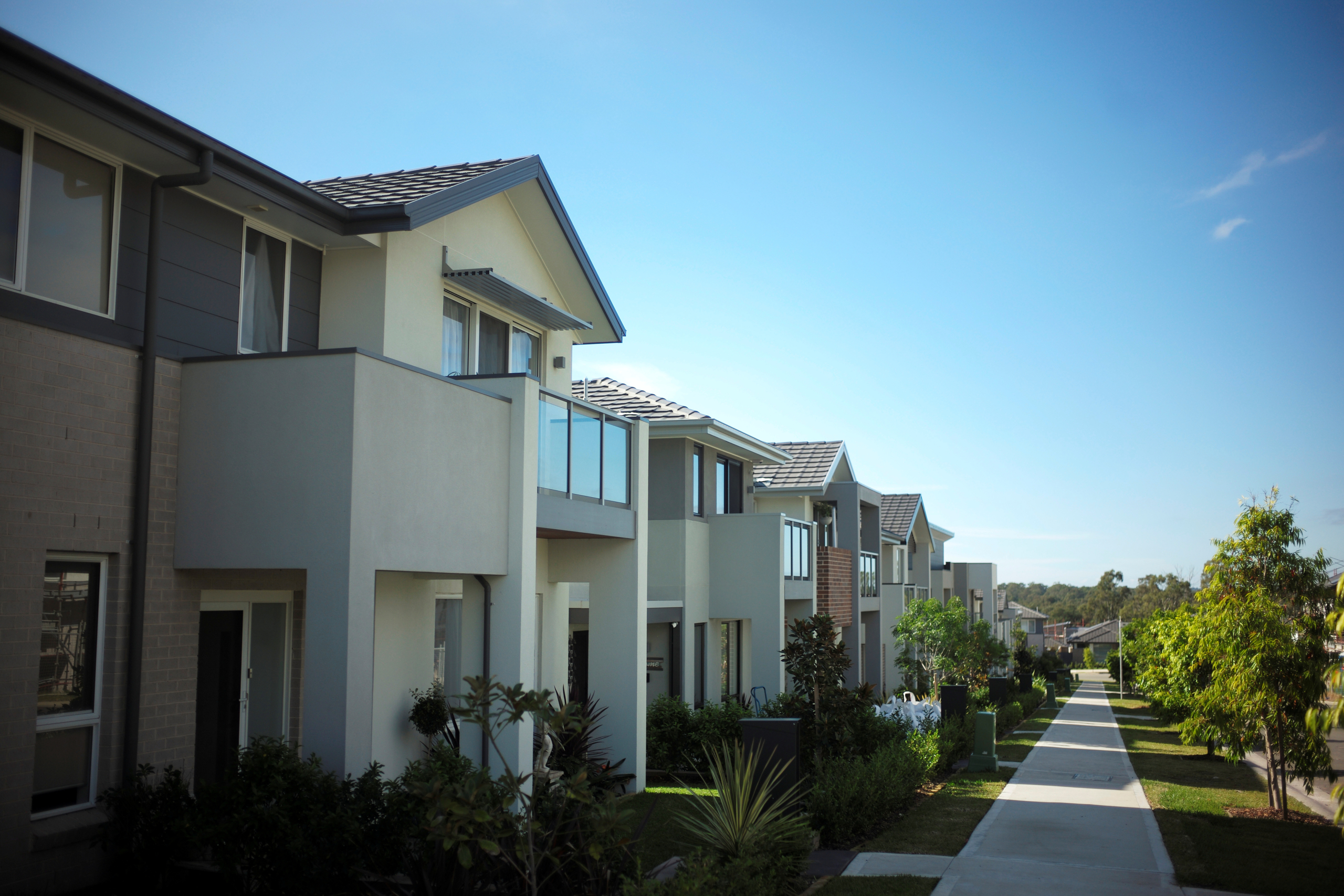
Australia's property market emerged from a shallow downturn in February as the first rate cut in over four years lifted buyer sentiment, although the still-high borrowing costs and elevated prices are clouding the outlook.Figures from property consultant CoreLogic showed prices across the nation rose 0.3% in February from January, ending three months of declines or no growth. That helped national prices settle just 0.1% lower from their peak hit in October.Melbourne and Hobart, where prices fell over the past year, led the gains, with both rising 0.4% in the month.Tim Lawless, CoreLogic's research director, said the bounce in prices has more to do with an uptick in sentiment than any immediate improvement in borrowing capacity as rates were only lowered by a quarter-point."The rate-cutting cycle is very fresh and is likely to be drawn out... interest rate settings are likely to remain in restrictive territory for some time yet," said Lawless."Until home loan serviceability improves more substantially, it’s hard to see housing markets moving into a material growth trend."The Reserve Bank of Australia has cautioned that any further easing will be gradual, with market pricing suggesting just two more rate cuts to 3.6% by the end of the year.Still, last…

Canada budget deficit over first nine months of 2024/25 at C$21.72 bln

OTTAWA, Feb 28 (Reuters) - Canada recorded a slight drop in its budget deficit to C$21.72 billion ($15.05 billion) for the first nine months of the 2024/25 fiscal year as government revenues increased faster than expenditure, the finance ministry said on Friday.By comparison, the deficit in the same period a year earlier had been C$23.61 billion, it said in a statement.Program expenses rose 10.7% on increases across all major categories of spending for the nine months. Public debt charges increased by 17.3% largely because of higher interest rates, the ministry said.Year-to-date revenues grew by 11.8%, largely reflecting higher tax revenues and from other taxes and duties.On a monthly basis, Canada's budgetary balance in December swung to a surplus of $1 billion, from a deficit of C$4.47 billion in same month the prior year.($1 = 1.4432 Canadian dollars)(Reporting by Promit Mukherjee, editing by Fergal Smith)((Reuters Ottawa bureau; [email protected]))Keywords: CANADA BUDGET/Source: Reuters.com

US port fees on China vessels would affect all shipping firms, CMA CGM says

U.S. proposals to hit Chinese vessels with high port fees would have a major impact on all firms in a container shipping industry in which most vessels are built in China, French-based shipping firm CMA CGM said on Friday.The U.S. Trade Representative's office has proposed charging up to $1.5 million for Chinese-built vessels entering U.S. ports as part of its investigation into China's expansion in the shipbuilding, maritime and logistics sectors."China builds more than half of all container ships in the world, so this would have a significant effect on all shipping firms," Chief Financial Officer Ramon Fernandez told reporters.CMA CGM, controlled by the family of Chairman and CEO Rodolphe Saade, is the world's third-largest container shipping line. It has a large U.S. presence, operating several port terminals while subsidiary APL has 10 U.S.-flagged vessels, Fernandez said.Asked about Ocean Alliance, a vessel-sharing agreement involving CMA CGM and Asian partners including China's COSCO, he said CMA CGM has had no indications the alliance could be called into question in view of U.S. policy.He declined to comment further on the USTR proposals pending a decision expected in April.The group already expects some impact on shipping this year from new tariffs announced by…

Canada’s economy posts surprise annualized fourth quarter growth of 2.6%

Canada's gross domestic product in the fourth quarter expanded by 2.6% on an annualized basis, surpassing widespread expectations, as a jump in consumer spending, business investments and exports lifted growth, data showed on Friday.Analysts polled by Reuters had expected the GDP to grow by 1.8% in annualized terms in the quarter ending December, similar to Bank of Canada's predictions from last month.The third quarter growth rate was revised to 2.2% from 1% earlier, Statistics Canada said. It added that, on a month-on-month basis, the economy in December expanded by 0.2%, reversing the contraction seen in November.This was mainly due to healthy growth in retail sales and a sales tax break that started from mid-December, it said.The monthly GDP figures are calculated by industrial output while quarterly figures are calculated by spending and expenditure.An advance estimate shows that monthly growth would likely be 0.3% in January.The Canadian dollar extended gains after the data and firmed 0.15% to 1.4417 against the U.S. dollar, or 69.36 U.S. cents. Yields on the two-year government bond rose 1.6 basis points to 2.639% after the data was released.Household spending, which accounts for more than half of total GDP, rose 1.4% in the fourth quarter, registering its…

Global equity funds draw big inflows overlooking tariff concerns

Global equity funds witnessed sharp inflows in the week through February 26, spurred by sustained expectations of rate cuts later this year, which were bolstered by weaker economic data reported during the week.LSEG Lipper data shows global equity funds saw a net $28.3 billion worth of inflows during the week, the highest amount since the week ending December 25, 2024.U.S. equity funds received a hefty $19.71 billion, the largest weekly inflow in nine weeks. European and Asian funds also witnessed $4.33 billion and $3.25 billion worth of net purchases.However, global markets have suffered steep losses this week on growing fears of trade war, intensified by U.S. President Donald Trump's announcement on Thursday of a 25% tariff on Mexican and Canadian goods and an additional 10% duty on Chinese imports, to start from Tuesday.Mark Haefele, chief investment officer at UBS Global Wealth Management, said the U.S. Federal Reserve was likely to cut rates later this year as inflation moderates over time, despite selective tariffs."We favor U.S. equities and high-quality fixed income against such a backdrop, including five-year Treasuries and investment grade corporate bonds."Global bond funds remained popular for a ninth successive week, drawing a net $17.02 billion in inflows during the…

Stocks slump, dollar towers as Trump tariff threat roils markets

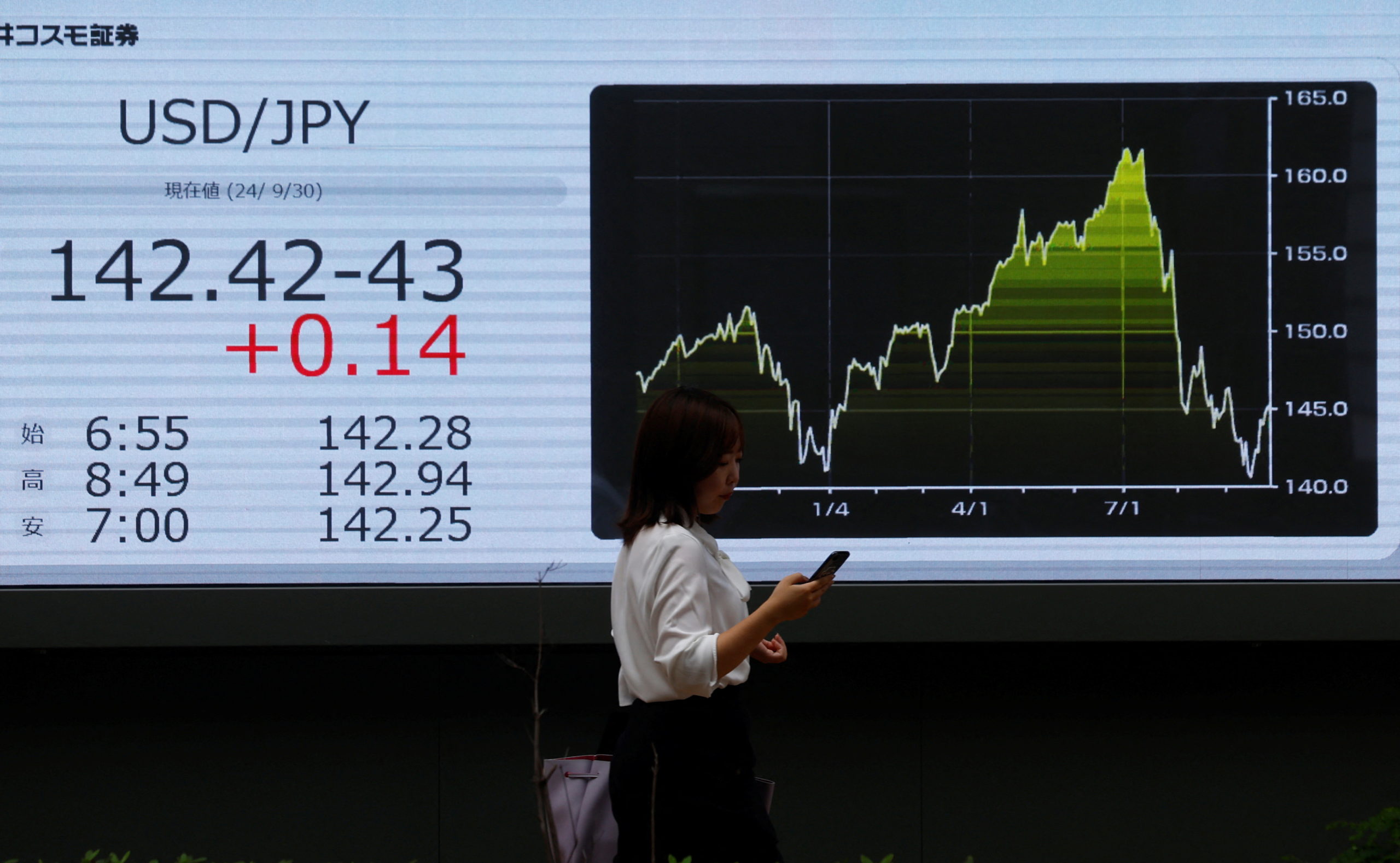
Equities slumped across Asia on Friday and the U.S. dollar hovered near multi-week highs against the currencies of the country's top trading partners as concerns about an escalating global trade war soured market sentiment.Technology shares took an additional hit following a sell-off in AI darling Nvidia and other so-called "Magnificent Seven" Wall Street mega-cap stocks, as investors judged the chipmaker's earnings report harshly a day after it was released.The safe-haven yen and Swiss franc strengthened, with Japan's currency getting an additional boost from lower U.S. Treasury yields. Bitcoin dipped below $80,000 for the first time in more than three months.An overall firmer dollar weighed on commodities including gold, although oil held on to most of Thursday's strong gains spurred by U.S. President Donald Trump's cancellation of Chevron's Venezuela licence.Trump said on Thursday that 25% duties on imports from Canada and Mexico will come into effect on March 4 - not April 2 as he had suggested the day prior - and said goods from China will be subject to an additional 10% duty. He also this week promised 25% tariffs on shipments from the European Union."A market that had reduced its sensitivity to recent tariff headlines has had to reconsider…

Brazil’s current account deficit shows steep deterioration, nears lack of FDI coverage

Brazil's 12-month current account deficit nearly tripled in January from a year ago and the central bank acknowledged it may soon go uncovered by foreign direct investment, something that only happened in the past decade during severe economic distress.This would signal a less favorable situation for the external accounts of Latin America's largest economy.Since foreign direct investment (FDI) consists of long-term investments in the productive activities of companies, it is widely seen by markets as a higher-quality source of financing to cover a country's current account deficit.According to central bank data on Thursday, Brazil's current account deficit reached $8.7 billion in the first month of the year, jumping from the $4.4 billion shortfall reported in January 2024 on the back of a shrinking trade surplus.Economists polled by Reuters had expected a narrower deficit of $8.3 billion.FDI for the month totaled $6.5 billion, broadly in line with the $6.55 billion projected by economists.Over the 12-month period, the current account deficit rose to 3.02% of gross domestic product, from just 1.11% of GDP a year earlier, marking the worst level since June 2020.It was still covered by FDI inflows, which stood at 3.16% of GDP on the same basis.However, the head of…

Trump’s cancellation of oil licenses likely to stoke Venezuela inflation

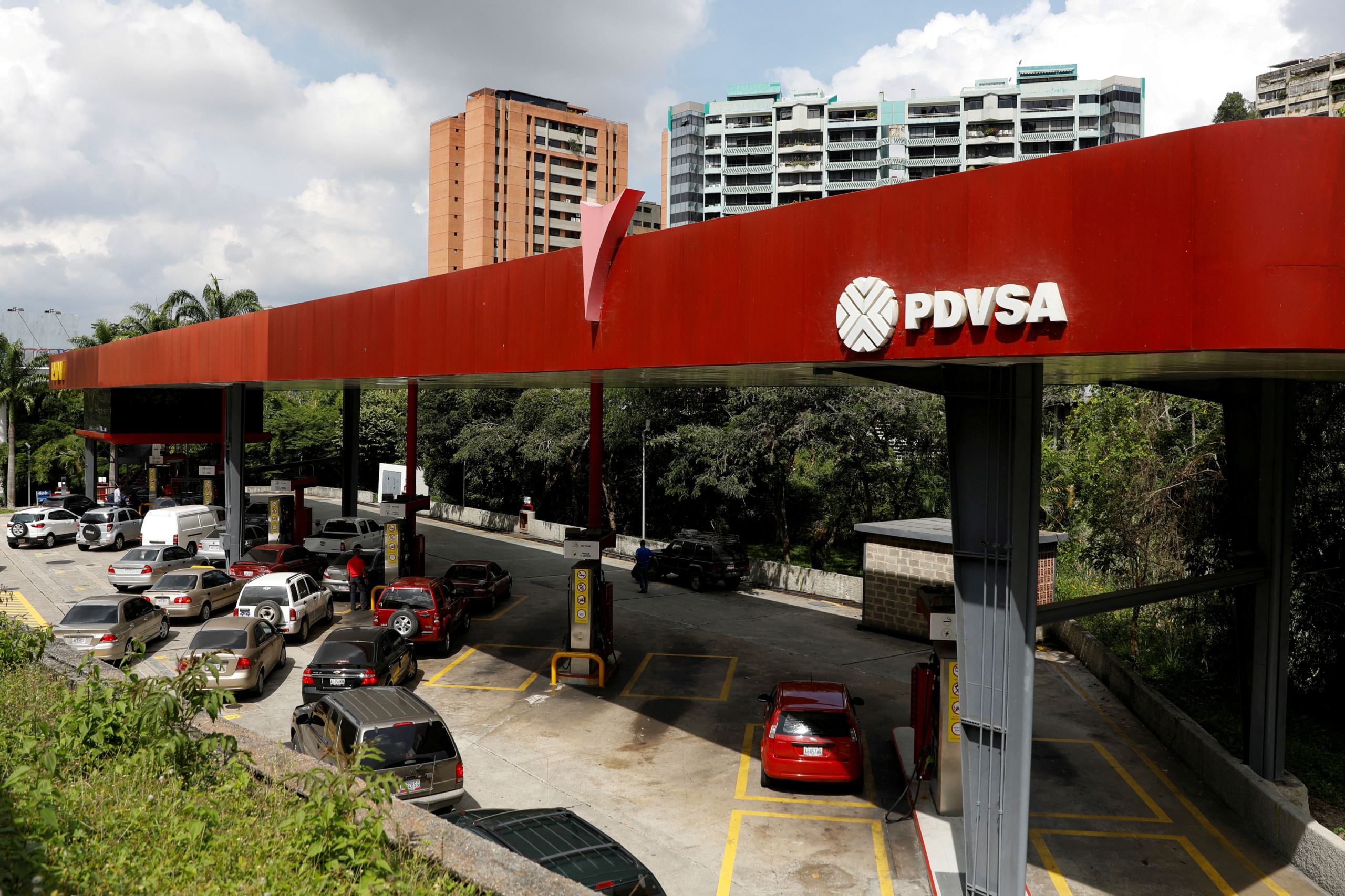
U.S. President Donald Trump's cancellation of licenses for foreign oil companies to operate in sanctioned Venezuela will reduce the dollars on offer in the country's exchange market, stoking depreciation of the local bolivar currency and prices, analysts said on Thursday.The cancellation on Wednesday is the latest economic challenge for Venezuelan President Nicolas Maduro, whose government for years has applied orthodox measures to tamp down formerly sky-high inflation, restricting credit, curbing public spending and until recently, holding the exchange rate steady."If oil licenses are suspended there is an impact - the fall in oil production and in the demand for services for the oil sector. There will be fewer royalties and taxes. It will affect the flow of foreign currency and there will be more devaluation," said economist Jose Guerra of the Venezuelan Finance Observatory.Since Trump first imposed sanctions on Venezuela's energy sector in 2019, the U.S. has granted individual licenses to some oil companies that allow them to export the South American country's oil to specific destinations.In late 2022, President Joe Biden's administration granted an automatically renewable license to Chevron (CVX.N) to expand operations in Venezuela and resume exports to the U.S. with the goal of recovering up to $3…