Stocks slip, inflation yields rise as tariffs fears ofsett any inflation relief

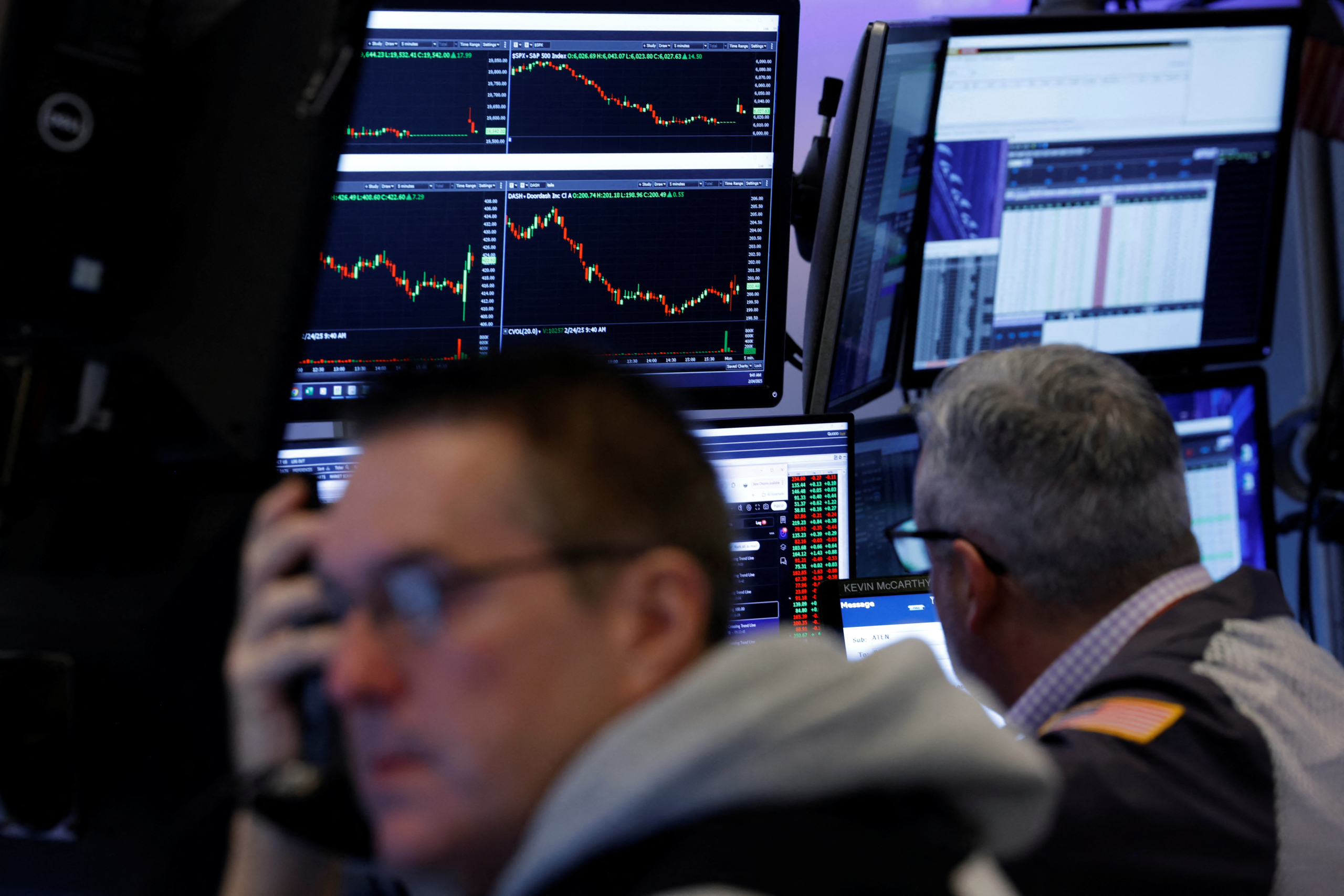
Equities around the world fell and U.S. Treasury yields rose on Thursday as investors worried about global trade tensions after U.S. President Donald Trump threatened duties of 200% on European beverage imports if the EU does not remove U.S. whiskey surcharges.Investors were also keeping an eye on wrangling over a possible, partial, U.S. government shutdown.Thursday's Labor Department's Bureau of Labor Statistics data showed U.S. producer prices (PPI) were unexpectedly unchanged in February. This was after Wednesday's data showed U.S. consumer prices (CPI) rose more slowly than expected.But investors worried that the cooling trend would not be sustainable as tariffs on imports raise prices in coming months."The February CPI and PPI reports were both better than expected, and show that the turn of the year spike in inflation was likely noise and not signal," said Bill Adams, Chief Economist for Comerica Bank in a research note.But he wrote that the inflation outlook depends more on government policies as tariffs, deportations and Department of Government Efficiency (DOGE) moves than "the backward-looking data releases right now."Trump's increased tariffs on all U.S. steel and aluminium imports took effect on Wednesday, drawing swift retaliation from Canada and the European Union."The guidance out of the White…
Bank of Canada considered leaving rates unchanged, governor tells Reuters

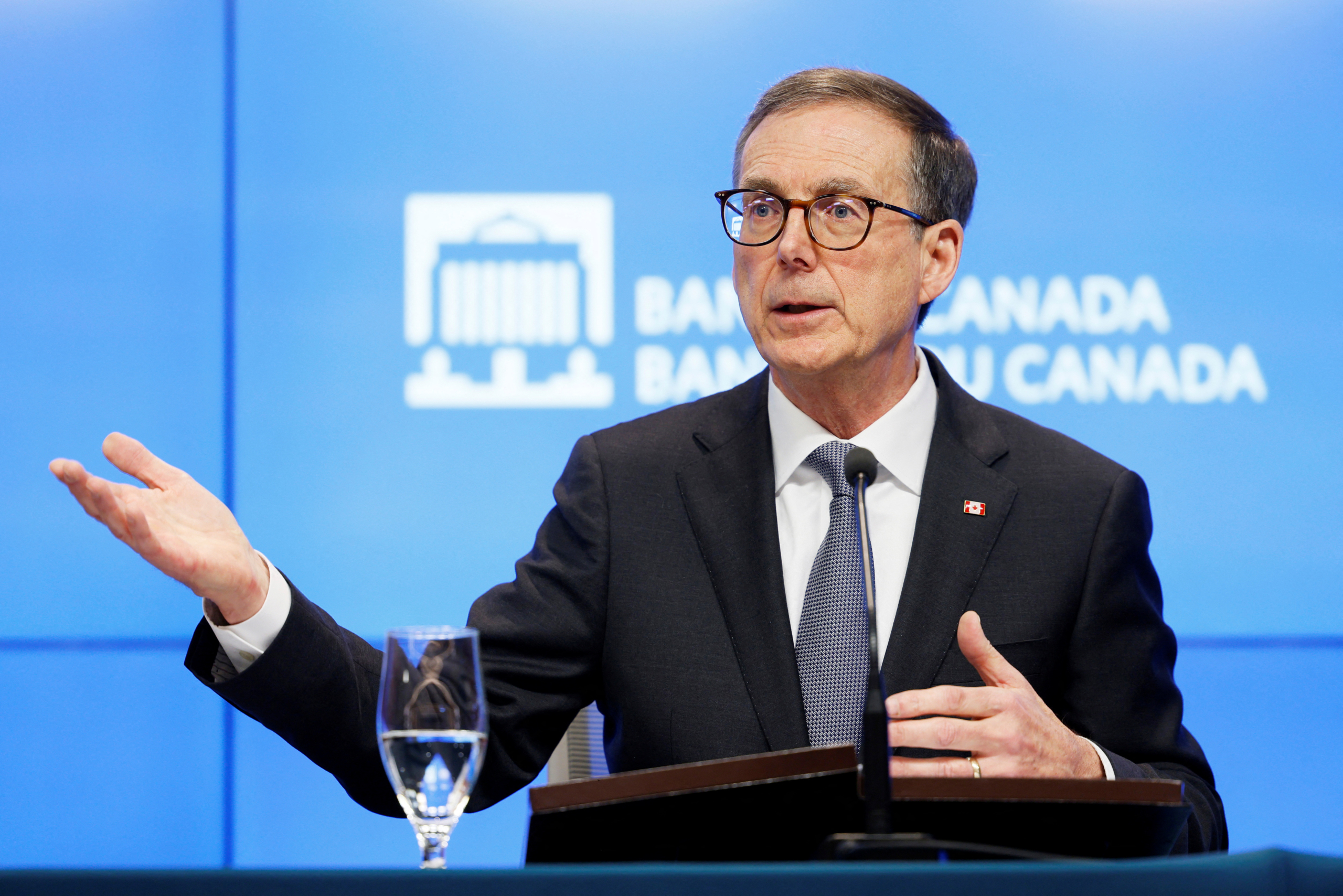
The Bank of Canada considered leaving its key policy rate at 3% ahead of a scheduled announcement before concluding it needed to cut for the seventh consecutive time, Governor Tiff Macklem said in an interview on Wednesday.The central bank trimmed its key policy rate by 25 basis points to 2.75% and raised concerns about inflationary pressures and weaker growth stemming from trade uncertainty and President Donald Trump's tariffs."We did discuss the option of staying at 3% as well as cutting to 2.75%," Macklem said, adding that one approach was to wait until the uncertainty around tariffs eased a bit.However, since the bank felt that domestic demand was going to be impacted and inflation continued at be around 2%, "the most appropriate course of action was to cut the policy rate," he said.The BoC expects Gross Domestic Product in the first quarter to not be too far off from its forecast of an annualized 2% but the impact of the trade war might be more prominent in the second quarter, Macklem said."I don't have a new forecast, but certainly in the near term, I expect, it will be weaker than what we forecast in January," he said about the GDP growth…

Brazil’s industrial output undershoots forecasts, remains steady in January

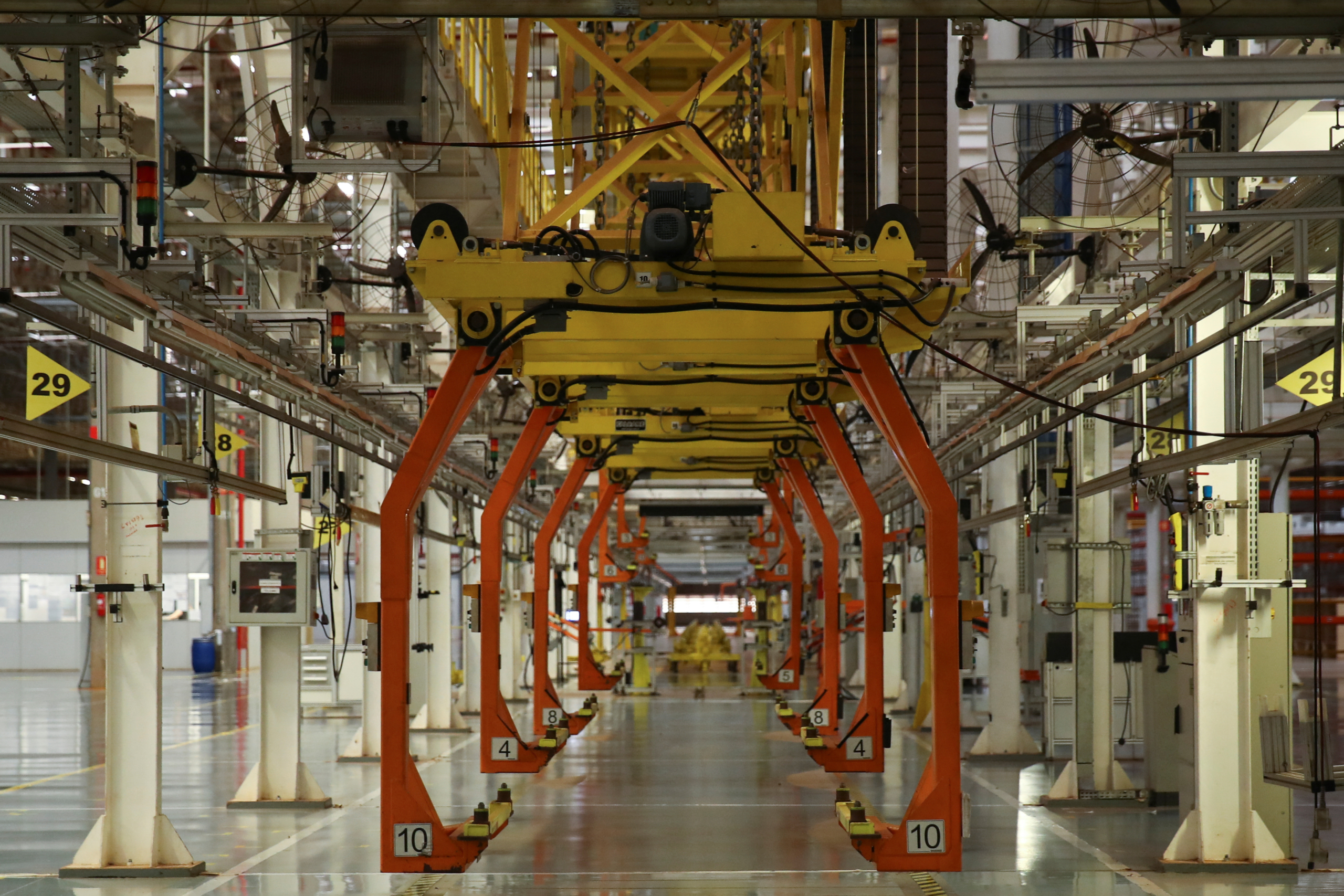
Industrial production in Brazil remained unchanged in January from December, government statistics agency IBGE said on Tuesday, undershooting market forecasts as indicators continue to sign a slowdown in the local economy.The January figure follows three consecutive months of negative readings as Brazil's industry grapples with high interest rates, with the sector having lost steam in recent months despite an overall strong 2024.Economists polled by Reuters expected a 0.5% month-on-month expansion in January.Production rose in three of the four main categories surveyed by IBGE, with capital goods standing out after drops in the previous two months, but a fall in intermediate goods output weighed on the overall index.Industrial production in January grew 1.4% on a yearly basis. But markets expected a 2.3% expansion, according to the Reuters poll."This was a poor start to the year," said Andres Abadia of Pantheon Macroeconomics. "The industrial slowdown is likely to continue in Q1, as stiflingly high interest rates, weakening demand and less supportive global growth weigh on activity."Brazil's benchmark interest rate currently stands at 13.25% and the central bank has already penciled in an additional hike of 100 basis points for its meeting later this month as it seeks to tame rising inflation.Policymakers have…

TSX futures rise after Monday’s selloff

Futures tied to Canada's main stock index rose on Tuesday, as investors took a pause after worries around a trade war with the U.S. sent the TSX to a four-month low in the previous session.March futures on the S&P/TSX index were up 0.4% at 6:54 a.m. ET (1054 GMT).Canada's benchmark index was dragged by declines for technology and metal mining shares on Monday, as it joined a global market selloff led by a 4% slump in Wall Street's tech-heavy Nasdaq (.IXIC).On Tuesday, investors in most markets, including in the U.S. and Europe, took a breather.U.S. President Donald Trump's ever-evolving levies on key trade partners such as Canada and Mexico have triggered risks of recession for all three North American countries.In commodities, oil prices pared earlier losses to rise during trade, helped by weakness in the U.S. dollar. But gains were capped as concerns mounted over a potential U.S. recession and the impact of tariffs on global economic growth.Gold prices rose, supported by safe-haven flows, while attention was on U.S. inflation data.All eyes are on the Bank of Canada's monetary policy decision on Wednesday, with traders expecting the central bank to provide additional support to the Canadian economy by cutting interest…

Central bank body BIS flags markets’ blessing for European defence spending surge

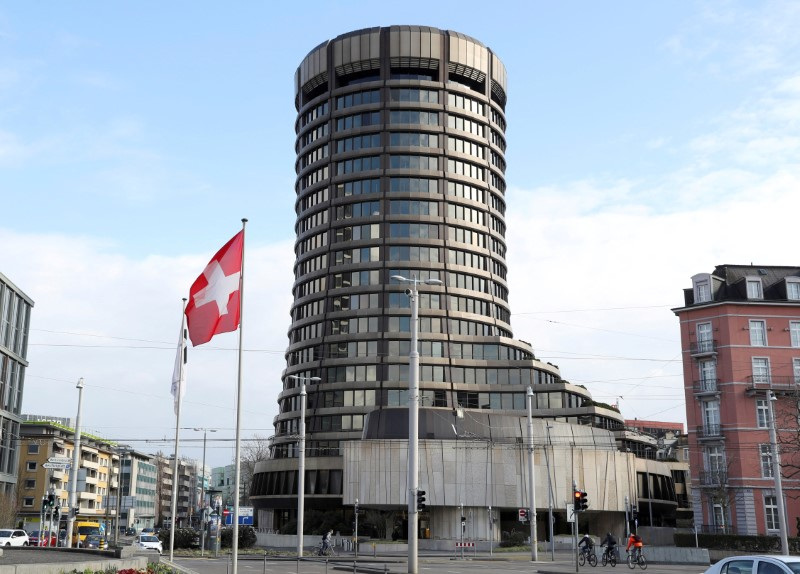
Central bank body, the Bank for International Settlements, has refrained from voicing its usual concerns about rising debt, noting markets' positive reaction to Europe's plans to ramp up defence spending in response to U.S. security policy shifts.The central bankers' central bank as the BIS is known, warned in its latest global report that U.S. President Donald Trump's tariffs led to unusually high uncertainty and market volatility, although it still expects the world's economy to avoid recession.U.S. bond yields, the dollar and stocks have all fallen in recent weeks on signs the economy there is now slowing, while Germany's dramatic plans to overhaul its debt limits as part of a wider European increase in defence spending has seen the sharpest rise in its bond yields since reunification in 1990."Tariffs wrapped in uncertainty are going to be doubly unhelpful," said Hyun Song Shin, economic adviser and head of research at the BIS, referring to both their unpredictable timing and some other policy shifts Trump has made recently.Commenting on the report in briefing with journalists, Shin said tariffs both hurt consumer and business confidence and could stoke inflation, causing a headache for central banks.Asked how the market conditions compared to those during the…

Asian stocks slide as market selloff deepens on US growth worries

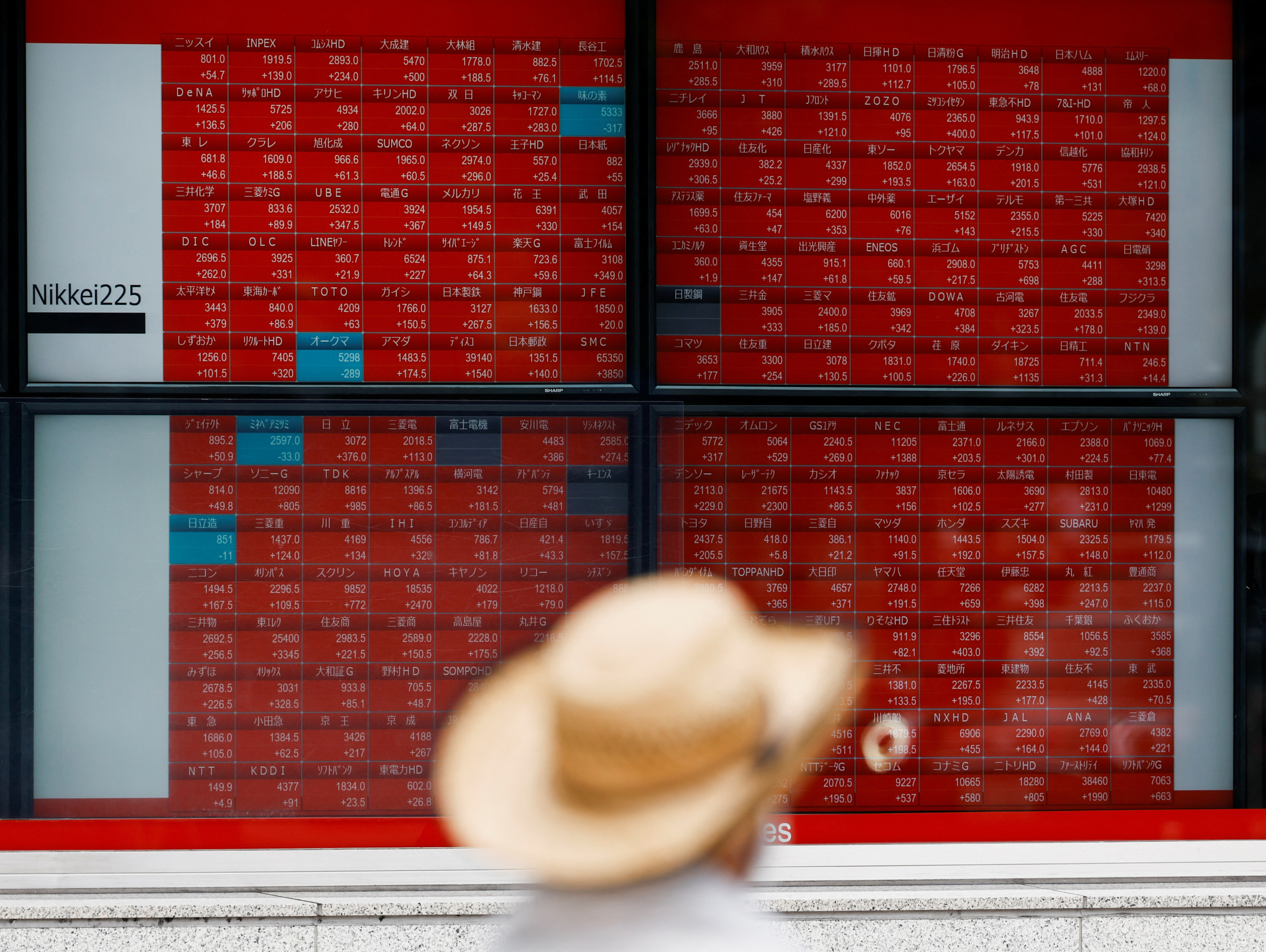
Asian stocks took their cue from the Wall Street and fell sharply on Tuesday as worries mounted that a wide-ranging trade war could dent U.S. economic growth and result in a recession, leading skittish investors to the safe-haven Japanese yen.Investor concerns about the potential economic slowdown were exacerbated after President Donald Trump in a Fox News interview talked about a "period of transition" while declining to predict whether his tariffs would result in a U.S. recession.Those comments and worries sapped risk sentiment, sending stocks sliding and weighing on the U.S. dollar and Treasury yields.The S&P 500 (.SPX) fell 2.7% on Monday, its biggest one-day drop this year, while the Nasdaq (.IXIC) slid 4.0%, its biggest single-day percentage drop since September 2022. S&P and Nasdaq futures slid 1% in Asian hours on Tuesday.In Asia, it was a sea of red with Japan's Nikkei (.N225) and Taiwan stocks (.TWII) sliding about 3%, hitting their lowest level since September. MSCI's broadest index of Asia-Pacific shares outside Japan (.MIAPJ0000PUS) fell more than 1%.Even Chinese stocks, which have been on a tear this year, were not immune to the downbeat mood. The blue-chip index (.CSI300) fell about 1%, while Hong Kong's Hang Seng Index (.HSI)…

SGX teams up with Brazil’s B3 to launch real futures in 2025

The Singapore Exchange said on Monday that it was teaming up with Brazilian exchange operator B3 to launch real futures contracts later this year, a move aimed at helping investors manage exposure to the currency during Asia trading.If the Brazilian real futures contracts receive regulatory approval, it would be SGX's first time venturing into emerging markets currencies out of Asia.The contracts come as global investors' interest in Brazilian markets is increasing, bringing with it a desire to hedge currency risks around-the-clock, especially as trade tensions and geopolitics heighten uncertainty in global markets.Brazil is a leading exporter of commodities like beef, iron ore and soybeans. Its government said on March 6 that it would remove import taxes on essential products including sugar, coffee, corn and beef to help reduce food prices.Source: Reuters.com

British stocks lose ground amid tariff uncertainties

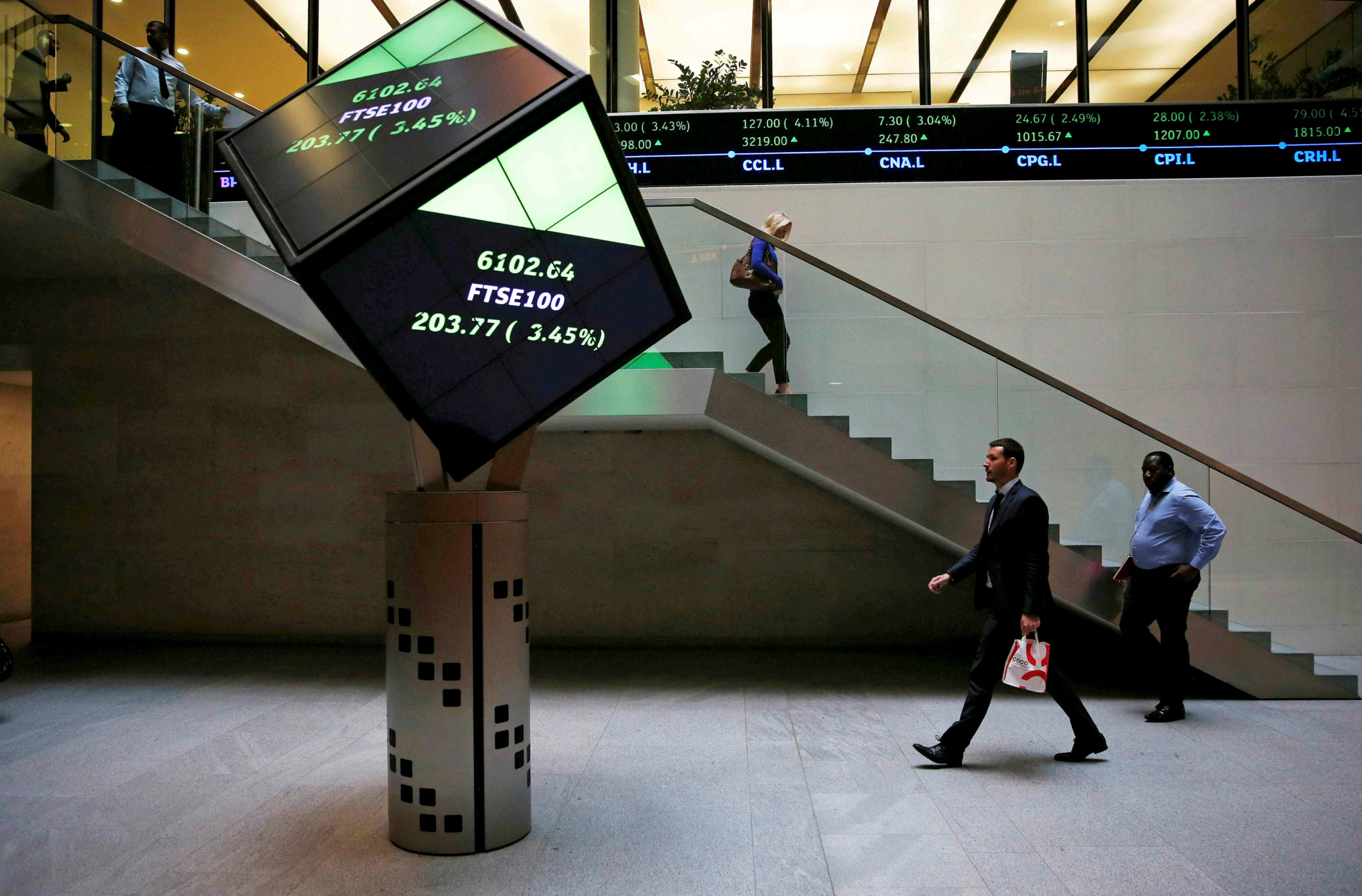
British shares fell on Monday as worries about global growth and uncertainties around U.S. tariffs continued to keep investors on edge.The blue-chip FTSE 100 (.FTSE) lost 0.5% at 1050 GMT, on track for a fifth straight session of declines, if losses hold.Investors remained concerned about an escalating global trade war, after U.S. President Donald Trump declined to predict whether the U.S. economy could face a recession due to tariffs imposed on Mexico, Canada and China over fentanyl."Unease about the effect of Trump's tariffs hangs over financial markets at the start of the week," said Susannah Streeter, head of money and markets at Hargreaves Lansdown."The prospect of a recession in the U.S. is lurking, with consumer confidence falling, companies facing increasing trade complexity and investors turning more nervous."Heavyweight bank (.FTNMX301010) and pharma (.FTNMX201030) stocks were down 2.2% and 1.4%, respectively, leading sectoral declines.The midcap FTSE 250 (.FTMC) lost 0.2%.Clarkson (CKN.L) slumped 17.5%, dragging down the midcap index, after the shipping services company flagged the impact of geopolitical uncertainty on its near-term outlook.Keeping losses at check, Assura (AGRP.L) gained 14.2%, after the British healthcare real estate investment trust said it would consider a 1.61 billion pound ($2.1 billion) offer from U.S. private…

TSX futures fall as trade war concerns persist, BoC rate decision in focus

Futures tied to Canada's main stock index fell on Monday as concerns of a global trade war persisted, while investors also eyed the Bank of Canada's interest rate decision later in the week.The futures on the S&P/TSX index were down 1% at 6:41 a.m. ET (1042 GMT).The benchmark index had registered its biggest weekly decline since December on Friday as trade tensions lingered despite U.S. President Donald Trump suspending tariffs on most goods from Canada and Mexico for 30 days.Meanwhile, former central banker Mark Carney won the race to become leader of Canada's ruling Liberal Party and will succeed Justin Trudeau as prime minister, official results showed on Sunday.Carney, a political novice, argued that he was best placed to revive the party and to oversee trade negotiations with Trump, who had threatened additional tariffs on Friday.Investor focus is also on the Bank of Canada meeting this week, where the central bank is likely to cut interest rates by 25 basis points.BofA Global Research expects the central bank to provide additional support to the Canadian economy by cutting rates further.The policymakers' comments will also take center stage amid heightened uncertainty posed by the U.S. trade policy.In commodities, oil prices inched up,…

HSBC downgrades US stocks, turns bullish on European equities

HSBC on Monday downgraded U.S. equities, citing uncertainty around tariffs, while turned bullish on European stocks following boost from Germany loosening its fiscal reforms.The brokerage lowered U.S. equities to "neutral" and raised rating on European stocks, excluding UK stocks to "overweight" from "underweight."The Trump administration's massive moves on trade and other policies have injected uncertainty, while a proposed $1.2 trillion European fiscal bazooka and the emergence of China as the tech race leader are marking a potential turning point for investor capital away from the United States.The S&P 500 (.SPX) has pulled back about 6.1% from its February 19 record high on worries that the trade war will hurt corporate profit and slow growth."It is important to stress that we are not turning negative on US equities - but tactically, we see better opportunities elsewhere for now," said HSBC's Global Equity Strategist Alastair Pinder said.Morgan Stanley Equity Strategist Michael Wilson believes the S&P 500 could fall another 5% to 5,500 points by mid-year, before ending the year at around 6,500, which is a 12.7% upside from the benchmark index's last close."The path is likely to be volatile as the market continues to contemplate these growth risks, which could get worse…