What Vietnam is considering to avoid US tariffs

U.S. President Donald Trump has announced plans for tariffs that could virtually hit all Vietnam's goods exports to its top market, worth last year more than $142 billion, according to UN data, about 30% of Vietnam's gross domestic product.As the Southeast Asian nation has one of the largest surpluses with the U.S. and meets several criteria for potential reciprocal tariffs, Vietnamese officials and foreign companies are taking the threats seriously. Most U.S. manufacturers in the country are expecting disruptions and forced layoffs if duties are imposed, according to a survey.Below are some of the measures Vietnamese officials have flagged, are considering or that may help dodge tariffs:DUTIES, NON-TRADE BARRIERSMany economists agree Vietnam's levies on U.S. products are higher than duties the U.S. charges. It also charges value added tax on goods. Both are criteria for Trump's possible reciprocal tariffs.The country has signalled an openness to find compromises but lowering duties on U.S. goods may force Vietnam to reduce them also on other trade partners under existing regulations.U.S. companies have also long raised concerns about non-trade barriers, including lengthy project approval procedures, cumbersome legal requirements, and hurdles for workers' visas.ENERGY IMPORTSVietnamese officials have repeatedly discussed with U.S counterparts possible purchases of…
Vietnam’s US exports account for 30% of GDP, making it highly vulnerable to tariffs

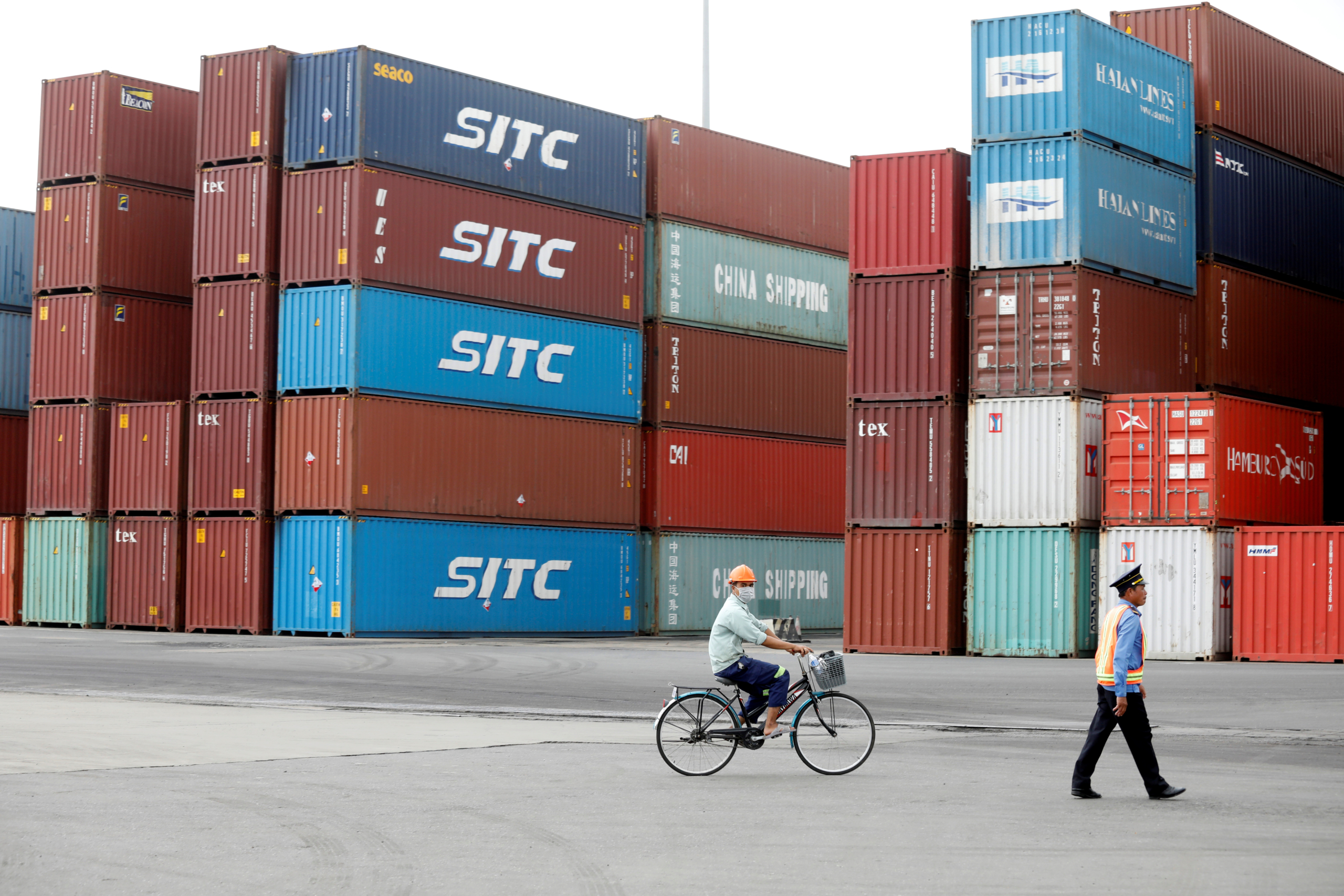
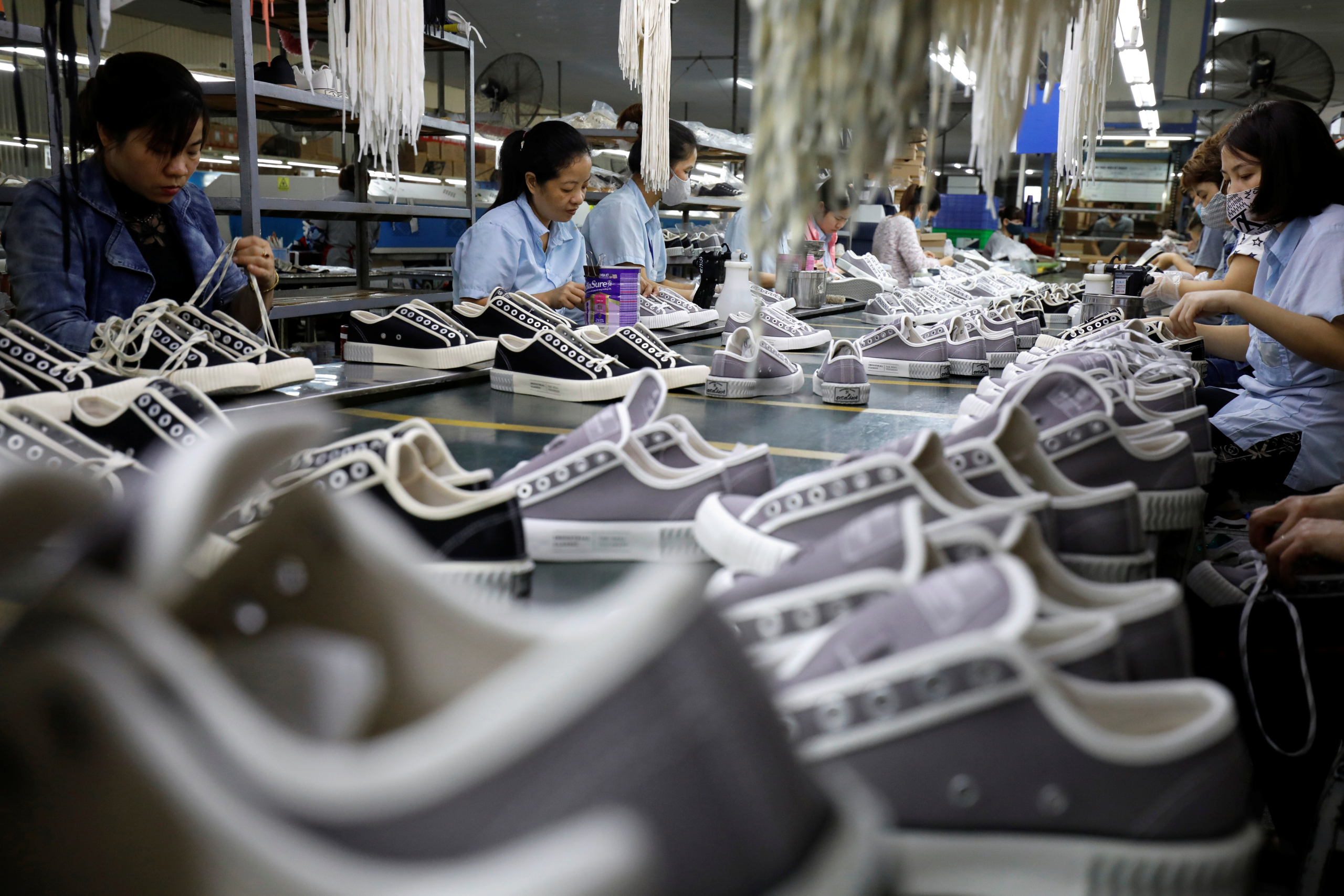
Vietnam's goods exports to the United States accounted for 30% of its gross domestic product last year, the highest share among U.S. top trade partners, a Reuters review of public data shows, making the country highly vulnerable to reciprocal tariffs.The Southeast Asian nation experienced a surge in foreign investment after the first Trump administration started a trade war with Beijing in 2018, as foreign multinationals moved factories from China to its southern neighbour to avoid U.S. tariffs.It hosts major operations of South Korea's Samsung Electronics (005930.KS) and Taiwan's contract manufacturer Foxconn (2317.TW). Apple (AAPL.O), chipmaker Intel (INTC.O) and footwear and apparel giant Nike (NKE.N) are among U.S. corporations which bet on Vietnam as a production hub for goods often exported to the United States.The massive inflow of manufacturing investment has turned the Communist-run nation into a major node in global supply chains and significantly boosted its economic ties with the United States. Vietnam now directs 29% of its exports to its former foe, according to Vietnamese customs data.Last year, with goods exports worth $142.4 billion, Vietnam became the sixth largest exporter to the United States after Mexico, China, Canada, Germany and Japan, United Nations commodity trade statistics show.Shipments to the…

Asian shares slide on US curbs on China, euro gives up gains

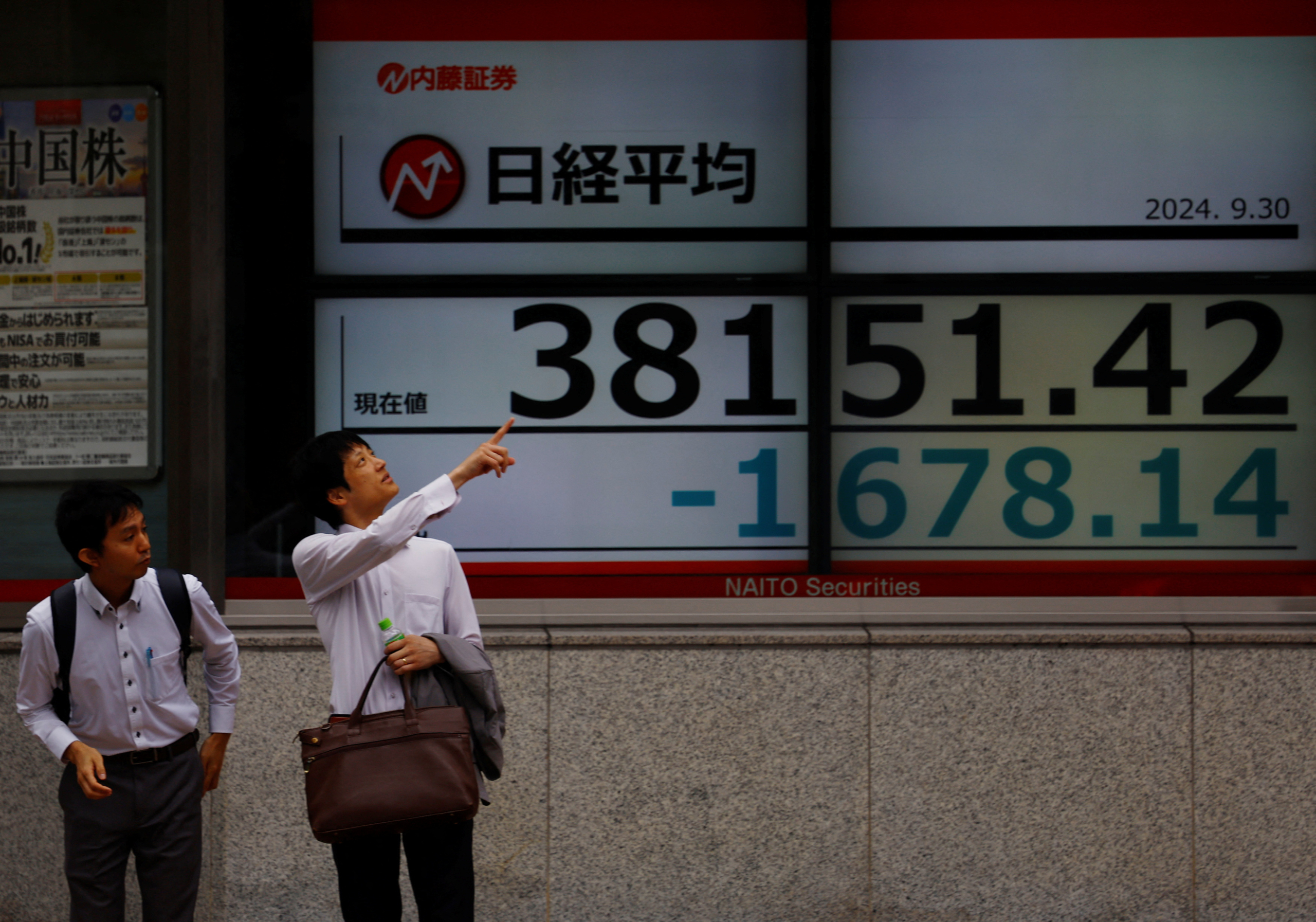
Asian shares slid on Tuesday amid worries about U.S. investment curbs on China, while a run-up in the euro faded as investors wait for Germany to sort out the formation of its new government with no major surprises.Gold hit a record high on tariff concerns. Investors are also cautious ahead of results from AI darling Nvidia (NVDA.O), where options point to a share price move of about 8% in either direction should they surprise.MSCI's broadest index of Asia-Pacific shares outside Japan (.MIAPJ0000PUS) dropped 1.3%. Japan's Nikkei (.N225) returned from a public holiday with a drop of 0.9%, but shares of its five major trading houses surged thanks to interest from billionaire investor Warren Buffett.Bank of Korea on Tuesday cut its interest rates by a quarter-point as expected, helping South Korean shares (.KS11) trimming some losses.Hong Kong's Hang Seng index (.HSI) tumbled 2.3%, extending the fall from Monday after U.S. President Donald Trump signed an order to restrict Chinese investments in strategic areas such as chips, AI and aerospace. Chinese blue chips (.CSI300) dropped 0.9%.Tech giant Alibaba (9988.HK), which had propelled the Hong Kong index to three-year highs, plunged 7.8% after its U.S.-listed shares tumbled 10% overnight in the biggest daily…

Aramco weighs on Saudi bourse, profit-taking hits Dubai

Most stock markets in the Gulf ended lower on Monday as oil giant Saudi Aramco weighed on the Saudi index, while the Dubai bourse extended losses on profit-taking.Saudi Arabia's benchmark index (.TASI) dropped 0.6%, pulled lower by a 1.8% fall in Saudi Aramco (2222.SE).Aramco is forecast to have no performance-linked dividend this year after a more balanced 2024 cash cycle following earlier bumper results that backed the special payout, JPMorgan said in a research note on Friday.The oil behemoth is slated to report its 2024 results on March 4.On the other hand, ACWA Power Company (2082.SE) was up 2.3%, on track to extend gains from the previous session.ACWA to buy $693 million stakes in Kuwait and Bahrain assets from ENGIE (ENGIE.PA), covering operating capacities of 4.61 GW gas-fired power generation and 1.11 million cubic meters per day (m3/day) water desalination facilities.Dubai's main share index (.DFGMI) lost 0.5%, extending losses for a second session, with blue-chip developer Emaar Properties (EMAR.DU) declining 1.8%.Elsewhere, district cooling services provider Empower (EMPOWER.DU) gave up early gains to close 2.9% lower.Empower and Dubai Multi Commodities Centre signed an agreement to supply the next phase of Uptown Dubai with sustainable district cooling services.These movements may represent a…

TSX futures rise on higher gold prices

Futures for Canada's main stock index rose on Monday, buoyed by higher gold prices, after a major sell-off in the previous session.March futures on the S&P/TSX index were up 0.54% at 7.00 a.m. ET (1200 GMT).Gold prices edged up to trade near its record peak, helped by a weaker U.S. dollar.TSX fell to a five-week low on Friday, weighed by declines for energy, metal mining and high-flying technology shares, as commodity prices declined and investors grew more risk-averse.Oil prices , steadied on Monday as investors awaited clarity on talks to end the war in Ukraine and weighed the prospect of a resumption in crude exports from northern Iraq.This week, Canada and Mexico are expected to intensify discussions to avoid 25% tariffs on their exports to the U.S., aiming to convince President Donald Trump's administration that their efforts to enhance border security and curb fentanyl trafficking are effective, ahead of a March 4 deadline.The U.S. Federal Reserve's favored measure of core inflation is due on Friday and is expected to slow to 2.6% in January from 2.8% in December.In Canada, a reading of fourth-quarter gross domestic product numbers is also due on Friday.In corporate news, Britain's National Grid (NG.L) has reached…

Most Gulf markets gain on earnings, corporate announcements

Most major stock markets in the Gulf rose in early trade on Monday, supported by earnings and corporate announcements, although the Qatari index bucked the trend to trade lower.Saudi Arabia's benchmark index (.TASI) edged 0.1% higher, with ACWA Power Company (2082.SE) gaining 2.3%, on track to extend gains from the previous session.ACWA said it plans to buy stakes in assets in Kuwait and Bahrain worth $693 million from French utility developer ENGIE (ENGIE.PA), according to a joint statement on Wednesday.The share purchase agreement covers operating capacities of 4.61 GW of gas-fired power generation and 1.11 million cubic meters per day (m3/day) of water desalination facilities, the companies said in a statement.Elsewhere, ADES Holding (2382.SE) added 1.4%, after reporting a sharp rise in annual profit.Dubai's main share index (.DFMGI) rose 0.3%, on course to snap two sessions of losses. The gains were led by a 1.2% rise in district cooling services provider Empower (EMPOWER.DU), as the firm and Dubai Multi Commodities Centre signed an agreement to supply the next phase of Uptown Dubai with sustainable district cooling services.Among other gainers, construction and engineering company Drake & Scull International (DSI.DU) advanced 2%, after winning contracts worth over 1 billion dirhams ($272.28 million)…

Shares of Australia’s major banks take a breather after $40 billion wipe off

Shares of top Australian banks took a breather on Monday, after a sharp sell-off over the past eight sessions wiped off more than A$63 billion ($40 billion) from their market value.Shares of the "Big Four" banks logged unprecedented growth last year on strong flows from superannuation funds and retail investors, pushing them to multi-year highs and trading at high multiples to the ASX200 benchmark index (.AXJO).But last week's interest rate cut - the first since November 2020 - alongside modest growth earnings, a rise in bad debts and arrears for the major banks triggered a sell-off as investors exited richly valued stocks.Financials (.AXFJ) rose 0.8%, as of 0030 GMT, on Monday but were still down more than 7% since February 12, compared with a 3% drop in the ASX200 index.Top lender Commonwealth Bank of Australia (CBA.AX) lost as much as 10% in the past eight sessions, losing about A$25 billion in market value. It was flat on the day.It reported an upbeat first-half profit and margin on February 12.National Australia Bank (NAB.AX), the country's top business lender, snapped a six-day losing streak on Monday but has lost nearly 14% in the last eight sessions, or about A$18 billion in value.Last…

German stock futures, euro edge up on Merz win

European shares steadied on Monday as Germany's election produced no nasty surprise, while Wall Street futures firmed on hopes results from AI diva Nvidia this week would justify the tech sector's sky-high valuations.DAX futures firmed 0.2%, while EUROSTOXX 50 futures were flat. The euro edged 0.3% higher to $1.0493 after the CDU/CSU won as polls predicted.German's new conservative leader Friedrich Merz has to form a coalition government and it is not yet clear whether that will include one or two partners, with the latter likely to take more time and horse trading.The uncertainty comes as European Union leaders are set to hold an extraordinary summit on March 6 to discuss additional support for Ukraine and how to pay for European defence needs.Liquidity was thinned by a holiday in Tokyo markets and MSCI's broadest index of Asia-Pacific shares outside Japan (.MIAPJ0000PUS) dipped 0.15%. Nikkei futures traded at 38,300, under the cash close of 38,776.S&P 500 futures added 0.4% and Nasdaq futures 0.5%. The Nasdaq had fallen 2.5%, its worst week in three months, with losses led by the Magnificent Seven.That pullback raises the stakes for Nvidia's (NVDA.O) results on Wednesday where investors are looking for fourth-quarter sales around $38.5 billion and…

Stock markets may face correction, says Goldman Sachs

Wall Street stocks could be facing a correction because of ructions in the options market, Goldman Sachs specialist Scott Rubner said in a Thursday note seen by Reuters on Friday.Roughly $2.7 trillion of U.S. stock market derivatives are due to expire on Friday, which if not exercised, will put pressure on stock markets and stoke volatility, the note said.WHY IT'S IMPORTANTS&P 500 and European stock markets hit a record highs on Tuesday but have since declined amid Trump's latest tariff warning on pharmaceuticals, semiconductor chips and wood, which among other threats, has exacerbated fears of a broad trade war and unnerved investors.Stock buying might be slowing for other reasons, as well. Retail traders in the U.S. are trading less because they'll have to pay their annual taxes, and average flows from retirement funds into mutual and exchange-traded funds typically taper in March, Rubner said.BY THE NUMBERSAbout $2.7 trillion of equity options, or derivatives that allow a trader to bet that a stock will reach a certain price, expire Friday, said the Goldman note.These derivatives include wagers on the S&P 500 (.SPX), as well as U.S. exchange-traded funds and single stocks.Banks and intermediaries that help put on these bets have over…

Dubai eases on profit-taking, Abu Dhabi marginally down

Dubai index fell on Friday, as investors continued to encash on the profits gained in previous sessions, while Abu Dhabi closed marginally lower.Dubai's main index (.DFMGI) slipped 0.4%, pressured by losses in utilities and financial sector stocks with Dubai Electricity and Water Authority (DEWAA.DU) falling 2.6% and blue-chip developer Emaar Properties (EMAR.DU) decreasing 0.7%.However, Dubai Taxi Company (DTC.DU) rose 1.9% after the firm proposed a 4.89 fils per share cash dividend for the second half of the year.Dubai stock market experienced a decline, continuing its pattern of uncertainty and minimal movements following a period of strong gains that were supported by robust earnings results, said Ahmed Negm, head of market research MENA at XS.com.However, correction appears temporary as the market continues to be underpinned by solid earnings results and strong fundamentals, Ahmed said.Abu Dhabi's benchmark index (.FTFADGI) dropped 0.01% after trading the entire session in the green, dragged down by a 5% decline in IHC-owned conglomerate Alpha Dhabi Holding (ALPHADHABI.AD) and 1.4% loss in hypermarket operator Lulu Retail (LULU.AD).However, Adnoc Gas (ADNOCGAS.AD) rose 0.8% as parent Abu Dhabi National Oil Co (ADNOC) completes a $2.84 billion offering of shares in Adnoc Gas at a discount of 5% to the stock's…