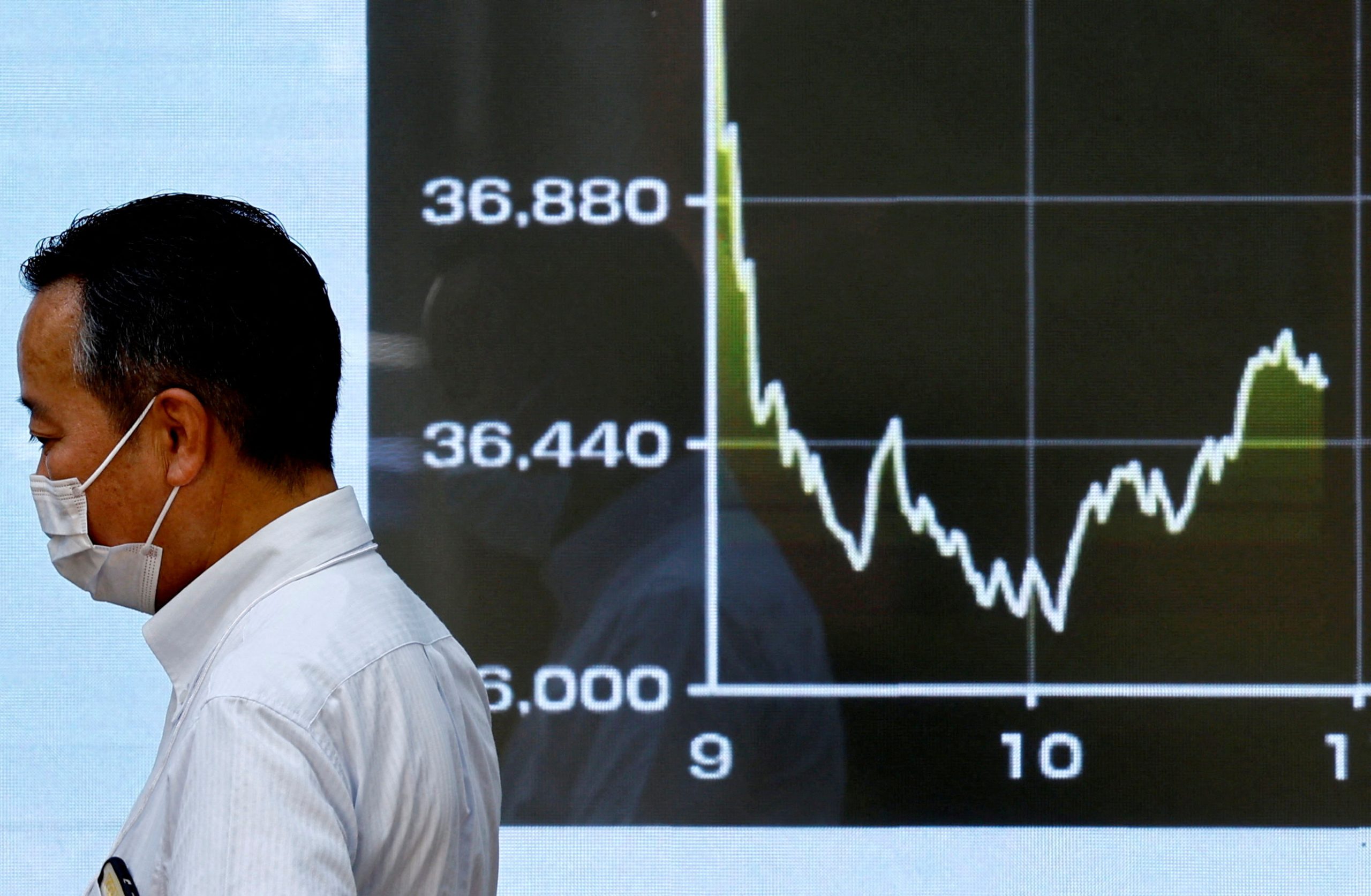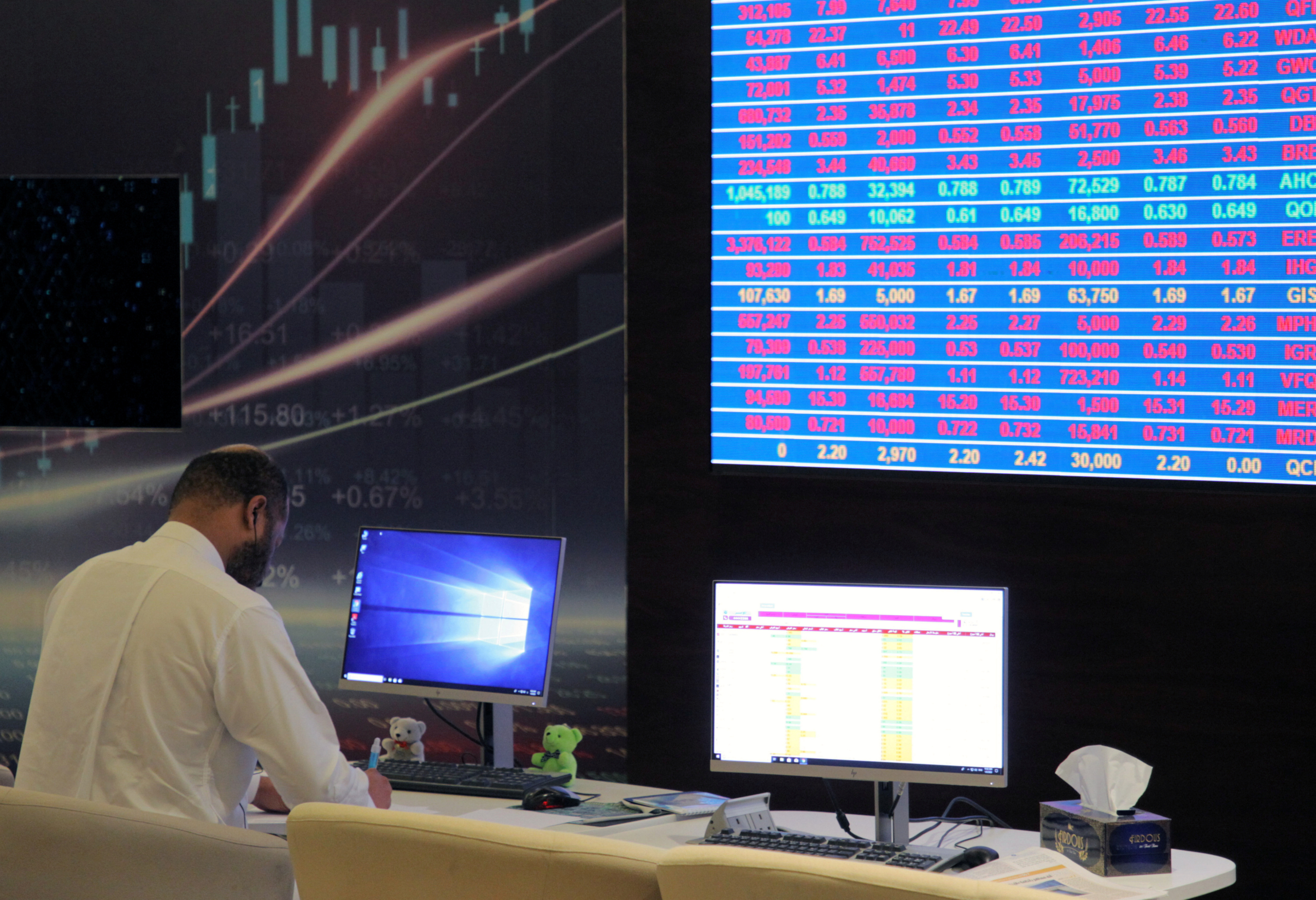
Most Gulf markets inch higher despite trade war fears

Most stock markets in the Gulf edged higher in early trade on Tuesday as investors focused on upcoming corporate earnings, although escalating U.S.-China trade tensions weighed on sentiment.China slapped tariffs on U.S. imports in a swift response to new U.S. duties on Chinese goods, renewing a trade war between the world's top two economies even as President Donald Trump offered reprieves to Mexico and Canada.Additional 10% tariff across all Chinese imports into the U.S. came into effect at 12:01 a.m. ET on Tuesday (0501 GMT) after Trump repeatedly warned Beijing it was not doing enough to halt the flow of illicit drugs into the United States.Saudi Arabia's benchmark index (.TASI) added 0.2%, helped by a 1.4% rise in Al Rajhi Bank (1120.SE) and a 0.9% increase in Alinma Bank (1150.SE).The kingdom's non-oil business sector expanded at its strongest pace in just over a decade in January, driven by a surge in new orders and robust business activity, a survey showed on Tuesday.Dubai's main share index (.DFMGI) rose 0.6%, with toll operator Salik Company (SALIK.DU) climbing 2.3% and blue-chip developer Emaar Properties (EMAR.DU) was up 0.7%.Abu Dhabi's benchmark index (.FTFADGI) edged up 0.2%, supported by a 1.6% gain in Borouge (BOROUGE.AD)…
Reactions to China’s tit-for-tat tariffs

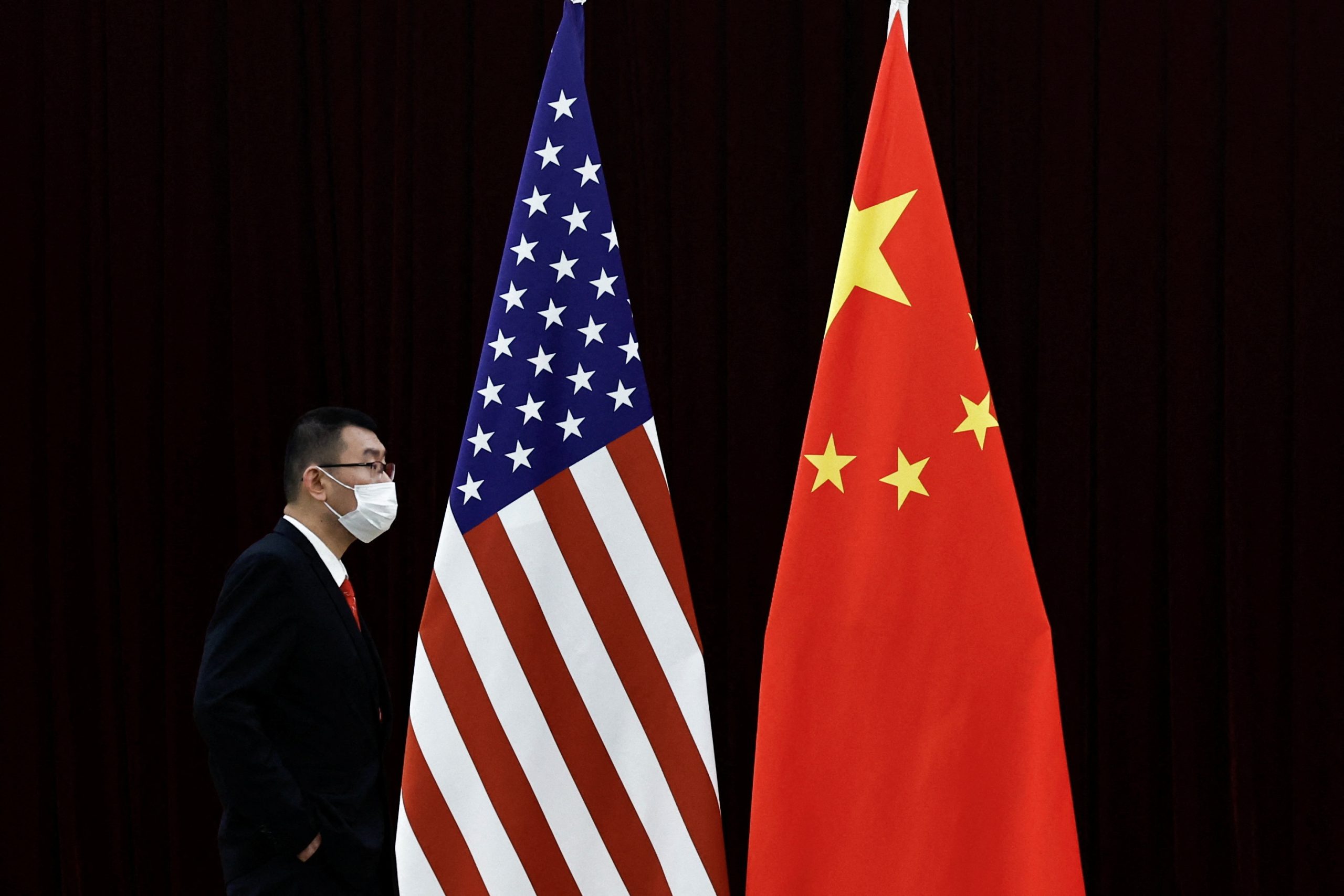
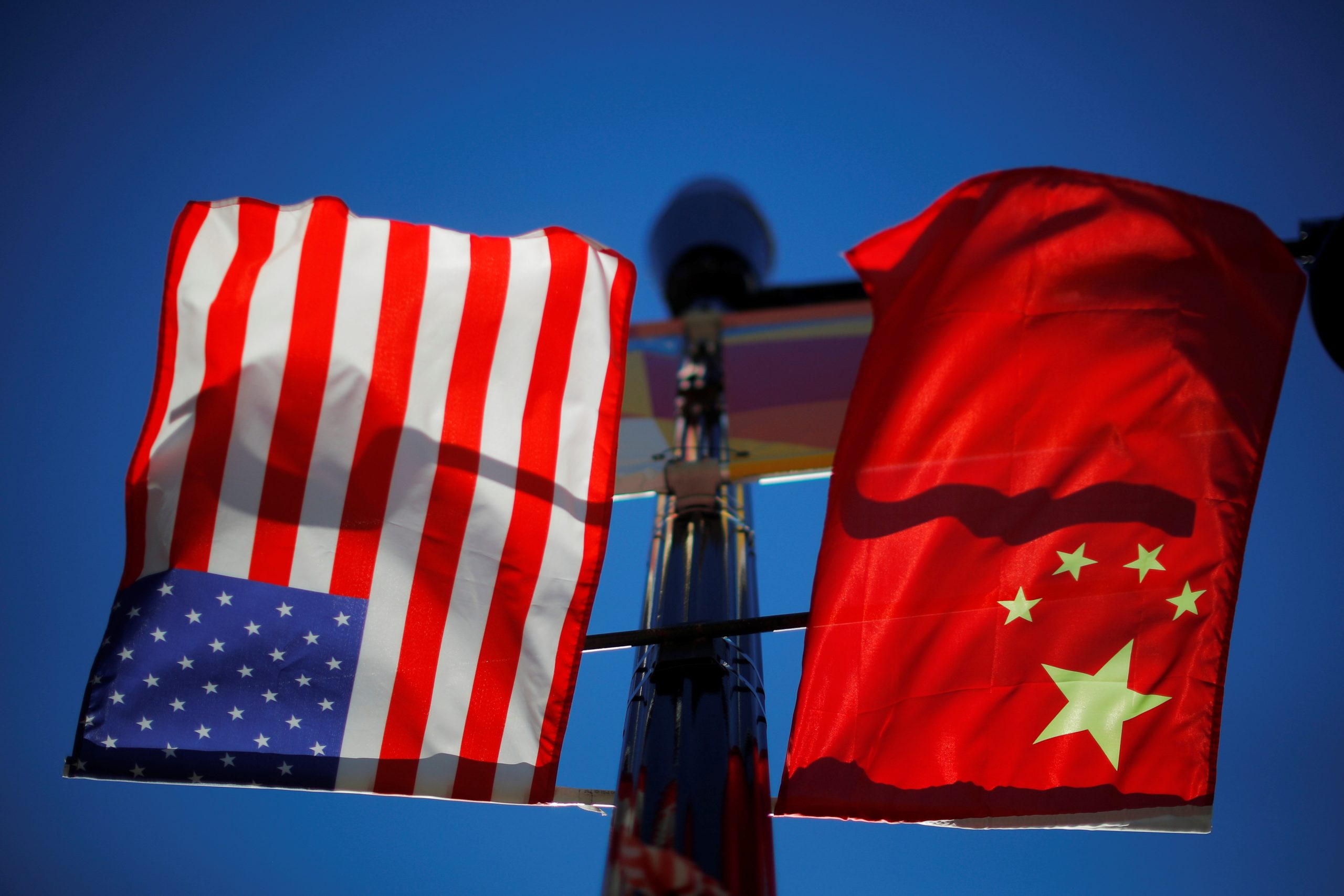
China on Tuesday slapped tariffs on U.S. imports in a rapid response to new U.S. duties on Chinese goods, renewing a trade war between the world's top two economies as President Donald Trump sought to punish China for not halting the flow of illicit drugs.Trump's additional 10% tariff across all Chinese imports into the U.S. came into effect at 12:01 a.m. ET on Tuesday (0501 GMT).On Monday, Trump suspended his threat of 25% tariffs on Mexico and Canada at the last minute, agreeing to a 30-day pause in return for concessions on border and crime enforcement with the two neighbouring countries.COMMENTS:SHIER LEE LIM, LEAD FX & MACRO STRATEGIST FOR APAC, CONVERA, SINGAPORE"China's calibrated retaliatory measures - targeting energy, agriculture, and machinery - aim to pressure key U.S. export sectors while mitigating domestic inflation risks. Our analysis aligns with estimates of asymmetric growth impacts: U.S. GDP could slow by 0.8–1.0 percentage points in 2025, versus a more contained around 0.4-point drag for China, reflecting its trade diversification since 2018."While the immediate inflationary impact of these tariffs appears limited (around 10–20 bps added to U.S. CPI), supply chain disruptions - particularly in energy and tech - pose upside risks. Markets currently price…

Australia household spending rises for third straight month in Dec

Australian household spending rose for a third straight month in December due to higher discretionary spend, data showed on Tuesday, suggesting consumption is picking up after a long fallow period.The Australian Bureau of Statistics' monthly household spending indicator (MHSI) showed a seasonally adjusted rise of 0.4% in December from November, when it rose by an upwardly revised 0.8%.Annual growth picked up to 4.3%, the highest since March 2024."The growth in December was driven by new vehicle purchases, dining out, air travel and streaming services," said Robert Ewing, ABS head of business statistics."Continued strength in clothing and footwear, furnishings and household equipment, and goods for recreation and culture also contributed to higher discretionary spending."The data is not expected to sway expectations for a rate cut later this month, which is almost fully priced in by traders after a surprisingly soft inflation report opened the door for the Reserve Bank of Australia to deliver its first rate cut in four years.Consumer spending should add around 0.2 percentage points to gross domestic product in the fourth quarter, a small but vital contribution to economic growth which had been flatlining under the burden of high mortgage rates and cost-of-living pressures.The MHSI series will replace…

US says packages from China to face formal customs entry under new tariffs

Mailed packages from China must undergo formal customs entry under new tariffs scheduled to be implemented on Tuesday, according to a notice from the U.S. Customs and Border Protection posted online on Monday.Chinese imports that are eligible for temporary duty exemptions will also be subject to U.S. tariffs of 10%, the notice posted in the Federal Register said.U.S. President Donald Trump on Monday delayed implementation of tariffs on Canada and Mexico until March 1, leaving only the Chinese packages affected for now.CBP issued additional guidance for shippers on how to handle those shipments in light of the executive order on Chinese tariffs, and how to address with a manifest filed before the order takes effect."As we transition to execution of the Executive Order, it is extremely important that the trade maintain awareness of the shipments they are responsible for and are aware of the messaging that they are receiving from CBP," it said.Source: Reuters.com

Trump warns tariffs on China may increase

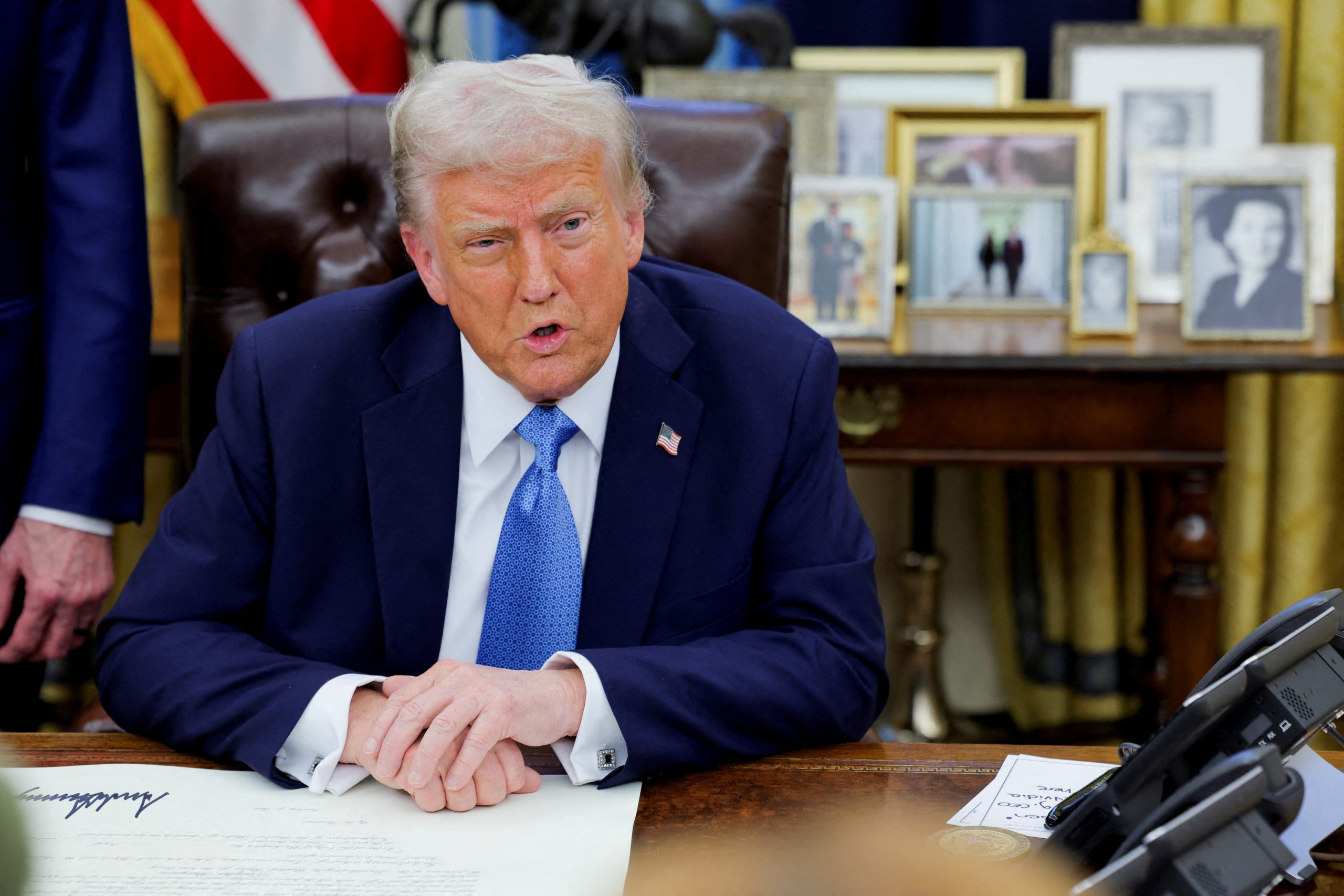
U.S. President Donald Trump warned on Monday he might increase tariffs on China beyond the 10% he imposed on Saturday and that "we will speak to China" probably over the next 24 hours.He described the tariffs he placed on Chinese imports as an "opening salvo" in his drive for more balance in the U.S.-China trade relationship. He spoke to reporters in the Oval Office.Source: Reuters.com

Trump tariff headlines spur volatility surge across markets

U.S. President Donald Trump's initial tariff actions against Canada, Mexico and China sparked a rise in broad market volatility and a rush to take guard against increased ructions across asset classes from stocks to currencies.The U.S. President's weekend orders for additional levies of 25% on imports from Mexico and most goods from Canada, as well as 10% on goods from China, jolted markets surprised by the speed and intensity of these moves so soon after his inauguration.Analysts estimate the tariffs could raise the risk of a sharp slowdown in global growth, resurgent inflation and a pause to Federal Reserve rate cuts, prompting a bout of risk aversion from investors.The Cboe Volatility Index (.VIX) - an options-based gauge of investor expectation for near-term stock market moves - jumped to a 1-week high of 20.41, before paring gains to trade up 2 points at 18.43. While that is still below the index's long-term average of 19.4, it is well above its average reading over the past year of 15.8.Currency markets were also roiled with an across the board rise in implied volatility - a measure of how much the market expects prices to fluctuate in the future. Volatility expectations for currencies directly…

Canadian factory PMI dips in January as trade war risk dents confidence

Canadian manufacturing activity increased at a slower pace in January as looming U.S. trade tariffs reduced confidence in the outlook, even as moves by clients to get ahead of the taxes led to the first increase in export orders in 17 months.The S&P Global Canada Manufacturing Purchasing Managers' Index (PMI) fell to 51.6 in January from 52.2 in December. Still, it was the fifth straight month above the 50.0 no-change mark. A reading above 50 indicates expansion in the sector.U.S. President Donald Trump on Saturday ordered sweeping tariffs of 25% on goods from Mexico and Canada, demanding they stanch the flow of fentanyl and illegal immigrants.Canadian Prime Minister Justin Trudeau said Canada would respond with 25% tariffs against $155 billion of U.S. goods, including beer, wine, lumber and appliances.“January’s survey highlighted the complex impact that possible U.S. tariffs are presently having on the Canadian manufacturing economy," Paul Smith, economics director at S&P Global Market Intelligence, said in a statement.Canada sends about 75% of its exports to the United States. The new export orders index rose to 50.3, its first move above the 50 threshold since August 2023."Firms noted that clients in some instances were bringing forward their orders to get…

Trump tariffs push Wall Street down, dollar up

Wall Street opened lower on Monday following a worldwide selloff driven by concern that U.S. President Donald Trump's tariffs on Canada, Mexico and China are just the opening salvo in a global trade war that would curb economic growth.The U.S. S&P 500 stock index (.SPX) fell almost 1.5%, while the tech-heavy Nasdaq (.NDX) declined 1.8%. The Russell 2000 (.RUT) index of small cap stocks - viewed as major beneficiaries of Trump's policies - fell almost 1%.In three executive orders, the United States imposed 25% tariffs on Mexican and most Canadian imports and a further 10% on goods from China, starting on Tuesday.Britain's FTSE 100 (.FTSE) fell 1.4%, while the pound dropped 0.3% after Trump told reporters on Sunday that while the country was "out of line" when it came to trade, it may be able to avoid tariffs."We'll see how things work out. It might happen with them, but it will definitely happen with the European Union, I can tell you that," Trump told reporters after returning to Washington from Mar-a-Lago.Trump warned Americans might feel "some pain" as tariffs are expected to increase consumer prices in the United States, while the effect of the trade war is expected to be…

TSX futures join global selloff after Trump tariffs

Futures for Canada's main stock index fell sharply on Monday, part of a global market selloff after U.S. President Donald Trump announced tariffs on Canada, Mexico and China, starting on Tuesday.March futures on the S&P/TSX index were down 1.3% at 6:50 a.m. ET (1150 GMT). Futures for Wall Street's S&P 500 also dropped 1.3%.Trump slapped a 25% import tariff on all Canadian goods except energy products, which will carry a levy of 10%.Canada's Prime Minister Justin Trudeau immediately announced retaliatory tariffs on C$155 billion ($107 billion) of U.S. goods.Those on C$30 billion worth of goods will take effect on Tuesday, the same day as most of Trump's tariffs, and duties on the remaining will take effect in 21 days, Trudeau said.The developments compelled global investors to buy U.S. dollars and dump equities as they remained worried that the tariffs could fuel inflation, keeping interest rates higher for longer.In commodities, oil prices , rose on fears of supply disruption after the new tariffs, though gains were capped by concern over what could be an economically damaging trade war.Gold prices erased early losses to remain close to record highs on safe-haven demand. Copper prices hit a four-week low on worries that the…