Tariffs might not happen but tequila is already paying the price

Even if U.S. President Donald Trump's tariffs on Mexico are not imposed, the threats and uncertainty caused by on and off-again levies have already cost the tequila sector money and could drive a temporary slowdown in sales, producers, investors and analysts told Reuters.The 25% tariffs, initially due to be applied from February and briefly in place on March 4 before being suspended on both occasions, threatened billions of dollars of imports from huge producers like Diageo (DGE.L) and Becle (CUERVO.MX) alone.They prompted businesses and consumers to stockpile tequila, which can only be made in Mexico, freeze expansion plans and divert resources elsewhere.Some producers, restaurants and drinkers accumulated hefty tequila stock, sometimes of up to six months - a bet which will pay off if tariffs are imposed. But producers say this also has a cost, hurting the sector even if the tariffs are rolled back."No matter what happens ... a price has been paid," said Mike Novy, chief executive officer of Calabasas Beverage Company, which operates the tequila brand founded by Kendall Jenner, 818 Tequila.The company asked its distillery to work flat out, with workers on overtime through the holidays in December, in order to be able to ship around…

Oil prices jump; optimism over China’s consumption stimulus boosts Asia shares

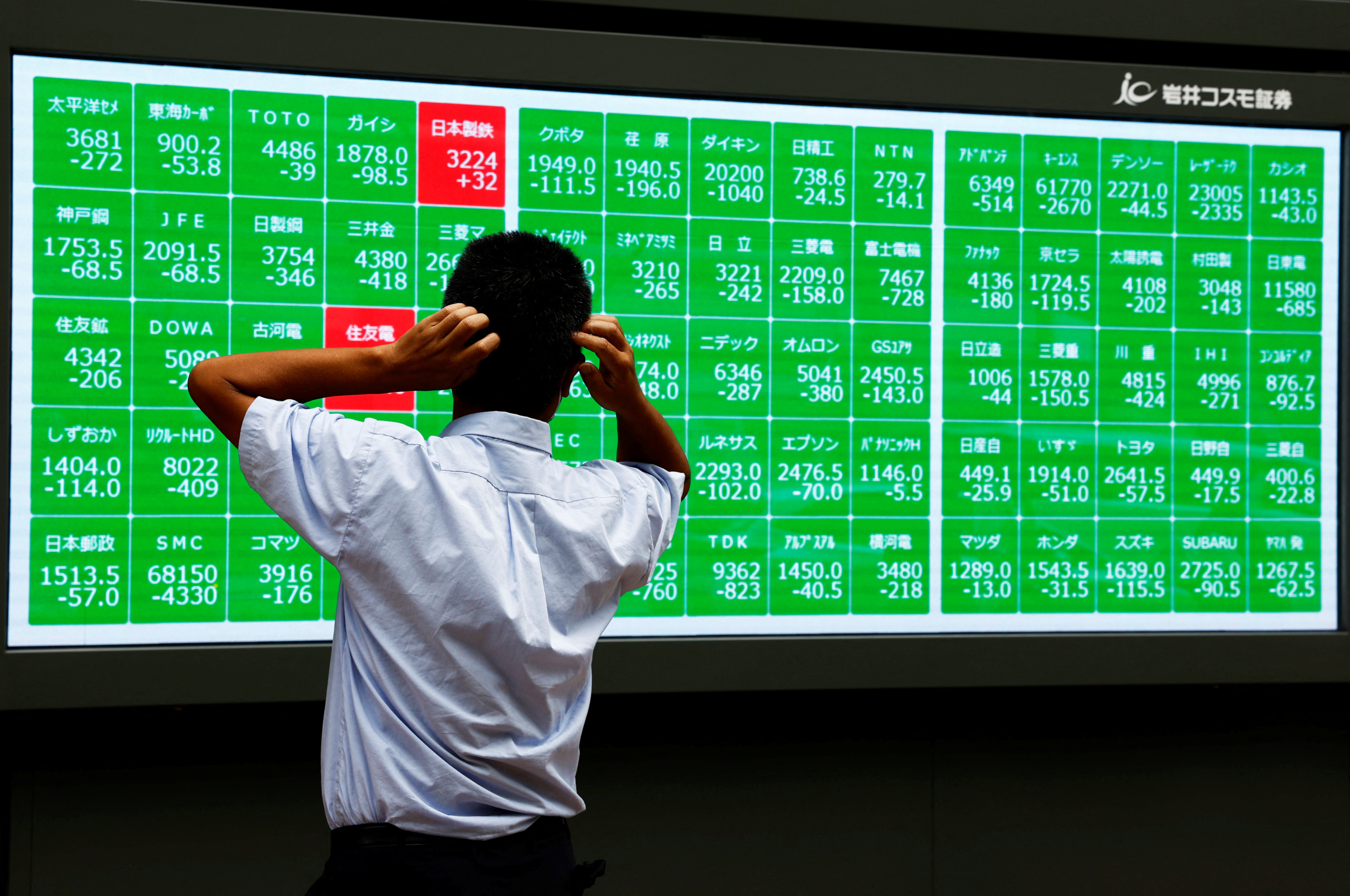
Oil prices surged on Monday, U.S. stock futures slid while those in Asia charged higher as investors took stock of the contrasting fortunes between the United States and the rest of the world.The week is a busy one with a series of central bank policy meetings, including by the U.S. Federal Reserve. It is widely expected to keep rates on hold when its meeting concludes on Wednesday.Over the weekend the U.S. defence secretary said the country would continue attacking Yemen's Houthis until they ended attacks on shipping, sending oil prices sharply higher in early Asia trade on Monday as investors worried about disruptions to supply.Brent futures were up 1.06% at $71.33 per barrel, while U.S. West Texas Intermediate crude futures also jumped 1.12% to $67.94 a barrel."We've got a reemergence of those geopolitical tensions," said Tony Sycamore, a market analyst at IG. "If crude oil gets much above $68.50, I think that could really start to trigger some short covering in the market."Also supporting oil prices were growing expectations of a revival in Chinese demand, after Beijing announced new efforts to boost consumption in the world's second-largest economy.China's State Council unveiled on Sunday a slew of measures including increasing residents'…

Global equity funds see declining demand on esclating trade tensions

Global equity funds saw weaker demand in the week through March 12, amid a global stock sell-off driven by concerns over U.S. tariffs and its escalating trade wars.Investors put just $3.21 billion into global equity funds for the week, sharply down from an average weekly inflow of $11.6 billion in February, LSEG Lipper data shows.European equity funds faced the heaviest selling during the week, as the EU's retaliatory tariffs on U.S. goods heightened trade tensions, leading to investors withdrawing a net $5.29 billion — the first net outflow in eight weeks.However, U.S. and Asian equity funds received modest net inflows.Sectoral equity funds saw their second consecutive weekly net outflow to the tune of $4.5 billion, with investors divesting a record $3.67 billion worth of technology funds.Heightened investor caution spurred inflows into safer assets, with bond funds attracting $10.37 billion, their 11th consecutive week of net inflows.Short-term bond funds drew a net $7.78 billion, the biggest weekly inflow in two months. Investors also snapped up government bond funds worth $2.5 billion and corporate bond funds worth $1.1 billion, on a net basis.Gold and precious metals commodity funds were popular for a fifth successive week as they drew about $794 million worth…

Asia shares steady; gold at record high as trade war ratchets up

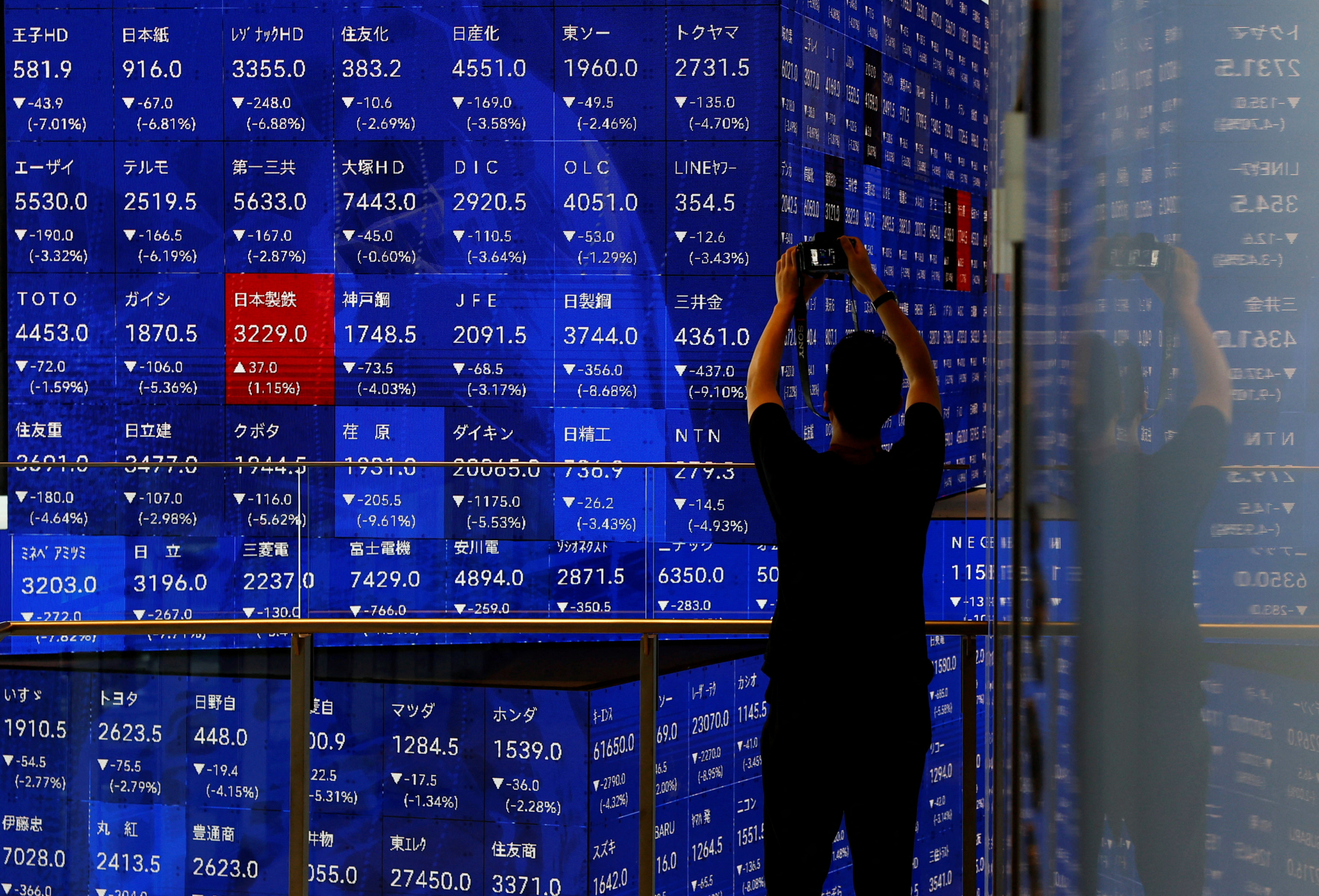
Asia shares rose on Friday and global markets attempted a rebound after a brutal selloff, while gold reached a record as an escalation of global trade tensions left investors nervous and sparked a flight to safe-haven assets.Relief over the likely aversion of a U.S. government shutdown boosted stocks in early Asian trade, after Senate Democrat Chuck Schumer said he would vote to advance a Republican stopgap funding bill, signalling that his party would provide the necessary support.U.S. stock futures rose sharply in response, with the Nasdaq up 0.87% and S&P 500 futures advancing 0.7%.EUROSTOXX 50 futures similarly edged up 0.04% and FTSE futures gained 0.1%."For today, at least, this news from Congress is positive for market sentiment at this point," said Alvin Tan, head of Asia FX strategy at RBC Capital Markets.MSCI's broadest index of Asia-Pacific shares outside Japan (.MIAPJ0000PUS) traded 0.2% higher, though was on track to lose more than 2% for the week, as global trade disputes battered global stocks.In the latest in a long list of tariff threats, U.S. President Donald Trump said on Thursday he would hit imports of European wine and spirits with duties of 200% if the EU did not remove retaliatory surcharges on…

Chinese stocks, emerging market debt see large inflows in February, says IIF

Foreigners added nearly $16 billion to their emerging market portfolios in February, with investors loading up on Chinese stocks as well as debt across developing economies, a report from a finance trade group said on Thursday.Chinese stocks sucked in $11.2 billion, but selling elsewhere meant emerging market equity portfolios saw a net outflow of $2.1 billion last month. The picture was the reverse in fixed income, where Chinese bonds posted a $15.1 billion outflow even as emerging market debt elsewhere raked in $33.2 billion.The overall $15.9 billion net inflow to emerging market portfolios last month compares with $21.2 billion in January and $27.8 billion in February 2024, according to data from the Institute of International Finance (IIF).The February inflow to Chinese equities was the largest for any month since September and the second largest in over two years."The 'animal spirits' are being awakened with a recognition of the advances that Chinese companies made in diverse areas such as AI and electric vehicles," said Guilherme Valle, founding partner and portfolio manager at ABS Global Investments in an email exchange."The combination of innovative business models and low valuations will continue to provide a favorable backdrop for Chinese equities," he said.The decoupling of…

Wall Street powerhouse BNY takes minority stake in EquiLend

EquiLend, a fintech at the heart of securities lending on Wall Street, said on Thursday it has secured a minority investment from an affiliate of U.S. banking giant BNY (BK.N).The securities lending industry enables investors to borrow and lend stocks, bonds and other assets to facilitate liquidity management and trading strategies.Major banks, asset managers and hedge funds rely on securities lending to optimize portfolio returns and meet regulatory capital requirements.EquiLend is partly owned by some of Wall Street's biggest heavyweights, including Goldman Sachs (GS.N), BlackRock (BLK.N), JPMorgan Chase (JPM.N) and Bank of America Merrill Lynch (BAC.N).BNY, along with eight other major financial institutions that hold strategic investments in EquiLend, will advise it on advancing innovation and improving efficiency in the industry, the fintech said."We are confident in EquiLend's central role in the marketplace and plans to further redefine securities finance with innovative market infrastructure," said Nehal Udeshi, BNY's head of securities finance.The global securities finance industry generated $703 million in revenue for lenders in February, a report by DataLend, the market data service of EquiLend, showed earlier this month.EquiLend, which was formed in 2001 by a consortium of global financial institutions and went live in 2002, provides securities finance technology…

Toronto stocks slip as tariff jitters keep investors on edge

Canada's main stock index edged down on Thursday in volatile trading, as investors remained risk-averse amid an intensifying trade war with the United States.The Toronto Stock Exchange's S&P/TSX composite index (.GSPTSE) was down 0.1% at 24,394.32.Information technology (.SPTTTK) led the declines, falling 2.1% to a four-month low. The sub-index has dropped 17.6% from its record peak a month ago.Consumer staples (.GSPTTCS) and healthcare (.GSPTTHC) shed 1.2% each."It's still a very volatile situation and things could change quite rapidly," said Colin Cieszynski, chief market strategist at SIA Wealth Management, adding the "trade war with the U.S. is a huge risk to Canada", which is being reflected in the equities.U.S. President Donald Trump's wavering trade policies have triggered a global trade war, rattling investors, consumers and business confidence, while increasing recession risks for the United States as well as for Canada.The Bank of Canada, which delivered a 25-basis point interest rate cut on Wednesday, also raised concerns about inflationary pressures and weaker growth stemming from tariff uncertainties.Further adding pressures on equities, the Canadian 10-year benchmark yield jumped five basis points at 3.130%.Wall Street's benchmark S&P 500 (.SPX) lost 0.7% on Thursday, primarily hit by Trump's rhetoric to impose a 200% tariff on…

UK stocks mixed as investors assess corporate results, tariffs

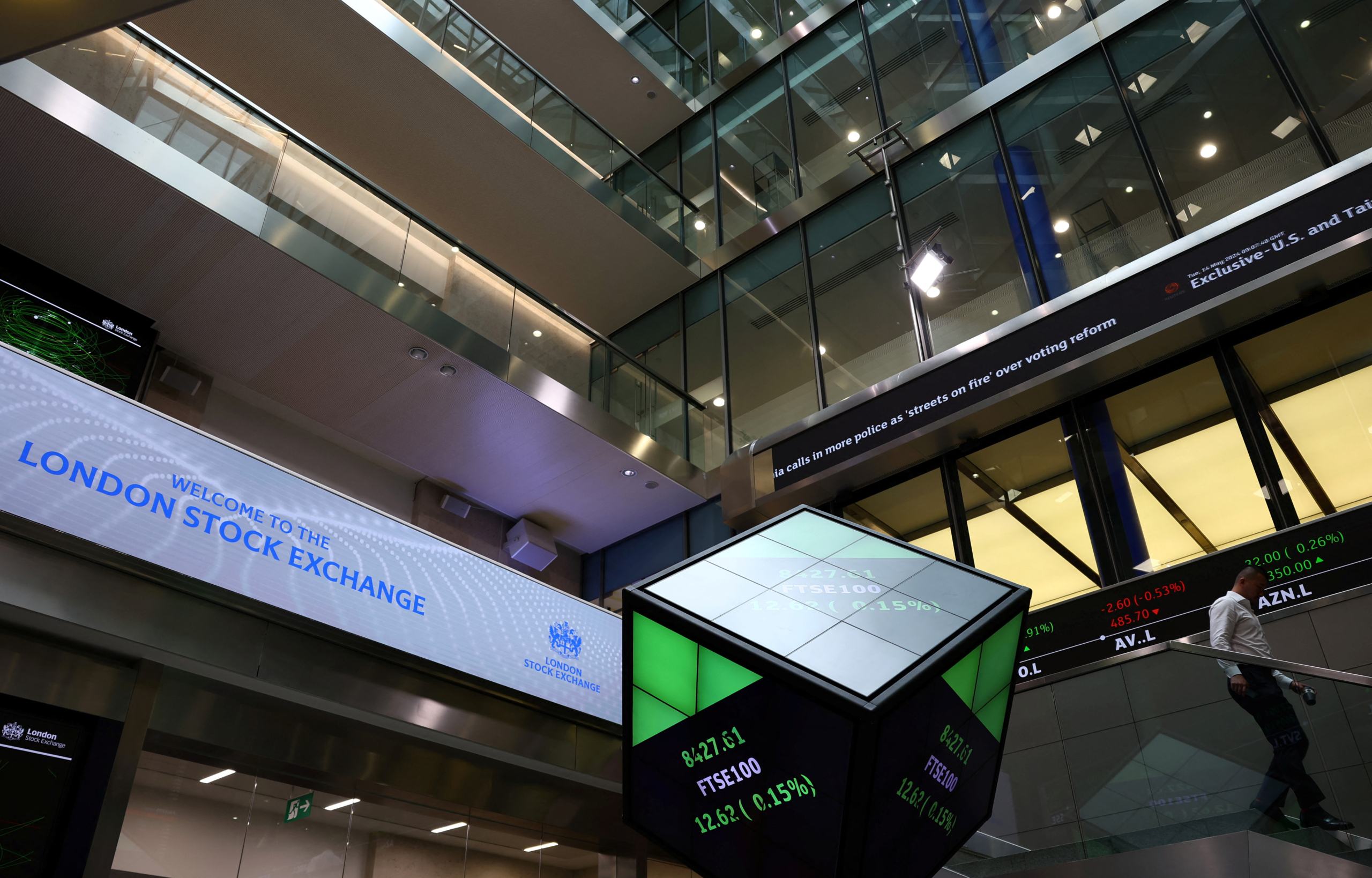
British stock indexes were mixed on Thursday, as positive corporate results were offset by concerns around U.S. trade policies.The benchmark FTSE 100 (.FTSE) was up 0.4% at 1100 GMT. The midcap FTSE 250 (.FTMC) was down 0.2%.The export-heavy blue-chip index held on to gains from Wednesday on positive Ukraine-Russia developments, and as sterling edged lower against the dollar.However, worries about the impact of U.S. trade policy continued. Britain refrained from immediate retaliation after U.S. President Donald Trump imposed tariffs on steel and aluminium imports on Wednesday, but Prime Minister Keir Starmer said all options remained open.Meanwhile, a survey showed that Britain's housing market had its slowest month in more than a year in February as a rush by buyers to close deals ahead of the expiry of a tax break ran out of steam. Further softening was expected in the months ahead.Homebuilder (.FTNMX402020) stocks were down 1.7%, leading sectoral declines.Deliveroo (ROO.L) hit a one-year trough, down 4.4%, after the meal delivery firm forecast its annual profit below estimates.Halma was up 3.6%, the biggest FTSE 100 gainer, after the health and safety device maker raised its profit margin forecast.IG Group (IGG.L) gained 4.3%, as the online trading platform reported a 12%…

Trump threatens tariffs on European wine and spirits in escalating trade war

U.S. President Donald Trump on Thursday threatened to slap a 200% tariff on wine, cognac and other alcohol imports from Europe, opening a new front in a global trade war that has roiled financial markets and raised recession fears.Stocks fell on the news, as investors worried that Trump would enact stiffer trade barriers around the world's largest consumer market."The Entire World is RIPPING US OFF!!!" Trump wrote on his Truth Social platform.Trump's threat came in response to a European Union plan to impose tariffs on American whiskey and other products next month -- which itself is a response to Trump's 25% tariffs on steel and aluminum imports that took effect on Wednesday. The European Commission had no immediate comment on Trump's post.Canada, a neighbor and close ally that is the U.S.' biggest aluminum provider, has also announced countermeasures of its own to Trump's metals tariffs.Alcohol is shaping up to be a key friction point in the trade war Trump has launched since returning to the White House in January.Some Canadian retailers have pulled American bourbon from their shelves as relations between the two countries have frayed and Trump has threatened to annex that country.Many of the EU's proposed countermeasures, worth…

IEA sees global oil market surplus for 2025 as demand disappoints

Global oil supply could exceed demand by around 600,000 barrels per day this year, the International Energy Agency said on Thursday, due to growth led by the United States and weaker than expected global demand.The outlook of ample supplies despite U.S. sanctions on major exporters Russia and Iran highlights the challenge for OPEC+, or the Organization of the Petroleum Exporting Countries plus Russia and other allies, in balancing the market."The United States is currently producing at record highs and is forecast to be the largest source of supply growth in 2025," the IEA, which advises industrialised countries, said in a monthly report."The latest round of sanctions on Russia and Iran has yet to significantly disrupt loadings, even as some buyers have scaled back purchases."Last month, the IEA had suggested a slightly narrower surplus of around 500,000 bpd, according to Reuters calculations based on the agency's data.World oil demand is now expected to rise by 1.03 million bpd in 2025, the IEA said on Thursday, down 70,000 bpd from last month's forecast, with growth driven largely by Asia and specifically China."Asian countries will account for almost 60% of gains, led by China where petrochemical feedstocks will provide the entirety of growth…