HEDGE FLOW Stock hedge funds post big one-day drop in DeepSeek rout, say Goldman data

Hedge fund stock-pickers lost billions of dollars on Monday in a rout in global technology shares sparked by the emergence of a low-cost Chinese artificial intelligence model, according to a Goldman Sachs trading update and industry figures on Tuesday.Hedge funds that pick stocks based on company fundamentals rather than using algorithms to trade systematically were down 1.1% Monday, as markets sank, Goldman's trading desk said, a significant one-day drop for funds that in a good year like 2024 make 15%.Goldman Sachs does not reveal dollar figures for the size of the hedge funds its teams track, but data from hedge fund research group BarclayHedge suggest the losses from Monday's sell-off could tally into the billions.Assets under management for hedge funds that take long and short positions - bets on an asset either increasing or decreasing in value - reached $176.7 billion at the end of the third quarter of 2024, according to BarclayHedge.Long-only hedge fund manager assets reached $672.9 billion in the same period, their website said.Stock-picking hedge fund returns are up 1.5% for the year so far, said the bank. These are hedge fund managers who invest based on the economic health of markets and companies, rather than charting…
Maybe Fed should fret a bit about an AI wobble

The Federal Reserve will probably keep its distance from the DeepSeek saga during its policy meeting this week, but the U.S. central bank has good reason to keep very close tabs on any artificial intelligence wobble on Wall Street.One of the curious things about the Nvidia-led plunge in U.S. megacap stocks on Monday, triggered by the emergence of the relatively cheap Chinese generative DeepSeek AI model, was how much the stock shakeout hit U.S. interest rate markets.As stock benchmarks and tech-led subsets recoiled sharply, so too did U.S. Treasury yields as Fed easing bets increased.Two-year yields lost up to 10 basis points - dipping below 4.2% for the first time this year - and Fed futures markets moved to fully price in two rate cuts this year, having been hesitant about the second until Monday.On one level, this may have been just a knee-jerk flight to "safety" at the first hint of a stock market swoon. Or maybe rates traders were just nervy ahead of the Fed's upcoming policy decision.What's almost certain is that the Fed will give the entire incident a bodyswerve when it issues its policy statement on Wednesday. Likely to stand pat on rates this week, the…

Growth engine or casino? Global investors rethink China playbook

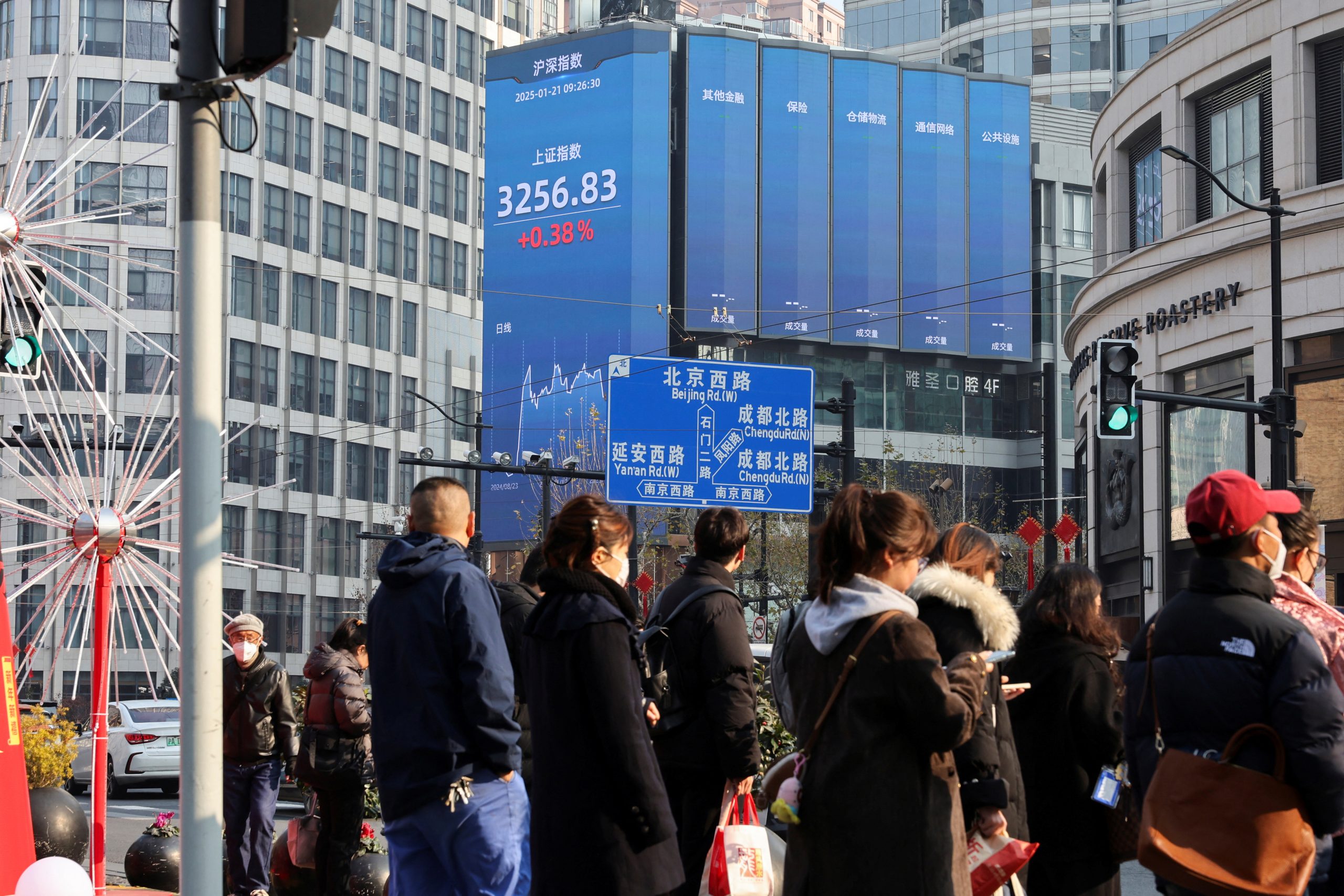
Global investors who have historically bet on China's economic development are ditching grand narratives of long-term prosperity and instead adopting more modest views that see the market as an opportunity for smaller bets with quicker payoffs.Frustration over Beijing's efforts to shore up faltering growth and fading investor conviction over where the economy is headed have kept stocks moving sideways, despite some initial excitement over promises of stimulus last year.The lack of investor consensus and increasing policy uncertainty have fundamentally changed the way analysts and money managers see China's domestic markets and have tightened their investment horizons."People basically take China as a trading market," said Goldman Sachs' China equity strategist Kinger Lau. "If they see the catalyst, they will come in, but after a short period of time, they will sell and take profits."Lau is positive but says clients want to "wait and see," and it's hard to engage them on China until there's clarity on both President Donald Trump's plans on China and Beijing's response.Last September, the benchmark Chinese stock index (.CSI300) surged 40% in two weeks after the Communist leadership and regulators signalled stimulus was in the offing. The yuan jumped and a long rally in the bond market,…

Australia inflation cools in Q4, opens door to rate cut

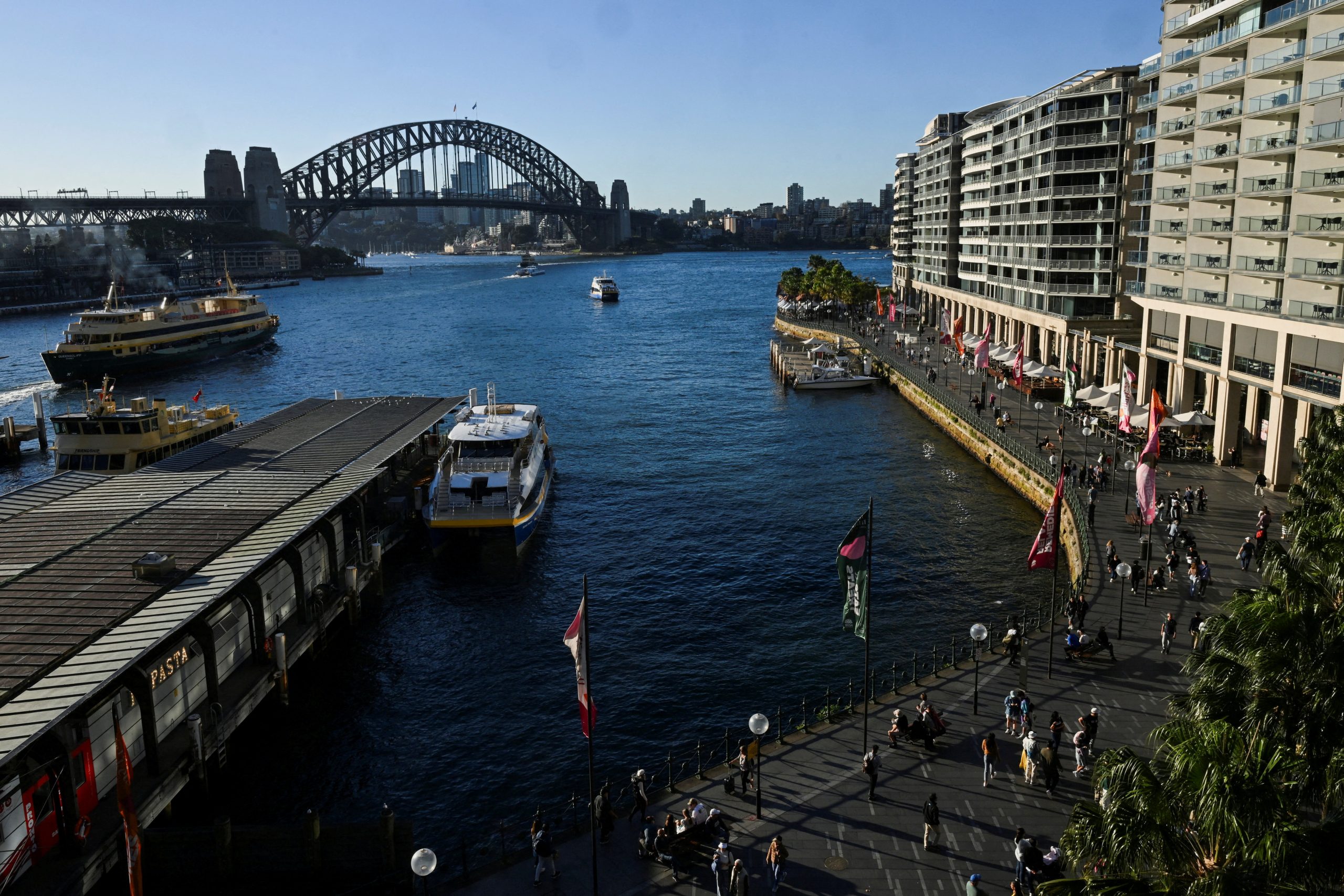
Australian consumer prices rose at the slowest pace in almost four years in the December quarter, while a pullback in housing costs helped cool core inflation and open the door to a cut in interest rates as early as next month.Wednesday's benign price report saw markets price in an 80% probability the Reserve Bank of Australia would cut the 4.35% cash rate by a quarter point when it next meets on Feb. 18.That would be the first policy change in more than a year and the first easing since the depths of the pandemic. A fall in borrowing costs would also be welcomed by the Labor government which faces a tough election this year.Local bonds rallied in reaction, while the Aussie dollar dipped 0.3% to $0.6228 .The data from the Australian Bureau of Statistics showed the consumer price index (CPI) rose 0.2% in the fourth quarter, under forecasts of a 0.3% increase. Some of the moderation was due to government rebates on electricity and other subsidies, which will tend to reverse once they expire.Annual inflation dropped to 2.4%, from 2.8% the previous quarter and a peak of 7.8% in late 2022, leaving it bang in the middle of the RBA's…

Tech stocks rebound in Asia as DeepSeek worries ease

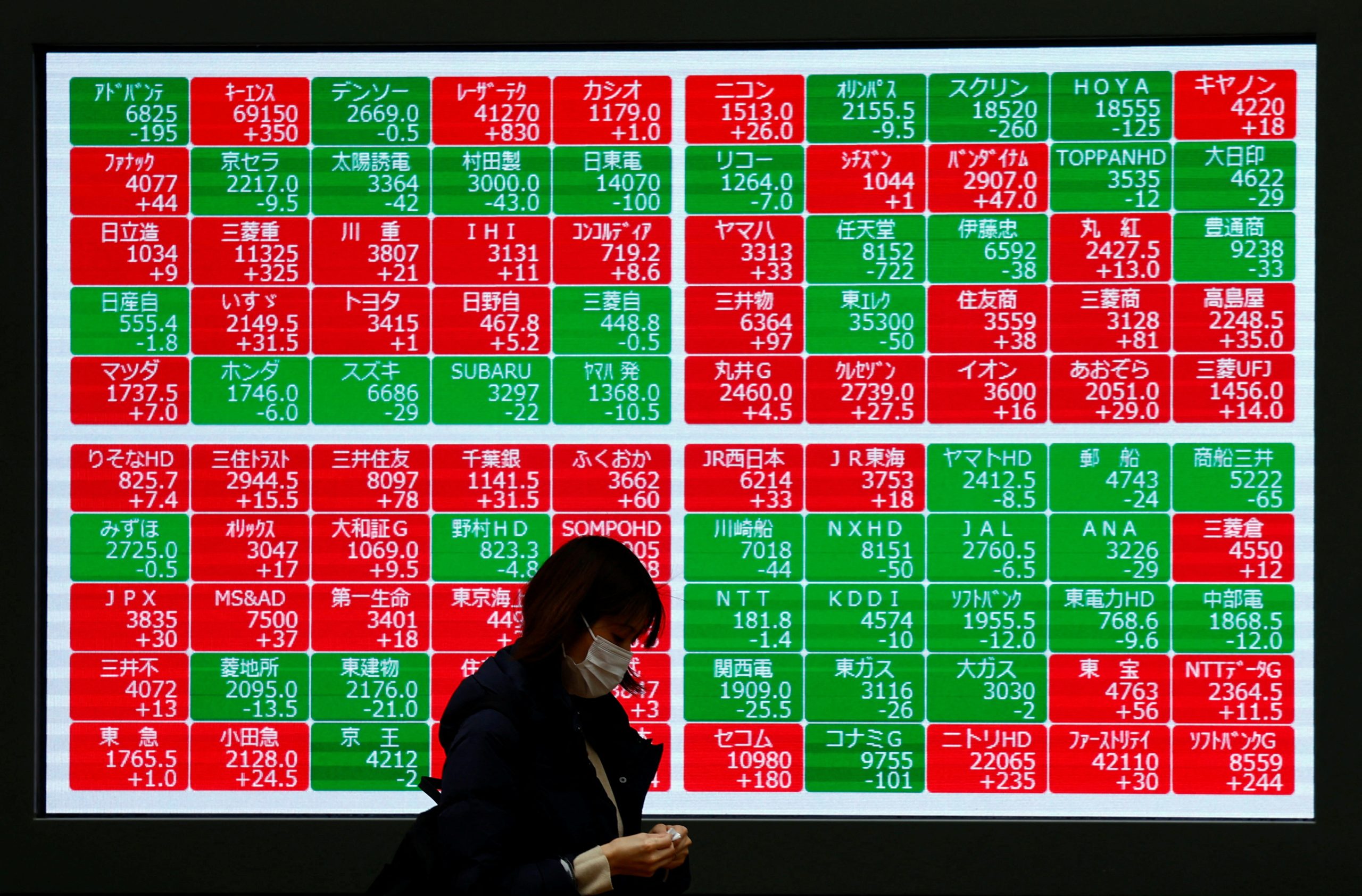
Technology stocks led gains in Asia-Pacific markets on Wednesday, tracking advances on Wall Street overnight as investor angst ebbed over the emergence of a low-cost Chinese AI model that some see rivalling U.S. dominance of the industry.The dollar remained firm after traders rotated back into the currency from safe-haven peers like the Japanese yen, while also getting a boost from fresh tariff warnings from the Donald Trump administration.Trading was thinned in Asia by Lunar New Year holidays that shuttered exchanges in mainland China and Hong Kong, as well as Taiwan, Singapore and South Korea.Japan's Nikkei share average (.N225) rose 0.5% as of 0055 GMT, putting it on track to snap three straight days of declines.Australia's stock benchmark (.AXJO) added 0.8%, with a subindex of tech names (.AXIJ) climbing 2.2%.Futures for the U.S. S&P 500 and Nasdaq Composite were each down about 0.1%, following respective rallies of 0.9% and 2% for the cash indexes overnight.The tech heavy Nasdaq had tumbled more than 3% in the previous session, after the spiking popularity of Chinese startup DeepSeek's app called into question sky-high valuations for U.S. chipmaker Nvidia (NVDA.O) and others at the forefront of the AI revolution."There appeared to be a level of…

US tech and tariff shocks spark scramble for new market havens

As a tech stock rout and U.S. dollar swings driven by President Donald Trump's tariff threats send markets into a tailspin, investors are piling into assets from Japan's yen to European credit that could act as a buffer to the turbulence.Markets that cheered Trump's pro-growth agenda have turned bumpy, with oil prices and Canada and Mexico's currencies gyrating, muddled inflation forecasts shaking Treasuries and investors starting to view the new White House as a source of risk."There will likely be more volatility in the U.S. dollar and across many other assets," said Amelie Derambure, senior multi-asset manager at Europe's biggest investor Amundi.She said she had limited her funds' exposure to sudden shifts in the U.S. outlook by investing in inflation-linked bonds that would be insulated from tariff-induced consumer price rises and European corporate debt that may gain on further euro zone rate cuts.Monday's deep slump in artificial intelligence chipmaker Nvidia (.NVDA.O), driven by panic over low-cost Chinese competition in AI, has also thrown a fresh curveball at febrile U.S. markets with investors expecting more turmoil ahead.BUFFER TRADESTrump kicked off his presidency by leaving markets guessing about when he might impose his heavily trailed import duties, floating a China trade deal,…

Gulf markets end mixed amid US tariff threats

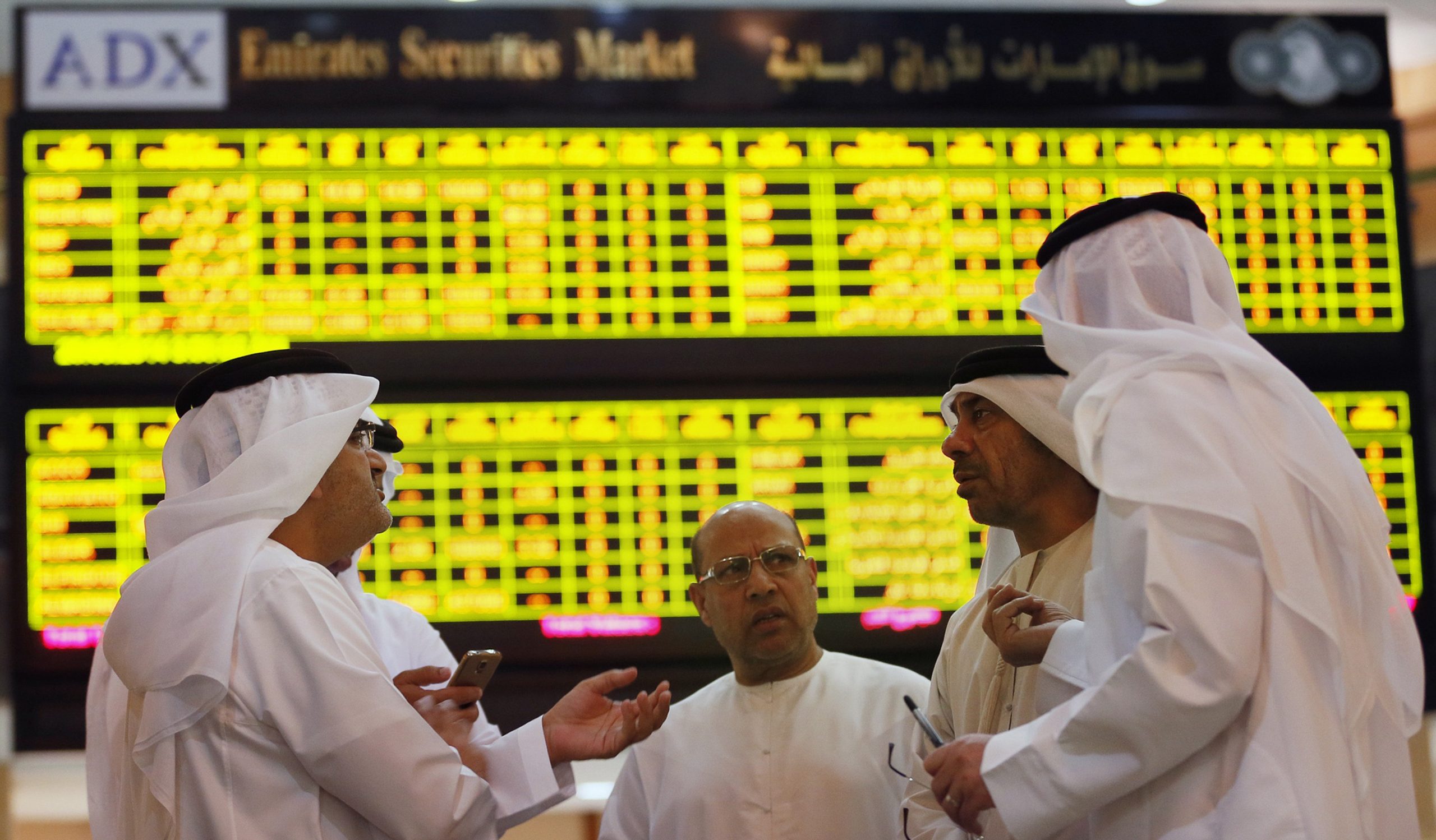
Stock markets in the Gulf closed mixed on Tuesday as investors assessed U.S. President Donald Trump's latest tariff threats, with the Saudi index rising on the back of property and telecom shares.On Monday, Trump revealed plans to impose tariffs on imported computer chips and certain metal imports, among other products. This move is likely to affect industries from technology to manufacturing and may have far-reaching consequences for the global economy.Saudi Arabia's benchmark index (.TASI) gained 0.4%, led by a 1.6% rise in the country's biggest lender Saudi National Bank (1180.SE).Among other gainers, Jabal Omar Development Company (4250.SE), a real estate firm based out of Mecca, jumped 7.5%, rising for a third consecutive session.The kingdom's Capital Market Authority (CMA) on Monday said foreign investors will be permitted to invest in Saudi-listed real estate companies operating in Mecca and Medina from Jan. 27.Elsewhere, Saudi Telecom Company (7010.SE) advanced 2.2%, after the firm said it won a contract worth 32.64 billion riyals ($8.70 billion) from a government entity to build, operate and provide telecommunications infrastructure services.Dubai's main share index (.DFMGI) fell 0.3%, hit by a 4% slide in Emaar Development (EMAARDEV.DU).In Abu Dhabi, the index (.FTFADGI) concluded flat.Oil prices - a catalyst for…

Nvidia short bets rake in over $6 billion in profits after DeepSeek panic

Short sellers of artificial intelligence-related stocks raked in bumper profits after the smashing debut of low-cost AI models from China's DeepSeek spooked Wall Street, with bets against Nvidia yielding record profits totaling more than $6 billion.Traders betting against AI-darling Nvidia (NVDA.O) earned profits of about $6.6 billion - the biggest single-day move ever on the stock - according to data analytics firm Ortex.Nvidia saw $593 billion wiped off its market value on Monday, in the biggest single-session loss ever for any company, after Chinese startup DeepSeek launched AI models that it said are at par or better than industry-leading models in the United States, at a fraction of the cost.Short sellers of chipmaker Broadcom (AVGO.O) also earned more than $2 billion in profits.Other AI-related stocks, such as server-maker Super Micro (SMCI.O), data-center operator Equinix (EQIX.O) and energy provider Vistra (VST.N), also witnessed heavy losses on Monday, giving investors betting against these firms combined profits of more than $900 million, according to Ortex.Source: Reuters.com

Saudi bourse rises on STC gains; Dubai index down

Gulf stock markets started Tuesday on a positive note, with most indexes rising, led by the Saudi index that was boosted by gains in Saudi Telecom Company.However, the Dubai index stood out as an exception, defying the regional upward trend.Saudi Arabia's benchmark index (.TASI) gained 0.5%, led by a 0.8% rise in Al Rajhi Bank (1120.SE), while Saudi Telecom Company (STC) (7010.SE) jumped 4%.STC Group, the kingdom's largest telecoms operator, on Tuesday said it won a contract worth 32.64 billion riyals ($8.70 billion) from a government entity to build, operate and provide telecommunications infrastructure services.The kingdom's Capital Market Authority (CMA) on Monday said foreign investors will be permitted to invest in Saudi-listed real estate companies operating in Mecca and Medina from Jan. 27.Jabal Omar Development Company (4250.SE), a real estate firm based out of Mecca, advanced 4.1%, on course to rise for a third consecutive session.In Abu Dhabi, the index (.FTFADGI) added 0.2%.Oil prices - a catalyst for the Gulf's financial markets - ticked up but hovered near a two-week low on Tuesday after weak economic data from China and warming weather forecasts elsewhere soured the demand outlook.The Qatari benchmark (.QSI) was up 0.1%, helped by a 0.7% rise in…

Australia business conditions improve in December, survey shows

A measure of Australian business activity rebounded in December as Christmas demand helped the down-beaten retail sector, a survey showed on Tuesday, though confidence remained poor as firms faced rising costs.The survey from National Australia Bank (NAB) showed its index of business conditions rose 3 points to +6 in December, retracing some of November's 5-point drop. The volatile confidence index edged up to -2, from -3.Sales picked up by 3 points to +9, while profitability rebounded by 4 points to +4. The employment index added 1 point to +4. Conditions improved in all industries except transport and utilities, construction and wholesale."Conditions remain strongest in services sectors," said Alan Oster, chief economist at NAB. "Most industries recorded an improvement in business conditions, with retail re-entering positive territory for the first time since November 2023."Consumer demand was weak for most of last year as high mortgage rates and cost of living pressures squeezed spending power.The Reserve Bank of Australia (RBA) kept interest rates at 4.35% for the entire year, though markets are speculating it could ease policy as early as February given a slowdown in inflation.The NAB survey showed purchase costs edged up in December, but labour costs slowed to a quarterly…